
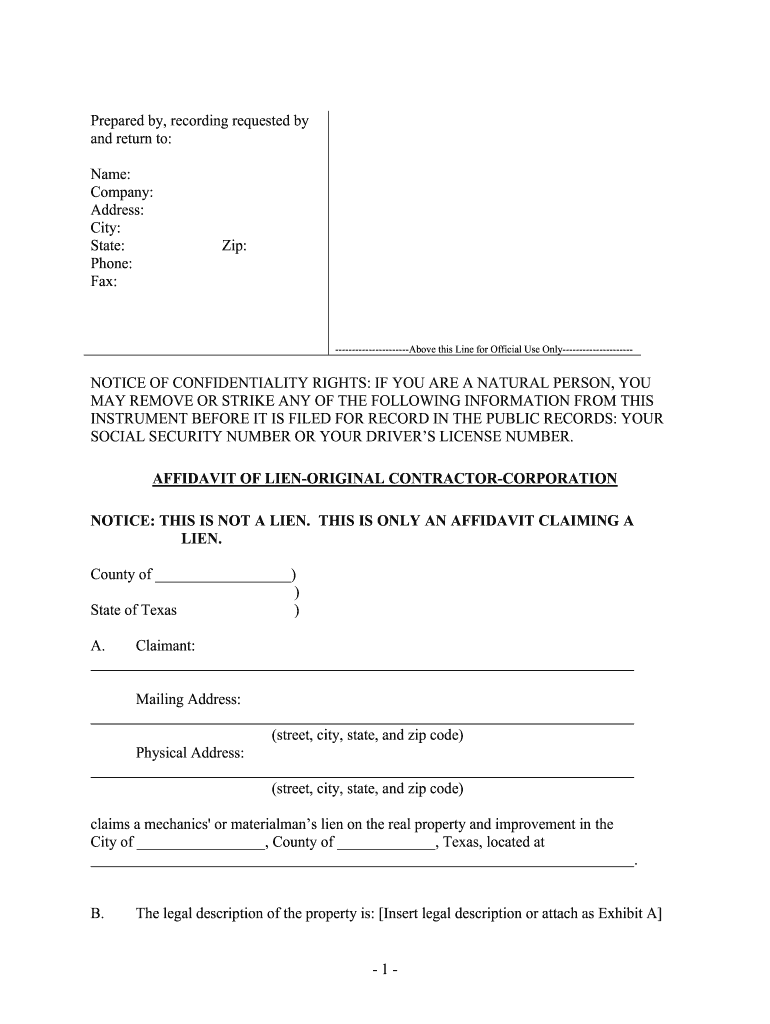







Definition and Meaning of Texas Affidavit Lien
A Texas Affidavit of Lien, also known as a mechanics' or materialman's lien, is a legal document used to assert a claim over a property when a contractor, subcontractor, or supplier has not been paid for services or materials provided. This form is critical in the construction industry within Texas, allowing those who have contributed labor or materials to a project to ensure they are compensated. The affidavit outlines the amount owed, provides a description of the property in question, and specifies the nature of the work or materials supplied.
The affidavit must be filed in the county where the property is located and serves as a formal notice to property owners and potentially encumbrances to lenders and buyers. It's essential for ensuring fair compensation for services rendered or materials provided and acts as a safeguard for contractors and suppliers.
How to Use the Texas Affidavit Lien
The Texas Affidavit of Lien is employed primarily by those in the construction and service industries who need to secure claims for unpaid work. To use this affidavit:
- Identify the Property: Accurately determine and describe the property where work was performed or materials were supplied.
- Detail the Services or Materials: Clearly outline the nature of the work or types of materials provided, dates of delivery, and specific contributions made to the construction or improvement of the property.
- Calculate the Debt: Specify the total amount owed, ensuring that this figure reflects only what is due for the particular project or property.
- File the Affidavit: Submit the completed affidavit to the county clerk’s office in the county where the property is located.
These steps ensure that the lien is properly attached to the property and notify all relevant parties of the claim.
How to Obtain the Texas Affidavit Lien
To obtain a Texas Affidavit of Lien, follow these steps:
- Access Templates: Templates can be downloaded from legal document platforms like DocHub, providing customizable forms that meet Texas state requirements.
- Understand State Requirements: Familiarize yourself with statutory requirements under Texas Property Code, ensuring all necessary information and statements are included.
- Consult Legal Advice: Engage with a legal professional if unfamiliar with lien laws, ensuring compliance and accuracy in documentation.
These steps will help ensure that you are well-prepared to file an affidavit that meets legal standards.
Steps to Complete the Texas Affidavit Lien
Completing a Texas Affidavit of Lien involves meticulous attention to detail:
- Gather Information: Collect data regarding the property, including legal descriptions, work conducted, and amounts owed.
- Complete the Form: Fill in each section of the form, ensuring all necessary information such as claimant details, property description, and amount claimed is accurately recorded.
- Notarize the Document: The affidavit must be signed under oath before a notary public to be considered valid.
- File the Affidavit: Submit the completed and notarized form to the appropriate county clerk’s office.
By following these steps, claimants can effectively protect their financial interests.
Key Elements of the Texas Affidavit Lien
Critical components of a Texas Affidavit of Lien include:
- Claimant Information: Name, address, and contact details.
- Property Description: Detailed legal description and location.
- Nature of Services/Materials: Comprehensive account of work done or materials supplied.
- Amount Owed: Exact dollar amount due for services/materials.
- Certification of Delivery: Verification that the affidavit has been filed and served on all parties concerned.
Each element is crucial for the affidavit's validity and enforceability.
Important Terms Related to the Texas Affidavit Lien
Understanding terminology is essential when dealing with liens:
- Mechanics' Lien: A claim against a property by those who have supplied labor or materials.
- Materialman's Lien: Specifically pertains to those who provide materials for construction.
- Subcontractor: A secondary contractor enlisted by the main contractor to perform a part of the contract.
- Encumbrance: A claim or lien on property, such as a mortgage, which might affect its transferability.
These terms form the backbone of lien documentation and usage.
Legal Use of the Texas Affidavit Lien
Proper legal use ensures compliance under Texas Property Code:
- Timeliness: Affidavits must be filed within a specific timeframe following completion of work or delivery of materials.
- Accuracy: All information presented must be truthful and supported by documents or contracts.
- Enforceability: Provides legal grounds to pursue payment through property-related claims if not compensated.
Legal adherence protects both the claimant’s rights and the integrity of the lien process.
State-Specific Rules for the Texas Affidavit Lien
Texas imposes unique requirements for lien filings:
- Deadline for Filing: Must be filed by the 15th day of the fourth month after the completing the work or supplying materials.
- Notice to Owner: Preliminary notice may be required before filing a lien.
- Expiration: Typically, liens expire after one year unless legal action is initiated.
These rules ensure that claimants act quickly and in accordance with state laws to protect their claims.
Examples of Using the Texas Affidavit Lien
Practical applications of a Texas Affidavit of Lien include:
- General Contractors: Filing for unpaid construction services.
- Material Suppliers: Claiming payment for delivered construction materials.
- Subcontractors: Ensuring remuneration for services rendered under contract terms.
Each scenario demonstrates the utility of the affidavit in safeguarding payment rights.




