






Definition & Meaning
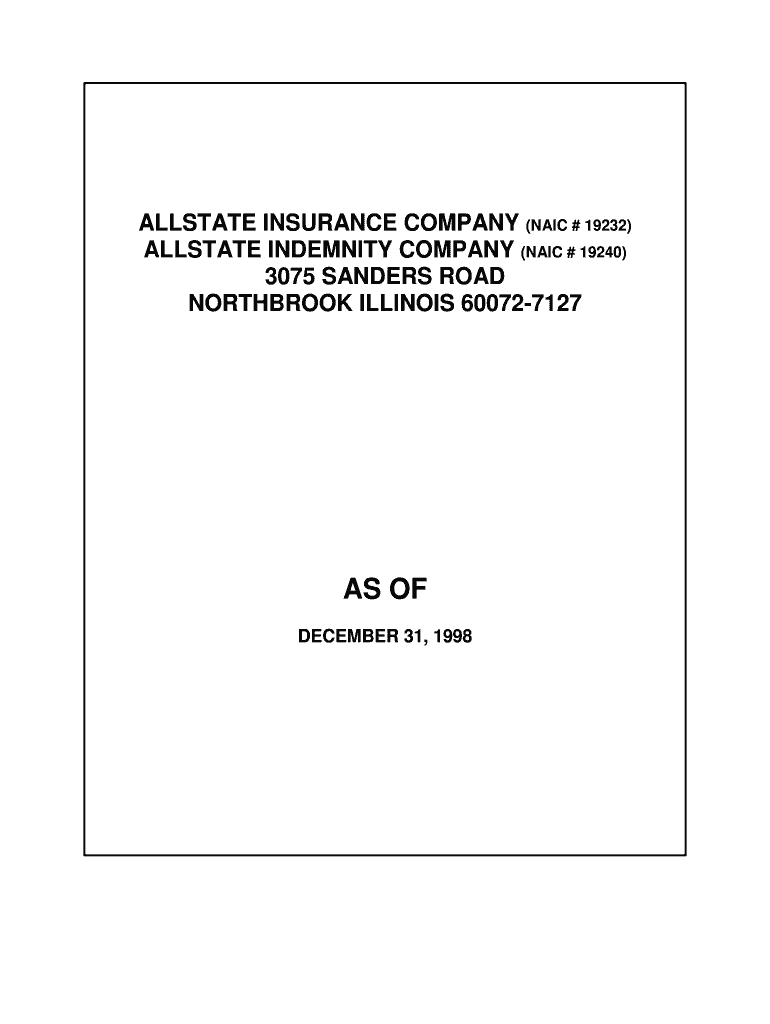
The "Allstate Indemnity Company - Maryland Insurance Administration" refers to a specific process where the Maryland Insurance Administration conducts examinations of insurance companies, such as Allstate Indemnity Company, to ensure compliance with state insurance laws. This involves assessing areas like sales practices, claims processing, and consumer complaint handling to identify any regulatory violations and require corrective actions. Such examinations aim to protect consumer rights and maintain fair practices within the insurance industry.
Practical Examples
- Sales and Advertising: Examining whether Allstate's promotional materials comply with Maryland laws.
- Claims Handling: Investigating Allstate's procedures for processing claims and ensuring timely payment.
- Consumer Complaints: Reviewing how consumer grievances are addressed by Allstate to comply with state regulations.
Key Elements of the Examination Report
The examination report consists of several key elements, each outlining different aspects of Allstate's operations. These elements are critical for understanding the breadth of the examination process.
Major Components
- Compliance Checks: Evaluates adherence to state insurance laws.
- Violations and Penalties: Documents regulatory breaches and any penalties imposed.
- Corrective Actions: Lists required steps for rectifying identified issues.
- Consumer Protection Measures: Highlights efforts to safeguard consumer interests.
Steps to Complete the Allstate Indemnity Company - Maryland Insurance Administration Process
Completing the examination involves several systematic steps to ensure thorough evaluation and compliance. Here is an outline of these steps:
- Initiation: Notification from the Maryland Insurance Administration to Allstate regarding the upcoming examination.
- Document Collection: Gathering relevant documents related to insurance operations.
- On-Site Visit: Conducting an on-site examination to observe practices and procedures.
- Data Analysis: Reviewing provided data and documentation for compliance.
- Reporting Findings: Compiling the findings into a comprehensive report.
- Consent Order Issuance: Drafting a consent order if corrective actions are needed.
- Follow-Up: Ensuring compliance with the consent order and monitoring any corrective actions taken.
Who Typically Uses the Examination Report
The examination report is used by various stakeholders within the insurance and regulatory landscape to ensure a transparent assessment process.


Primary Users
- Maryland Insurance Administration: Utilizes the report to enforce compliance and guide policy.
- Allstate Management: Reviews to understand regulatory expectations and improve practices.
- Attorney Representatives: Use the report in legal contexts where regulatory compliance is questioned.
- Consumers: Benefit indirectly through improved company practices and safeguarded rights.
State-Specific Rules for the Examination
Maryland's insurance laws have specific rules and guidelines that influence how examinations like these are conducted.
Important Rules
- Filing Requirements: Specific documents must be submitted by Allstate within designated timelines.
- Consumer Complaint Management: Companies must follow mandatory procedures for addressing complaints.
- Policy Handling: Rules regarding policy cancellations and renewals directly impact compliance checks.
Legal Use of the Examination Findings
The findings from the examination process have important legal implications for Allstate and the broader regulatory framework.
Legal Applications
- Enforcement Actions: Legal measures may be taken against Allstate for non-compliance.
- Policy Amendments: Findings may result in revisions to state insurance laws.
- Consumer Litigation: Exam results can serve as evidence in consumer lawsuits against Allstate.
Penalties for Non-Compliance
Non-compliance with the findings from the examination can lead to significant penalties for Allstate.
Types of Penalties
- Monetary Fines: Financial penalties, such as the $90,000 administrative penalty imposed.
- Reputation Damage: Public disclosure of violations may impact Allstate's brand and market trust.
- Operational Restrictions: Potential sanctions on business operations within the state until compliance is restored.
Filing Deadlines / Important Dates
Understanding crucial deadlines is essential for managing the examination process effectively.
Key Dates
- Examination Start Date: Initial notification date marking the beginning of the process.
- Submission Deadlines: Dates by which Allstate must submit requested documents.
- Response Deadlines: Timelines for implementing corrective actions after receiving the report.
Form Submission Methods (Online / Mail / In-Person)
The process of submitting relevant documents and responses for the examination includes various methods to accommodate different needs.
Submission Options
- Online Submissions: Digital platforms for document submission.
- Mail: Acceptable for official hard copies and certified document submissions.
- In-Person Drop-off: Available for urgent and critical document submissions directly to the administration office.
Important Terms Related to the Examination Process
Understanding the terminology specific to the examination process is critical for clarity and compliance.
Key Terms
- Consent Order: An agreement that requires the insurance company to take specific corrective actions.
- Market Conduct Examination: A review of an insurance company's business practices.
- Administrative Penalty: A fine imposed by the regulatory body for violations.
Software Compatibility for Document Management
In managing the documents related to the examination, using compatible software can facilitate efficient handling and storage.
Compatible Software
- DocHub: Supports a variety of file formats and offers features for editing and signing.
- Google Workspace Integration: Seamlessly integrates with tools like Google Drive for document management.
- Security Features: Ensures data protection through SSL encryption and authentication protocols.