







Definition & Meaning
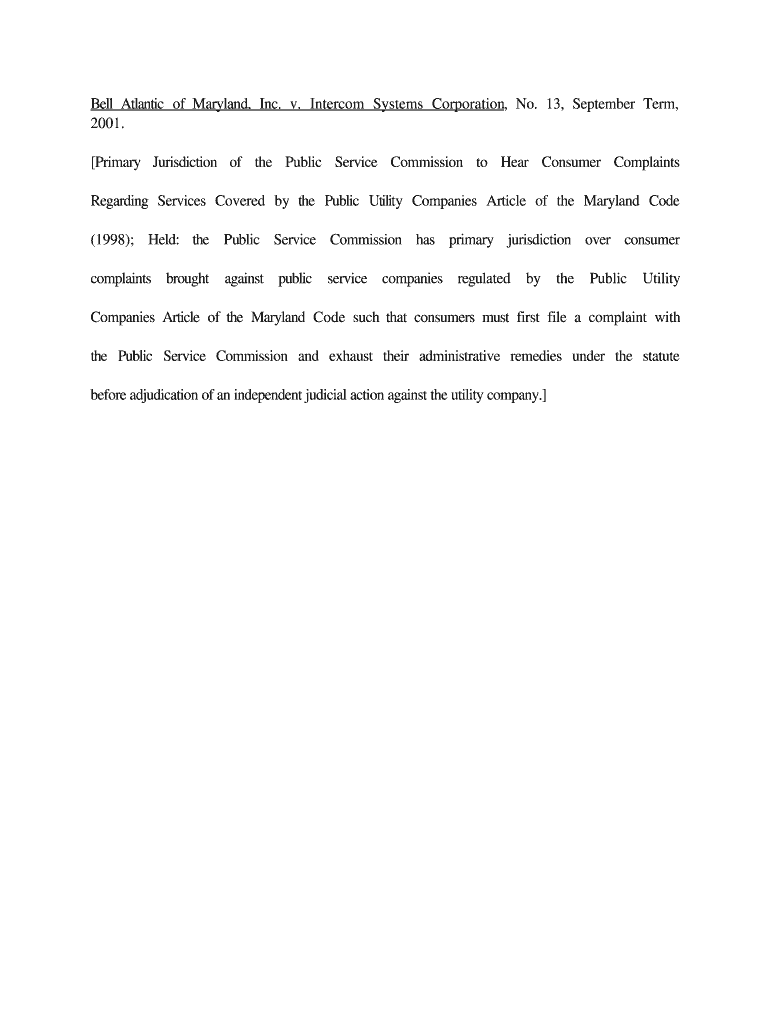
The case of Bell Atlantic of Maryland, Inc. v. Intercom Systems Corporation revolves around the legal intricacies of telecommunications and consumer protection. This landmark case brings to light the primary jurisdiction held by the Maryland Public Service Commission (PSC) when it comes to managing consumer grievances against public service companies. The court decision emphasizes that consumers are required to initially route their complaints through the PSC. The intention is to leverage the specialized knowledge and regulatory framework in place to resolve these issues effectively. Only after these administrative remedies are exhausted can consumers pursue judicial recourse for claims involving tortious interference, negligence, and breach of contract.
Legal Use of the Bell Atlantic of Maryland, Inc v Intercom Systems
The legal use of the Bell Atlantic of Maryland, Inc v Intercom Systems case serves as a precedent for handling disputes related to telecom services within the state of Maryland. It establishes that the PSC has the authority to evaluate consumer complaints comprehensively before any judicial intervention. This case underlines the legal requirement for consumers to follow this administrative procedure, ensuring all regulatory measures and expert evaluations are utilized before resorting to the courts. By doing this, it upholds the structured legal pathway designed to protect consumer rights effectively while also regulating telecom service providers fairly.
Key Elements of the Bell Atlantic of Maryland, Inc v Intercom Systems
Key elements involved in this case include understanding what constitutes the primary jurisdiction of the PSC, how it interfaces with judicial oversight, and what administrative remedies are available. The case also addresses the nuances of tort law including interference and negligence claims within the telecommunications sector. Central to these proceedings is the role of the PSC as the first point of resolution for disputes, emphasizing that comprehensive documentation and clear substantiation by consumers are necessary to prove claims. It is critical to grasp these elements to ensure compliance with outlined legal procedures.
State-Specific Rules for the Bell Atlantic of Maryland, Inc v Intercom Systems
The Bell Atlantic case highlights the intricacies of state-specific regulatory environments in Maryland regarding the telecommunications industry. Here, the PSC's jurisdiction is a distinctive feature of Maryland's state regulations that governs how consumer disputes are initiated and managed. Other states might not necessitate the involvement of a public service commission as comprehensively as Maryland. Therefore, understanding these state-specific rules is crucial for telecom companies and consumers alike in Maryland to navigate legal challenges effectively.
Examples of Using the Bell Atlantic of Maryland, Inc v Intercom Systems
Examples of the impact from this case include its application in instances where consumers experience consistent issues with telecom services and seek resolution. It guides cases where administrative avenues have not yielded satisfactory outcomes, demonstrating the necessity of the PSC's involvement. Practically speaking, consumers must systematically gather all pertinent evidence related to service deficiencies and articulate these clearly during the initial PSC complaint process. Such examples reinforce the procedural importance of administrative remedies and serve as a road map for similar future cases.
Important Terms Related to Bell Atlantic of Maryland, Inc v Intercom Systems
Several important terms come into play with this case, crucial for understanding its full legal context. Primary jurisdiction refers to the PSC's authority to initially weigh in on and resolve disputes. Administrative remedies denote the procedural requirements consumers must fulfill before escalating issues to court. Tortious interference and negligence relate to the legal wrongs consumers may allege against telecom companies. Understanding these terms clarifies the legal landscape articulated by the court decision.
Eligibility Criteria
Eligibility criteria, in the context of this case, apply to parties seeking to file a complaint with the PSC. Individuals or entities experiencing issues with telecom services, such as service interruptions or contractual disputes, should ensure that they have valid grounds for the complaint based on documented evidence of the alleged issues. Moreover, they need to demonstrate that they have adhered to initial attempts for resolution directly with the provider, providing a clear reason for escalating their complaint to the PSC.


Application Process & Approval Time
To initiate a case similar to Bell Atlantic v Intercom Systems within the PSC framework, consumers need to submit detailed documentation outlining their grievance. This includes comprehensive information about the issue, interactions with the provider, and evidence gathered. The PSC then reviews the case, often holding hearings or requesting further information. The approval time varies based on the case's complexity and the thoroughness of documentation provided, but the intent is to address issues promptly while ensuring all regulatory procedures are followed.
Steps to Complete the Bell Atlantic of Maryland, Inc v Intercom Systems
-
Document Issues: Compile detailed evidence of the problem experienced with the telecom service. This could include communication records, service logs, and any prior attempts to resolve the matter directly with the provider.
-
File a Complaint: Submit a formal complaint to the Maryland PSC, ensuring that all required documentation and evidence are thoroughly included.
-
Engage in Hearings: Participate in any PSC hearings, providing additional information or clarification as required by the commission.
-
Exhaust Administrative Remedies: Allow the PSC to fully review and attempt resolution of the issue.
-
Judicial Recourse: Should PSC interventions prove insufficient, proceed to engage in judicial actions based on recommendations or findings issued by the commission.
These structured steps ensure that the process is adherent to legal and regulatory requirements, offering a comprehensive pathway to resolving telecom disputes in Maryland.




