







Definition and Context of the Case
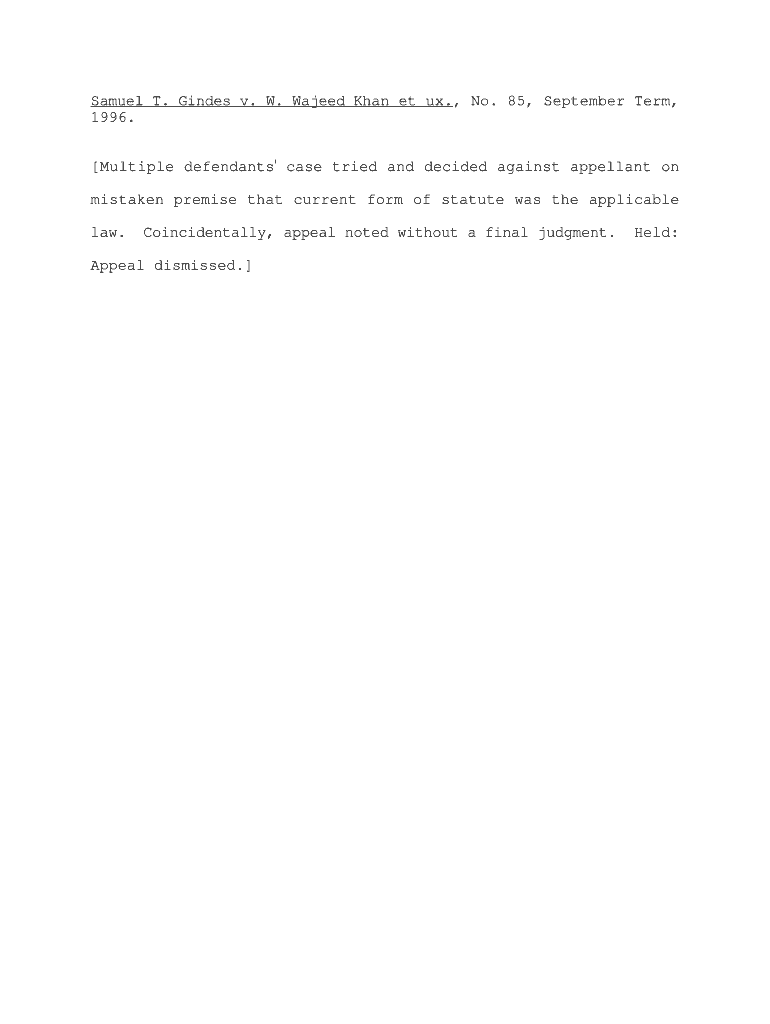
The Samuel T. Gindes v. W. Wajeed Khan et ux. case pertains to an appeal arising from a Maryland state court decision about a real estate transaction. The primary legal issue revolves around the application of an incorrect version of an escrow-related statute. This case illustrates the complexities involved in statutory interpretation, particularly when revisions to laws impact ongoing legal proceedings. The Court of Appeals of Maryland concluded that the trial court incorrectly applied current statutory provisions rather than those in effect at the transaction's time, which opened the door for a potential re-evaluation at the circuit court level.
Nuances of Statutory Interpretation
- Timing of Statute Application: Understanding the specific period during which a statute was effective is crucial. In this case, the incorrect application of current laws to a prior transaction prompted the appeal.
- Procedural Considerations: The case highlights procedural mistakes that can occur when courts apply statutes. It serves as a guide for legal professionals to ensure compliance with the correct legal provisions.
Step-by-Step Process of Case Handling
Initial Steps in Legal Proceedings
- Filing the Case: Legal proceedings begin by submitting necessary documentation to the appropriate court, in this instance, concerning real estate transaction disputes.
- Trial Court Judgment: The case progresses through initial hearings, where factual and legal arguments are presented before a trial court issues a judgment.
Appeals Process
- Grounds for Appeal: If there is a belief of legal error, such as improper statutory application, parties can appeal the decision.
- Review by Higher Courts: The Court of Appeals examines trial court decisions for legal correctness. In this instance, the absence of final judgment led to the dismissal of the appeal.
Legal and Practical Implications
Key Legal Concepts
- Escrow Requirements: Central to this case is understanding how escrow requirements in real estate transactions are governed by specific statutes.
- Final Judgment Necessity: The absence of a final judgment in the initial proceedings resulted in the dismissal of the appeal, underlining the importance of procedural completion.
Practical Considerations in Real Estate
- Document Accuracy: Ensuring all legal documents reflect the correct laws and regulations at the time of their execution is vital.
- Consultation with Experts: Engaging legal professionals who specialize in real estate law can prevent similar procedural errors.
Who Uses This Legal Framework?
Typical Users
- Real Estate Professionals: Those involved in the buying or selling of property may frequently encounter legal documents requiring precise statutory knowledge.
- Legal Practitioners: Lawyers and paralegals specializing in real estate law must be adept at navigating state-specific statutory requirements.
Broader Audience
- Judicial Bodies: Courts need to maintain awareness of statutory changes and ensure accurate application during legal proceedings.
- Property Developers: Businesses engaged in property development benefit from understanding how legislative changes impact transaction processes.
Importance of Proper Legal Documentation
Compliance with State-Specific Laws
Understanding state-specific legislation and correctly applying it, as seen in this Maryland case, is fundamental to avoiding legal disputes and procedural errors.
Protecting Transactional Integrity
Properly drafted legal documents not only ensure compliance but also protect the interests of all parties involved in a transaction, minimizing the risk of future disputes.
Examples of Similar Cases
Comparable Legal Disputes
In cases like Samuel T. Gindes v. W. Wajeed Khan et ux., other similar appeals often arise from misunderstanding or misapplication of state-specific laws, especially as they pertain to real estate transactions. Legal history is replete with examples where court interpretations hinge on precise statutory application.
Lessons Learned
- Statutory Updates: Regular updates on legislative changes are essential for legal practitioners and real estate professionals.
- Training and Education: Continued education in statutory interpretation and procedural law can prevent similar legal issues from occurring.
Key Elements of Court Proceedings
Essential Components
Understanding judicial processes, such as the necessity for a final judgment before an appeal, plays a critical role. Additionally, appreciating the procedural integrity of trial courts can influence the outcome of legal proceedings favorably.
Procedural Integrity
Maintaining procedural integrity in legal processes ensures that cases are decided fairly and correctly, considering all applicable legislation and case law.




