






Definition & Meaning
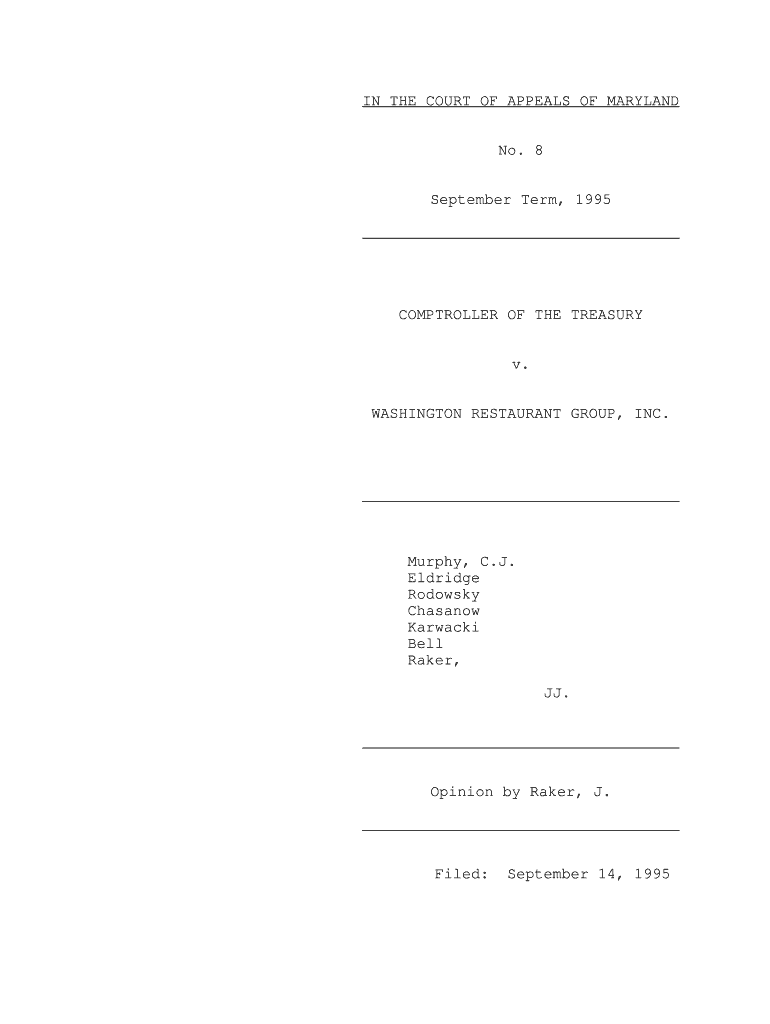
The case "COMPTROLLER OF THE TREASURY v WASHINGTON RESTAURANT GROUP, INC" refers to a legal dispute brought before the Maryland Court of Appeals. The central issue involves the authority of the Comptroller of the Treasury to enforce a state tax lien by executing a writ against a specific asset, in this case, a Montgomery County liquor license held by the Washington Restaurant Group, Inc. The court examined whether such a liquor license can be considered property subject to execution under Maryland tax law.
Key Elements of the Case
The case primarily revolves around several key legal elements:
- Tax Lien: This is the government's legal claim against the assets of the Washington Restaurant Group, Inc due to unpaid taxes.
- Writ of Execution: The legal mechanism by which the Comptroller seeks to seize the property (i.e., liquor license) to satisfy the tax lien.
- Property Definition: The court evaluates if the liquor license qualifies as property that can be subject to seizure.
Legal Use
The decision in this case clarifies the legal framework surrounding the execution of tax liens against specific types of collateral, like liquor licenses. It provides guidance on how state authorities in Maryland can proceed with enforcing unpaid tax obligations and the types of property that can be leveraged to cover these debts. This impacts how businesses holding particular licenses or assets should understand their legal vulnerabilities in tax disputes.
Important Terms
Several legal and financial terms are essential for understanding the implications of this case:
- Tax Lien: A statutory lien imposed by law on the property of a taxpayer who has not paid taxes owed.
- Writ of Execution: A court order that enables the enforcement of a lien or judgment through seizure of the debtor's property.
- Liquor License as Property: The classification of such licenses as property for tax and legal purposes.
Steps to Complete Legal Obligations
For affected businesses, understanding the procedural requirements that arise from this ruling involves:
- Identifying Tax Obligations: Review any outstanding taxes that could lead to similar actions.
- Asset Evaluation: Determine which business assets could be subject to liens or seizures.
- Legal Consultation: Seek legal advice for compliance strategies and dispute resolution.
Application Process & Approval Time for Liquor Licenses
Rulings like this impact the processes for businesses seeking or renewing liquor licenses. Awareness of the potential for these licenses to be seized as assets can influence strategies for license application and maintenance.
- Application: Coordination with state authorities for proper submission of license applications.
- Approval Time: Dependent on state processes and any unresolved disputes or liens.
State-Specific Rules
As the case is within the jurisdiction of Maryland, its rules apply specifically within the state. Other jurisdictions may have different approaches to similar legal questions, impacting how similar disputes might be resolved elsewhere.
Business Types that Benefit
Understanding the case is particularly crucial for:
- Restaurants and Bars: Businesses holding liquor licenses must comprehend taxation risks and asset seizure possibilities.
- Entities with State-based Licenses: Other businesses that operate under state-issued licenses can draw parallels to assess their risk.
Penalties for Non-Compliance
The ruling reinforces the importance of complying with state tax obligations. Non-compliance can lead to asset seizure, legal fees, and operational disruptions. Businesses should ensure:
- Timely Tax Payments: Always meet deadlines to avoid penalties.
- Legal Representation: Engage legal resources for defense in potential disputes.
Examples of Usage
This case example illustrates:
- Precedent Setting: How asset identification as property can serve as a legal precedent for other seizures.
- Business Strategy: Influencing business decisions regarding asset management and risk mitigation.
State-by-State Differences
While this case sets a precedent in Maryland, other states may interpret the law differently. Businesses operating in multiple states must be aware of these variations:
- Asset Classification: Variance in what constitutes property subject to lien enforcement.
- Procedural Differences: Differences in filing and enforcement procedures across states.
Required Documents for Tax Compliance
To prevent similar legal challenges, businesses should maintain:
- Tax Documentation: Accurate and complete records of tax payments and liability.
- License Verification: Up-to-date records of asset ownership and valuations.
Penalties for Non-Compliance
Businesses should understand potential consequences, such as fines, additional legal costs, and business interruptions, which underscore the importance of adherence to tax laws and disciplined financial management.