







Definition & Meaning
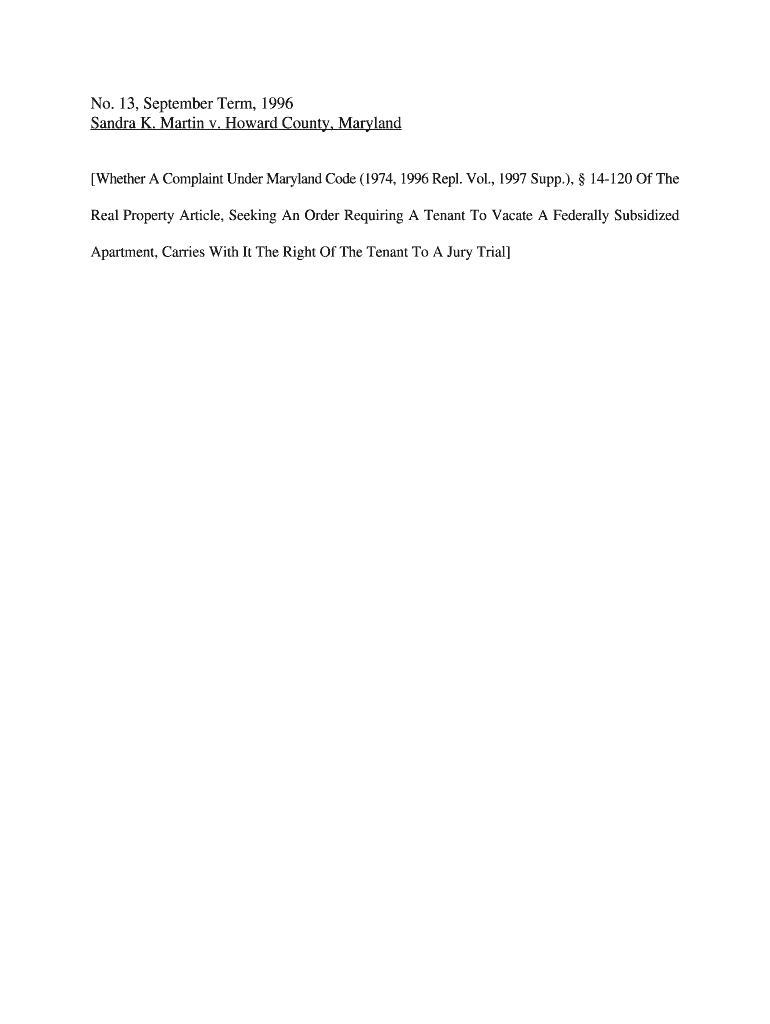
The case of Sandra K. Martin v. Howard County, Maryland is a legal proceeding in which the Court of Appeals of Maryland addressed the rights of tenants in eviction cases. Specifically, it examined whether a tenant is entitled to a jury trial when facing eviction due to allegations of nuisance related to controlled dangerous substances under Maryland's Real Property Article § 14-120. The court ultimately concluded that the action is legal, akin to ejectment proceedings, and thus the tenant is indeed entitled to a jury trial.
Legal Use of the Sandra K Martin v Howard County, Maryland
This legal case is significant for establishing the entitlement of tenants to a jury trial in specific eviction proceedings within Maryland. The ruling clarifies tenants' rights under state law, ensuring that their right to a fair trial is upheld when they are accused of creating a nuisance in federally subsidized housing. Legal professionals use this case as a precedent when dealing with similar situations in the state.
Key Elements of the Case
The primary elements of the case include:
- Tenant Rights: The acknowledgment and protection of tenants' rights to a jury trial in eviction cases involving allegations of nuisance.
- Legal Framework: The interpretation of Maryland's Real Property Article § 14-120 and its application in tenant eviction cases.
- Court's Decision: The ruling that the nature of the action is legal, similar to an ejectment process, affirming the right to a jury trial.
Steps to Complete a Legal Review of the Case
- Case Analysis: Examine the court's opinion for its interpretation of laws related to tenant eviction and nuisance complaints.
- Historical Context: Review prior cases and legal precedents that influenced the current ruling.
- Decision Implications: Understand the implications of the court's decision on future eviction cases in Maryland.
- Jury Trial Eligibility: Assess how this ruling affects tenants' eligibility for jury trials in similar legal contexts.
State-Specific Rules for Tenant Eviction in Maryland
- Eviction Grounds: In Maryland, tenants can be evicted for several reasons, such as failure to pay rent, lease violations, or creating a nuisance.
- Notice Requirements: Landlords must provide written notice before proceeding with eviction.
- Court Proceedings: Tenants have the right to contest evictions legally, which can involve different processes depending on the county.
Important Terms Related to the Case
- Ejectment: A legal action to recover the possession of property.
- Nuisance: A tenant's behavior that interferes with others' use and enjoyment of their property.
- Controlled Dangerous Substances: Drugs regulated under federal and state laws.
Who Typically Uses the Court's Opinion in This Case
- Legal Professionals: Lawyers and attorneys representing tenants or landlords in eviction cases.
- Judges and Courts: Utilize the opinion to guide similar cases and ensure consistent application of the law.
- Tenants and Landlords: Use the decision to understand their rights and obligations under Maryland law.


Examples of Using the Sandra K Martin v Howard County, Maryland Ruling
- Case Preparation: Lawyers can cite this ruling when advocating for tenants' rights to jury trials in eviction cases.
- Legal Education: Law schools may include this case in curricula to exemplify interpretation of tenant rights under state law.
- Advocacy: Tenant advocacy groups might refer to this decision when pushing for stronger tenant protections in eviction cases.
Application Process & Approval Time for Tenant Jury Trials
- Filing a Request: Tenants must formally request a jury trial if they wish to contest eviction under the grounds discussed in this case.
- Court Scheduling: The court schedules the jury trial, often involving several preparatory legal steps.
- Trial Duration: The duration and timing of the trial process can vary based on court schedules and specific case details.




