






Definition & Meaning
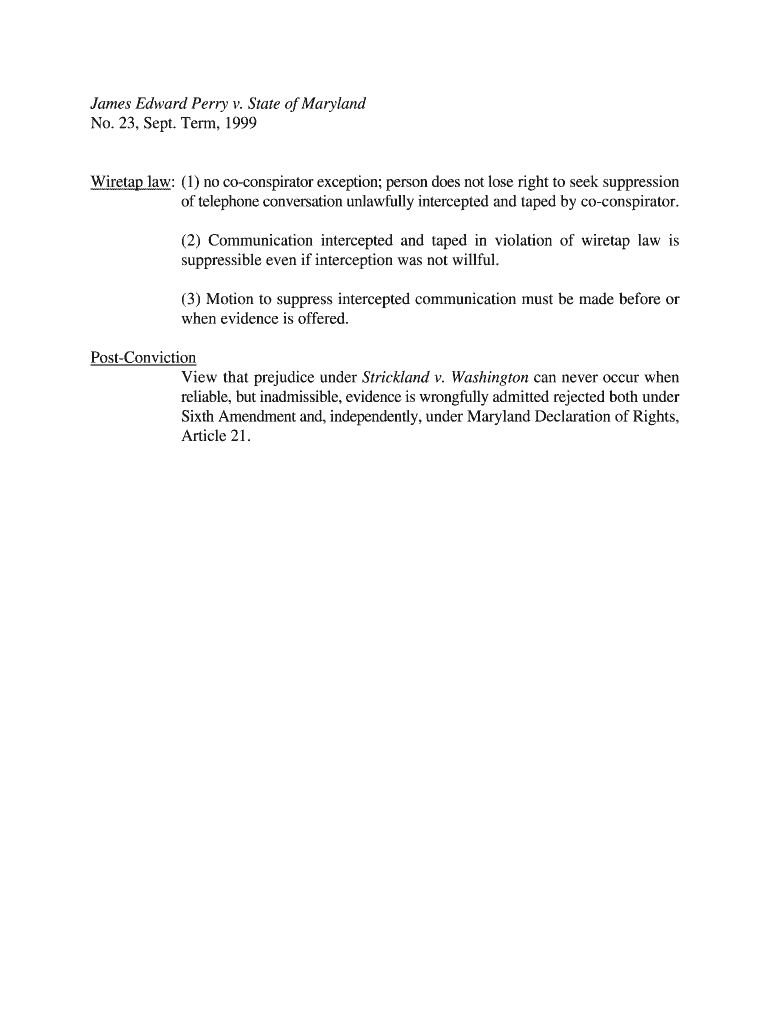
The case of James Edward Perry v. State of Maryland revolves around the legal examination of wiretap evidence in a murder trial context. The court assesses the permissibility of such evidence, focusing on whether illegally intercepted communications can be used, even if intercepted under circumstances differing from local law. Here, the court's verdict highlights the inadmissibility of any evidence obtained through unlawful wiretapping, emphasizing the safeguarding of defendants' rights regardless of differing jurisdictional laws.
How to Use the James Edward Perry v. State of Maryland Case
When applying the principles from this case, legal practitioners must consider the implications of evidence obtained through wiretaps. They need to scrutinize how evidence was gathered and ensure compliance with both local and federal wiretap laws. Lawyers should be prepared to file a motion to suppress any evidence collected in violation of these laws, contributing to a fair trial where only lawfully obtained evidence is presented.
Key Elements of the Case
- Wiretap Evidence: The central focus of the case is the use of wiretap evidence, which was deemed inadmissible.
- Defendant Rights: The court underscores the right of individuals to suppress unlawfully obtained communications.
- Counsel Ineffectiveness: The case further examines the effectiveness of legal representation, particularly in raising timely objections to inadmissible evidence.
- Jurisdictional Law Conflicts: The differentiation between state and out-of-state laws regarding wiretapping is highlighted.
Legal Use of the James Edward Perry v. State of Maryland Case
Legal professionals can reference this case in situations where wiretap evidence is contested. It serves as a precedent for arguing against the inclusion of illegally obtained communications. This ruling emphasizes all parties' rights to a fair trial by holding the evidence admission process to rigorous standards, ensuring evidence complies with legal frameworks across jurisdictions.
Steps to Complete Legal Proceedings
- Review State and Federal Laws: Ensure understanding of relevant wiretap laws applicable to the case.
- Examine Evidence Collection: Analyze how each piece of evidence was gathered to determine legality.
- File a Motion to Suppress: Submit motions for any evidence that may have been unlawfully acquired, drawing on precedents set by this case.
- Prepare for Legal Arguments: Develop arguments that highlight the nuances of the case, focusing on ensuring a fair trial by excluding inadmissible evidence.
- Assess Counsel Performance: Evaluate legal representation effectiveness, especially regarding objections to evidence inclusion.
Important Terms Related to the Case
- Wiretap Evidence: Refers to communications intercepted through electronic surveillance without consent.
- Admissibility: The condition under which evidence is allowed to be presented in court.
- Suppression Motion: A request made to the court to exclude certain evidence from consideration during a trial.
- Jurisdictional Law: Laws that apply within a specific geographic area or authority.
State-Specific Rules
Maryland, like other states, follows federal guidelines on wiretapping but may have additional state-specific statutes that further restrict or expand these laws. Legal professionals must be aware of Maryland’s specific legal backdrop concerning electronic surveillance and ensure that all evidence aligns with both state and national requirements.
Examples of Application
- Case Precedent: In similar cases where wiretap evidence is in question, lawyers can cite this case as precedent to argue for exclusion.
- Prosecutor and Defense Strategies: Both sides of a legal dispute involving wiretaps can utilize insights from this case to shape their legal strategies, whether for prosecuting or defending against allegations.
Penalties for Non-Compliance
Failure to adhere to established wiretap laws can lead to severe legal consequences, including the exclusion of critical evidence, potential dismissal of charges, or even sanctions against legal representatives for misconduct. This case serves as a cautionary example for ensuring all evidence gathering adheres strictly to legal standards, protecting defendants' rights and maintaining the integrity of the legal process.