







Definition and Overview of the Case
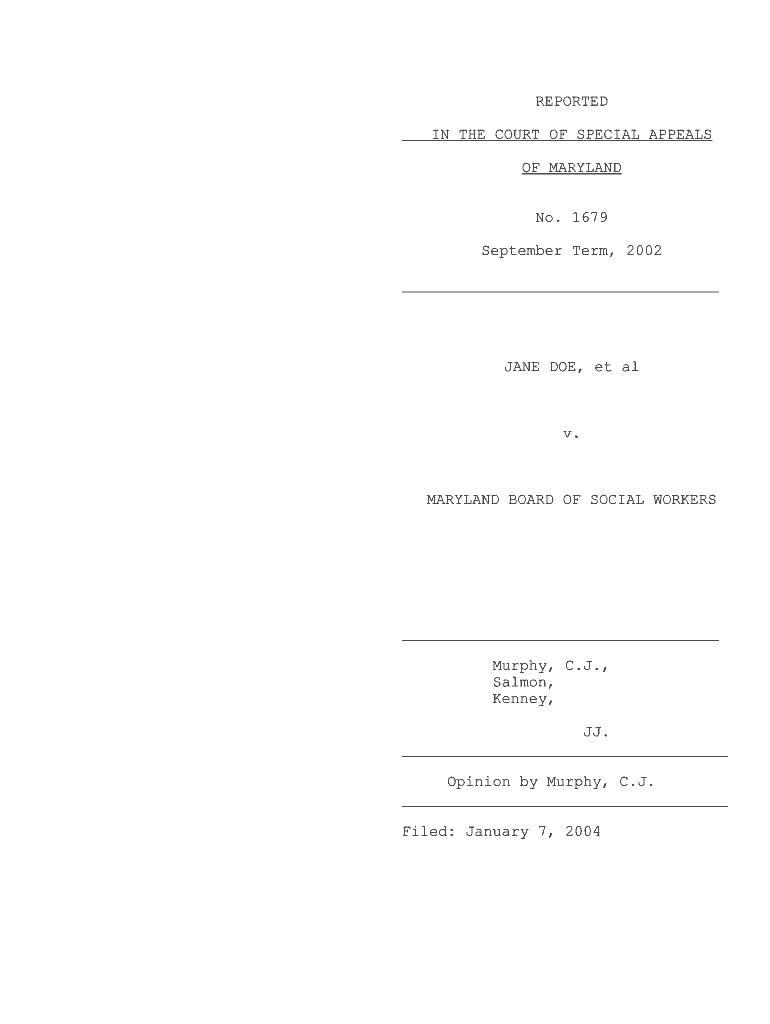
The "1679 September Term, 2002 JANE DOE, et al v - courts state MD" refers to a legal proceeding involving Jane and John Doe against the Maryland Board of Social Workers. This case revolves around the Board's authority to subpoena confidential mental health records in the course of a disciplinary investigation.
The primary issue in this case arose when a subpoena was issued for the complete patient files of the Does, following a complaint against their former social worker. The subpoena was contested on privacy grounds, but the case ultimately affirmed the Board's power to access such records under specific statutory conditions, prioritizing the state's interest in investigating potential misconduct over privacy concerns.
How to Access the Court Records
Obtaining records for the "1679 September Term, 2002 JANE DOE, et al v - courts state MD" involves several steps:
-
Identify the Court's Jurisdiction: This case was heard in the Maryland Court of Special Appeals, which will guide where requests or inquiries should be directed.
-
Contact the Clerk's Office: Reach out to the Clerk's Office of the Maryland Court of Special Appeals through their official contact channels for guidance on record retrieval.
-
Request Procedures: Fill out any necessary forms or applications as instructed by the Clerk's Office. Some records might require a formal request or proof of interest.
-
Payment and Fees: Be prepared to pay any applicable fees for copying or accessing court records. Fees vary based on the type and volume of requested documents.
Key Legal Elements and Terms
Understanding this legal case necessitates familiarity with certain terms and legal principles:
-
Statutory Authority: The legal and regulatory framework granting the Board the power to subpoena confidential records.
-
Subpoena: A legal order compelling an entity or individual to provide testimony or submit evidence, such as documents or records.
-
Confidential Mental Health Records: Sensitive information that typically remains private, barring exceptional circumstances like legal investigations.
-
Privacy vs. State Interest: Balancing individual privacy rights against the state's need to conduct thorough investigations to protect public welfare.
State-Specific Legal Framework
In Maryland, the statutory authority governing subpoenas for confidential records comes from state laws related to professional discipline:
-
State-Specific Statutes: Maryland statutes allow certain boards, like the Board of Social Workers, to obtain necessary information for disciplinary actions.
-
Legal Precedents: Previous cases in the Maryland courts might have shaped the statutory interpretation applicable in this case, setting benchmarks for privacy and state interest balances.
Examples of Similar Legal Cases
Examining similar cases can provide a broader understanding of legal precedents:
-
Case A: XYZ v. Maryland Board of Health: A case where patient confidentiality was weighed against the board's investigation needs. It highlighted similar balances between privacy rights and state responsibilities.
-
Case B: ABC Clinic v. State of Maryland: Focused on the funding and ethical questions around subpoena processes for medical records in public investigations.
Who Typically Utilizes These Court Records
Various parties may need access to records from this case:
-
Legal Professionals: Lawyers and legal aides researching precedents for similar cases.
-
Social Work Practitioners: Professionals looking for guidance on compliance with state regulations and potential implications for practice standards.
-
Policy Makers: Officials developing policies around professional conduct and public protection standards.
Legal Use of Court Records
Court records like those from this case can be used in several ways:
-
Legal Research: They serve as valuable resources for legal professionals in building arguments or understanding legal frameworks.
-
Educational Purposes: Academic settings may utilize these records for teaching about professional ethics and legal processes.
-
Policy Development: Insights from cases like these inform the development of ethically and legally sound practices within regulated professions.
Implications for Professional Practice
The outcomes of such cases directly impact professional guidelines:
-
Code of Ethics: Reaffirmations or alterations in behavior expectations for social workers and related fields.
-
Procedural Changes: Adjustments in how complaints or potential misconduct cases are managed, particularly concerning data confidentiality.
-
Professional Training: Enhanced focus on understanding legal environments and privacy obligations within practice training programs.




