






Definition & Meaning
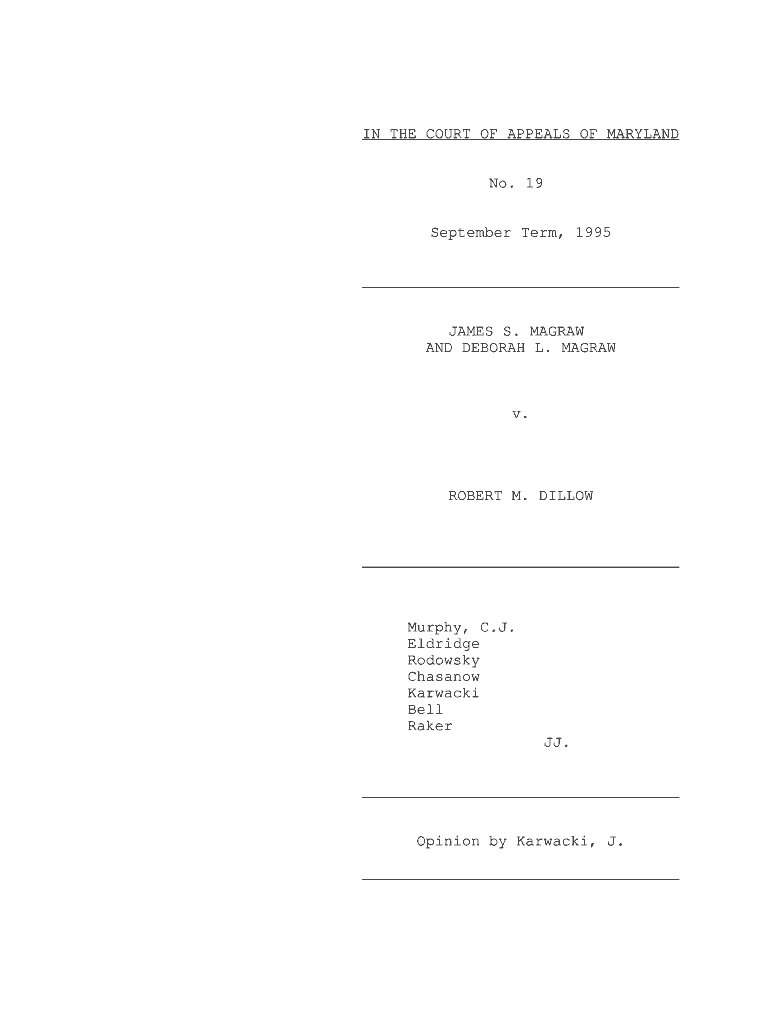
The case "James S. Magraw and Deborah L. Magraw v. Robert M. Dillow" refers to a legal dispute involving property encumbrances adjudicated in Maryland. This court opinion from the Court of Appeals of Maryland focuses on the interpretation of a special covenant against encumbrances and the procedural nuances in foreclosure actions. The core issue addresses the Magraws' oversight in notifying heirs during a tax sale foreclosure, leading to an encumbrance that Dillow argued violated the covenant.
Legal Use of the Case
In legal practice, this case is utilized to understand the application and implications of covenants related to property encumbrances. It serves as a precedent for similar disputes where proper notification during foreclosure processes is contentious. Legal professionals reference the case to bolster arguments in property law and estate matters, emphasizing the importance of adhering to statutory requirements during foreclosure to avoid residual encumbrances.
Key Elements of the Case
- Covenant Against Encumbrances: The central argument revolves around whether a breach occurred because of existing encumbrances due to heirs not waiving their rights.
- Heirs’ Rights: Focuses on retained redemption rights by heirs that were not properly addressed during foreclosure.
- Tax Sale Foreclosure Procedures: Illustrates procedural obligations in notifying all potential stakeholders, avoiding legal oversight.
- Court Rulings: Affirms Dillow's claim, impacting subsequent legal interpretations.
State-Specific Rules
Maryland's unique legal framework governs foreclosure and property disputes, highlighting the necessity for accurate heir notification and compliance with state-specific statutes. Variations in foreclosure laws may affect how similar cases are adjudicated in different jurisdictions, but Maryland emphasizes strict adherence to procedural detail in notifying interested parties in tax sales.
Who Typically Uses This Case
- Real Estate Attorneys: Utilize the case to advise clients on property transactions and potential encumbrance risks.
- Judges and Clerks: Reference it to understand precedent in foreclosure cases and disputes involving redemption rights.
- Individual Property Owners: May explore the ramifications of improper notification in tax sales or inheritance matters.
Steps to Complete Notification During Foreclosure
- Identify Heirs: Thoroughly research and ascertain all legal heirs of the property.
- Issue Notices: Legally mandated notices must be sent to identified heirs to inform them of foreclosure proceedings.
- Provide Redemption Opportunity: Allow heirs a clear pathway to exercise redemption rights if applicable.
- Document Compliance: Maintain records of all notifications sent to demonstrate procedural compliance in any disputes.
Important Terms Related to the Case
- Encumbrance: Legal term for claims or liens against property that may affect transfer or foreclosure.
- Covenant: An agreement made within property deeds or contracts regarding the use or encumbrance of land.
- Redemption Rights: The rights of heirs or interested parties to reclaim property under certain conditions after a foreclosure.
Examples of Using the Case
- Case Studies in Legal Education: Law schools may include this case in curricula to illustrate issues in property law and procedural due diligence.
- Legal Strategy Development: Attorneys might use the findings and arguments shaped by this case in crafting defenses or supporting claims in similar property disputes.
Important Filing Deadlines
In similar cases, strict adherence to deadlines for foreclosure notices and court filings is essential. Maryland, like many states, prescribes specific timeframes within which affected parties must be notified and given the option to respond, emphasizing the importance of timeliness in foreclosure processes.