







Definition & Meaning
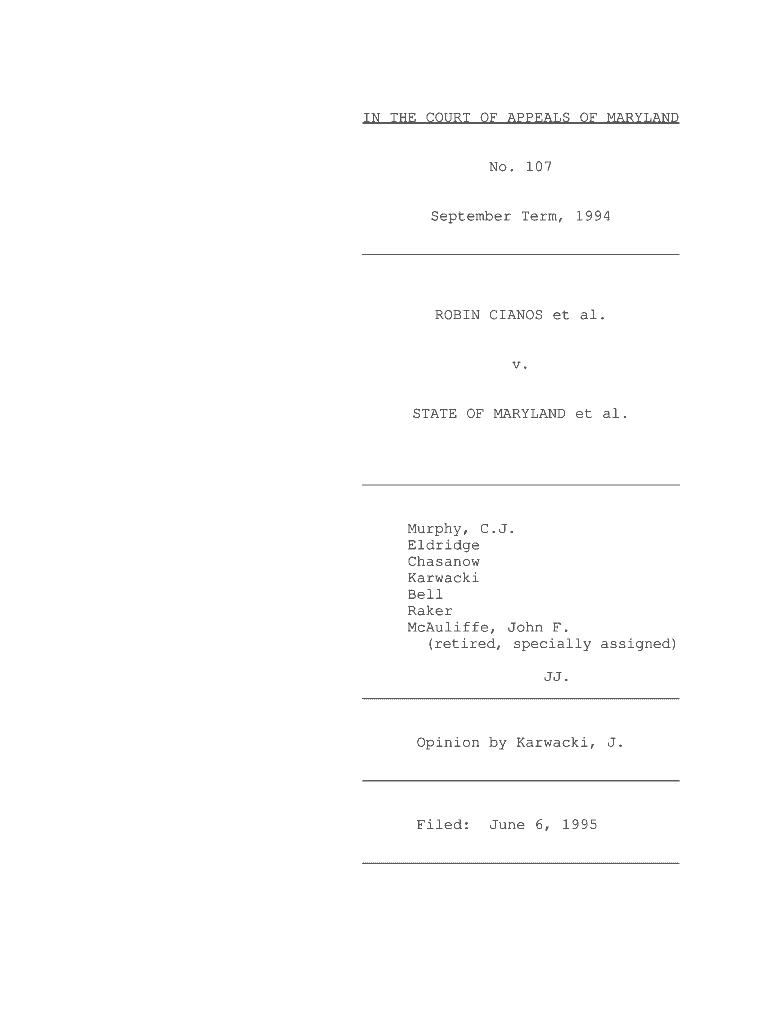
The phrase "ROBIN CIANOS et al avenue of appeal from a guilty plea before a circuit court - courts state md" refers to the legal procedures and considerations relevant to appealing a guilty plea in a Maryland circuit court. In legal contexts, "et al." stands for "and others," indicating that Robin Cianos is the primary appellant representing other individuals as well. This form encompasses the application and processes required to initiate appellate review in the legal system, specifically addressing whether procedural errors or other factors might have influenced the initial guilty plea.
How to Use the Form
To effectively use the "ROBIN CIANOS et al avenue of appeal from a guilty plea before a circuit court - courts state md," you should have a clear understanding of the grounds upon which an appeal can be based. This process typically involves:
- Reviewing the Judgment: Understand the detailed findings and decisions made during the initial trial.
- Identifying Grounds for Appeal: These might include procedural mistakes, new evidence, or legal misinterpretations.
- Completing the Appeal Form: Accurately fill out all sections, ensuring that all necessary information and documentation are provided.
- Filing the Appeal: Submit the form through the appropriate channels, adhering to any specified deadlines.
Important Terms Related to the Form
Understanding key terms associated with this form is crucial for navigating the appeal process:
- Guilty Plea: An admission of guilt for a crime, which can be contested under certain legal circumstances.
- Circuit Court: A court where significant cases are initially heard and judgments are made; decisions here can often be appealed to higher courts.
- Appeal: A legal process wherein a case is reviewed for potential errors in the initial trial.
- Appellant: The party submitting the appeal, seeking a review of the decision made by a lower court.
Steps to Complete the Form
Completing the "ROBIN CIANOS et al avenue of appeal from a guilty plea before a circuit court - courts state md" requires meticulous attention to detail. Follow these steps:
- Gather Documentation: Collect all relevant court documents, evidence, and any transcripts from the original trial.
- Prepare Your Argument: Clearly articulate the reason for the appeal, supported by collected evidence or legal precedents.
- Fill Out the Form: Carefully provide all requested information, ensuring accuracy and comprehensiveness.
- Submit the Form: Deliver your completed form and supporting documents to the designated legal office or online portal as prescribed by Maryland court procedures.
Legal Use of the Form
This form is crucial for individuals or entities seeking to challenge the results of a guilty plea through legal arguments. It should only be used by:
- Defendants: Individuals who believe their guilty plea was unfairly influenced or established through error.
- Legal Representatives: Attorneys preparing to argue the basis for appeal on behalf of their clients.
- Other Recognized Parties: As determined appropriate by Maryland state laws regarding legal appeals.
State-Specific Rules for the Form
Maryland’s legal system provides distinct guidelines for handling appeals:
- Filing Deadlines: Appeals must be submitted within a specific timeframe after the initial court decision, often within 30 days.
- Document Requirements: Complete submission with all supporting documents, without which the appeal might not be accepted.
- Court Procedures: Familiarize yourself with specific procedural differences that exist within Maryland in comparison to federal appeal processes.
Key Elements of the Form
To successfully navigate the appeal process, understanding the primary components of the "ROBIN CIANOS et al avenue of appeal from a guilty plea before a circuit court - courts state md" form is fundamental:
- Personal and Case Information: Complete identification and case details.
- Grounds for Appeal: Clearly stated reasons supported by facts or legal citations.
- Signature & Verification: Legal affirmation that all provided information is truthful and accurate.
Examples of Using the Form
Consider these practical scenarios for using this form:
- Procedural Error: A defendant was not informed of their rights during the plea process, potentially invalidating their guilty plea.
- New Evidence: Evidence surfacing post-conviction could significantly alter the outcome of the initial plea agreement.
- Misinterpretation of Law: Initial trial outcomes were based on a misapplication or misunderstanding of applicable law, justifying appellate review.
By focusing on these block guidelines, individuals can effectively manage their appeal proceedings according to Maryland’s legal standards.




