







Definition & Meaning
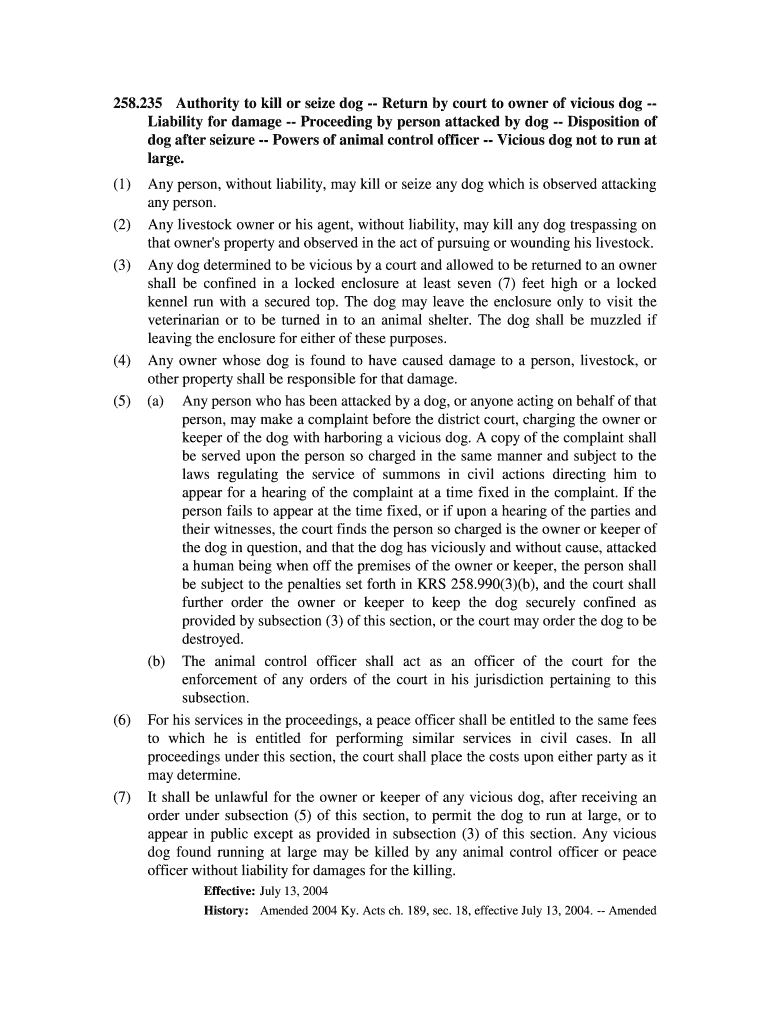
The "235 Authority to kill or seize dog -- Return by court to owner of vicious dog -Liability for damage" refers to a legal framework addressing the management and ownership of dogs considered dangerous. It outlines the authority to seize or euthanize dogs that have attacked individuals or livestock and stipulates the process for their possible return to owners once deemed no longer threatening. The law also covers the liability of dog owners for damages caused by their pets and manages court-ordered obligations.
Legal Use of the 235 Authority
This legal authority empowers local agencies or courts to act against dogs displaying violent behavior. In situations where a dog poses a risk to public safety, authorities such as animal control officers may contain or eliminate the threat. This provision ensures public safety while also defining the respective obligations of dog owners in managing their animals according to legal and ethical standards. Legal enforcement includes penalties for non-compliance and mandates protocols on managing seized animals.
Key Elements of the Authority
- Seizure Protocols: Defines conditions under which a dog may be seized by authorities, such as direct threats to people or livestock.
- Return Regulations: Establishes the process and conditions for potentially returning a dog to its owner, ensuring compliance with safety regulations.
- Owner Liability: Outlines the legal responsibilities of dog owners to prevent harm caused by their pets and potential repercussions of failing to do so.
- Safety Measures: Requires dog owners to implement specific safety measures like confinement or muzzling following initial aggression.
- Court Procedures: Details the procedural approach for owners to contest the seizure or extermination of their pets, with court decisions being legally binding.
How to Use the 235 Authority
To utilize this legal measure, individuals or entities must first report incidents involving a dog’s aggressive behavior to local animal control or law enforcement. These agencies execute the authority to act upon the situation, potentially leading to legal action against the dog owner. Owners who wish to contest court decisions regarding their pets can file appeals or provide evidence to seek reconsideration.
Steps to Complete the Process
- Incident Reporting: Initiate the process by documenting and reporting the aggressive behavior of a dog to local authorities.
- Investigation: Authorities assess the reported threat and determine whether seizure or other actions are warranted.
- Legal Action: If necessary, legal proceedings take place to evaluate further measures against the dog.
- Compliance Check: Dog owners may need to submit documentation proving compliance with safety orders for their pets.
- Court Follow-Up: Engage in hearings or appeals as part of the judicial process, where courts decide on possible pet returns or penalties.
Who Typically Uses the Authority
This legal framework is primarily used by law enforcement, animal control officers, and municipal courts. It can also involve pet owners, legal representatives, and insurance companies handling liability claims. In some cases, neighborhood associations or community organizations may engage when addressing local safety issues with aggressive dogs.


Important Terms Related to the Authority
- Vicious Dog: A legal designation for a dog that has shown aggressive behavior posing threats to public safety.
- Seizure: The act of legally taking control of a dog by local authorities due to safety concerns.
- Owner Liability: Responsibility held by pet owners concerning damages their pets cause.
- Enforcement Agencies: Organizations tasked with implementing laws regarding animal control and public safety.
Examples of Using the Authority
- A Dog Attack Case: A court orders the seizing of a dog after it attacks a neighbor's child, with restrictions for its return based on behavior modification.
- Landowner Liability: A farmer faces legal action when their dog continuously attacks livestock, resulting in compensation for damages and additional safety measures.
- Community Safety Initiative: Local government enforces stricter animal control laws following a series of aggressive dog incidents in public spaces.
State-Specific Rules
Different states may interpret and enforce the principles under "235 Authority to kill or seize dog -- Return by court to owner of vicious dog -Liability for damage" according to local statutes. Such interpretations consider specific state regulations on animal control, public safety policies, and dog ownership laws. It is essential for residents and dog owners to familiarize themselves with local legislation to ensure compliance and understand potential liabilities.




