






Definition and Meaning
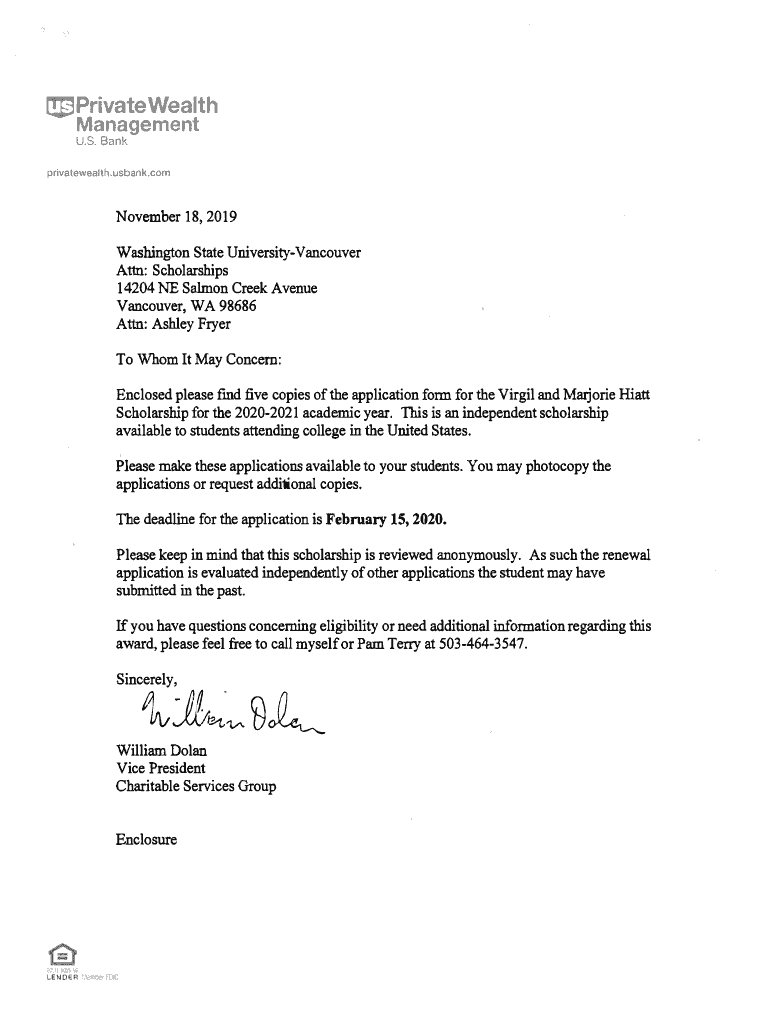
The "Virgil and Marjorie Hiatt Scholarship Application - Student" is an official form used by students to apply for a scholarship created in honor of Virgil and Marjorie Hiatt. This scholarship aims to provide financial assistance to eligible students pursuing higher education, and the application process involves a detailed assessment of the applicant's academic background, need for financial support, and other personal achievements. This form acts as a comprehensive tool through which applicants can present their qualifications for the scholarship.
Eligibility Criteria
To successfully apply for the Virgil and Marjorie Hiatt Scholarship, students must meet specific eligibility requirements. Primarily, applicants should be enrolled or planning to enroll in an accredited higher education institution for the upcoming academic year. Other criteria might include maintaining a minimum grade point average (GPA), demonstrating financial need, and involvement in community service or extracurricular activities. Verification of the student's residency in the United States may also be required as the scholarship is U.S.-centric.


Required Documents
As part of the application process, applicants must provide several supporting documents, which typically include:
- A completed scholarship application form.
- An official transcript from high school or current college.
- Letters of recommendation from teachers or mentors.
- A personal essay or statement outlining educational goals and motivations.
- Documentation of financial need, such as tax returns or financial aid reports.
Steps to Complete the Virgil and Marjorie Hiatt Scholarship Application - Student
- Gather Required Information: Collect all necessary personal, academic, and financial information.
- Complete the Application Form: Fill out all fields accurately, ensuring no sections are left blank.
- Write a Personal Statement: Craft a compelling essay that highlights achievements, goals, and reasons for applying.
- Obtain Recommendations: Request letters from educators or mentors familiar with your academic and personal achievements.
- Submit Supporting Documents: Ensure all documents are current and complete.
- Review and Proofread: Carefully review the application for any errors or omissions.
- Submit Application: Follow specified submission methods, whether online, by mail, or in-person, before the deadline.
Application Process and Approval Time
After submitting the application, the review process generally involves:
- Initial Screening: Ensures all required materials are included.
- Evaluation: A committee reviews the applications based on the criteria.
- Interview: Shortlisted candidates may be invited for an interview.
- Notification: Applicants are informed of their application status.
- Approval times vary but typically range from a few weeks to a couple of months, depending on the volume of applications.
Important Terms Related to the Scholarship Application
Understanding the following terms is crucial for applicants:
- Financial Need: Refers to the gap between the cost of education and the student's ability to pay.
- Merit-Based: Indicates scholarships awarded based on academic achievements or talent.
- Need-Blind: Assessment conducted without considering the applicant’s financial situation.
- Holistic Review: Evaluation based on academic, personal, and extracurricular components.
Submission Methods
Applicants may submit their applications via multiple methods:
- Online Submission: Often the preferred method, allowing applicants to upload documents through a dedicated platform.
- Mail Submission: Sending the completed application to the specified physical address.
- In-Person Submission: Delivering the application directly to the administering body’s office if feasible.
Key Elements of the Scholarship Application
Important elements of the application include:
- Personal Information: Applicant’s contact details and educational background.
- Academic Achievements: Details of awards, honors, and significant accomplishments.
- Financial Disclosure: Information on family income and financial obligations.
- Extracurricular Activities: Participation in clubs, sports, or community service.
- Essay: A personal narrative reflecting the applicant's aspirations and motivations for higher education.