




01. Edit your form online
Type text, add images, blackout confidential details, add comments, highlights and more.

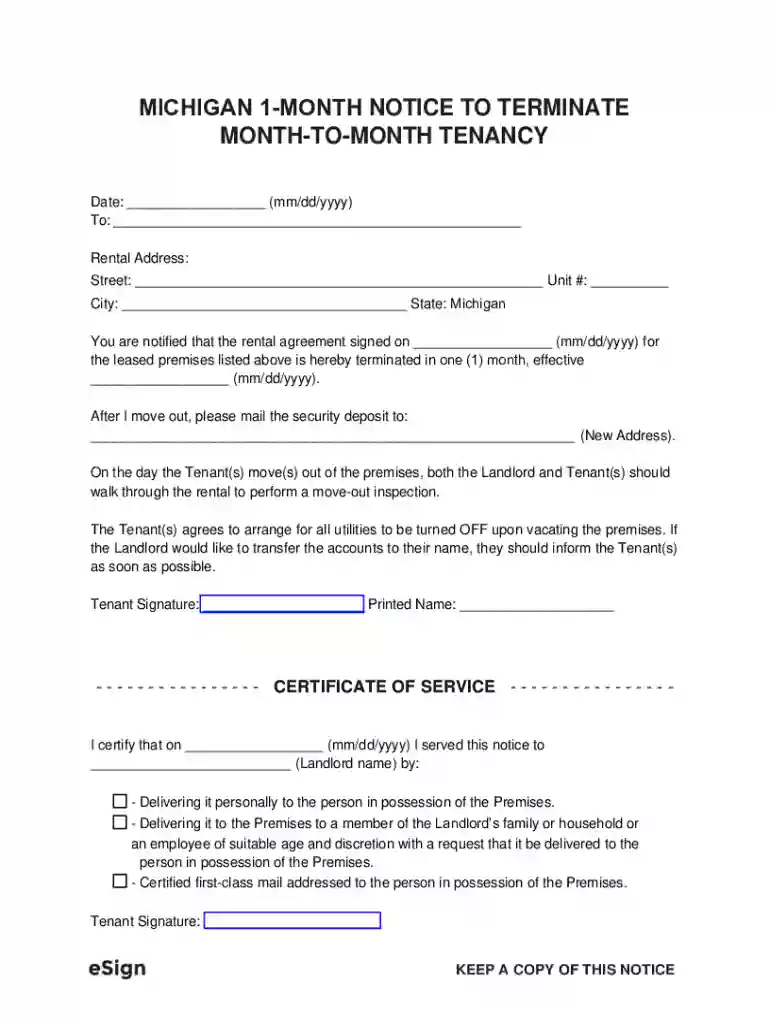
Type text, add images, blackout confidential details, add comments, highlights and more.

Draw your signature, type it, upload its image, or use your mobile device as a signature pad.

Send it via email, link, or fax. You can also download it, export it or print it out.
The Michigan 1-Month Notice to Terminate Month-to-Month Tenancy for Tenant is a legal document used to inform a tenant that their month-to-month lease will be terminated in 30 days. This document is essential for adhering to Michigan's tenancy laws, ensuring both landlords and tenants have clear communication and agreement about the end date of the lease. It includes crucial details such as the address of the rental property, the effective date of termination, and any necessary actions regarding the return of security deposits and disconnection of utilities.
Using this notice involves drafting the document with accurate and complete information. Landlords need to specify the tenant’s full name, the property address, and the effective date of lease termination. It is important to deliver the notice in person or via registered mail to ensure proper documentation of delivery. The tenant should retain a copy for their records. Following formal procedures ensures compliance with state regulations and minimizes the risk of disputes.
The document must adhere to Michigan's landlord-tenant laws, specifically addressing month-to-month tenancies. It serves as a formal communication tool to avoid legal disputes and ensures that the lease termination process is transparent and legally binding. Both parties should understand their rights and obligations as outlined in the lease agreement and state law.
Some key terms include "month-to-month tenancy," referring to leases without a fixed term, and "termination notice," a formal declaration of lease end. Understanding these terms helps ensure clarity in communication and compliance with legal procedures.
Michigan law mandates a minimum 30-day notice for terminating a month-to-month tenancy. Landlords must provide this notice in writing and ensure it is received by the tenant to be legally effective. Any alterations to these rules should be documented in the lease agreement.
Consider a landlord in Detroit who needs to reclaim their property for personal use. They provide a 30-day notice using the Michigan 1-Month Notice to Terminate Month-to-Month Tenancy for Tenant, ensuring ample time for the tenant to relocate while adhering to legal requirements. Another example could involve a tenant wishing to terminate their lease and also providing a one-month notice to the landlord to avoid penalties.
Landlords primarily utilize this notice to formally communicate lease termination. However, tenants may also issue a similar document if they choose to end their month-to-month tenancy, provided they follow the same notice period and legal procedures. This document is crucial for both parties to avoid misunderstandings and adhere to legal standards.


At DocHub, your data security is our priority. We follow HIPAA, SOC2, GDPR, and other standards, so you can work on your documents with confidence.





Defendant tenant held under a month-to-month tenancy. requisite thirty-day notice to terminate the tenancy.1
Information in ITRC Materials is for general reference only; it should not be construed as definitive guidance for any specific site and is not a substitute forRead more
(1) Except as provided otherwise in this section, an estate at will or by sufferance may be terminated by either party by giving 1 months notice to the otherRead more


