Definition & Meaning
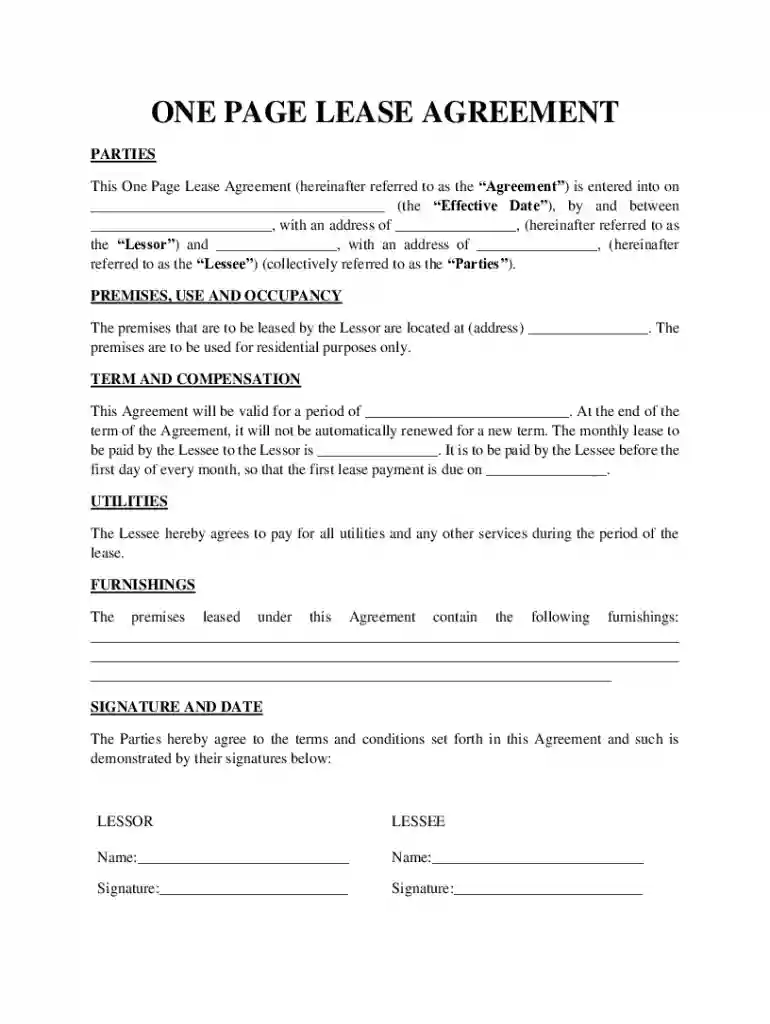
A Basic 1-Page Lease Agreement serves as a concise document used to formalize the lease terms between a lessor and a lessee for residential properties. This simple lease agreement captures essential details about the rental arrangement, including the identities of both parties (lessor and lessee), the property in question, the lease term, rent amount, and any responsibilities regarding utilities and furnishings. Its streamlined format makes it ideal for straightforward lease agreements where complex terms are unnecessary.
Essential Considerations
- Parties Involved: Identifies the lessor (landlord) and lessee (tenant) along with their respective contact details.
- Rental Property Description: Specifies the address and condition of the leased premises.
- Lease Term: Standard periods include month-to-month or a fixed lease term such as six, twelve, or more months.
- Payment Terms: Details on rent amount, payment due dates, and acceptable payment methods.
- Additional Terms: May include clauses about security deposits, late payment penalties, and lease renewal terms.
Key Elements of the Basic Lease Agreement
A Basic 1-Page Lease Agreement is comprised of several critical components that ensure a clear understanding and mutual agreement between the lessor and lessee.
Fundamental Components
- Effective Date: The date when the lease agreement becomes valid.
- Rent Details: Monthly rent amount, payment schedule, due dates, and applicable late fees.
- Utility Responsibilities: Clearly defined responsibilities for utilities like gas, water, and electricity.
- Furnishings Included: Enumeration of furnishings and appliances provided by the lessor.
- Signatures: Both parties must sign the agreement to validate the terms and conditions.
Additional Provisions
- Maintenance Obligations: Specifies which party is responsible for property maintenance and repairs.
- Early Termination Options: Conditions under which the lease can be terminated early by either party.
- Pet Policy: Rules regarding the presence of pets on the premises, if applicable.
How to Use the Basic Lease Agreement Form
Using the Basic 1-Page Lease Agreement form involves several key steps to tailor it to the specific needs of the rental arrangement.
Step-by-Step Instructions
- Download the Template: Obtain the lease agreement form in PDF or Word format from a trusted source such as DocHub.
- Review the Contents: Familiarize yourself with the terms, ensuring they fit the intended rental arrangement.
- Fill in the Details: Enter the relevant information, such as tenant and landlord details, rent amount, and lease duration.
- Add Custom Clauses: Include any additional agreements or clauses pertinent to the lease that aren't covered in the standard template.
- Review and Amend: Check the filled-out form for accuracy and make any necessary amendments.
Finalizing the Agreement
- Discuss with the Lessee: Both parties should review the lease together to address any questions or concerns.
- Sign and Date: Once agreed, both the lessor and lessee sign and date the form.
- Distribute Copies: Provide a copy of the signed agreement to all involved parties for their records.
Legal Use of the Basic Lease Agreement
The legal enforceability of a Basic 1-Page Lease Agreement is contingent upon its adherence to relevant laws and its full execution by both parties.
Compliance and Legal Considerations
- State Laws: Must comply with the landlord-tenant laws specific to the state where the property is located.
- Legally Binding: The agreement becomes legally binding once it is signed by both parties and all terms are acknowledged.
- Modifications: Any changes must be agreed upon by both parties and documented in writing.
Enforcement and Dispute Resolution
- Dispute Practices: Details procedures for resolving disputes, often encouraging mediation before legal proceedings.
- Court Representation: If disputes escalate, the agreement may outline which party is responsible for legal costs.
Important Terms Related to the Lease Agreement
A sound understanding of the specific terminology used in an agreement can prevent misinterpretations and potential disputes.
Common Terms and Their Meanings
- Lessor: The property owner or landlord.
- Lessee: The tenant or individual who leases the property.
- Premises: The physical property being rented, including land and any buildings or structures.
- Lease Term: The duration of the rental agreement.
- Security Deposit: A refundable fee collected by the landlord to cover potential damages or unpaid rent.
Advanced Terms
- Sublease: Agreement that allows the lessee to rent the property to another individual.
- Force Majeure: Clauses that allow for lease termination in the event of natural disasters or unforeseen events beyond the control of either party.
State-Specific Rules for Lease Agreements
Lease agreements must comply with state-specific requirements, which can influence how leases are drafted and enforced.
State Variations in Lease Requirements
- Disclosure Obligations: Some states mandate disclosures regarding property conditions or known hazards.
- Security Deposit Limits: Varies by state, affecting how much landlords can charge.
- Notice Periods: Different states have specific rules about notice periods for termination or rent increases.
Examples of State Differences
- California: Requires detailed disclosure regarding potential environmental hazards.
- Texas: Focuses on detailed lease terms regarding late fees and eviction processes.
- New York: Provides stringent requirements for security deposits and their return process.
Typical Users
- Independent Landlords: Often used by landlords managing their own properties, offering a straightforward option for shorter-term leases.
- First-Time Renters: Favored for its uncomplicated terms, making it easy for tenants to understand their rights and obligations.
- Property Management Firms: Useful for firms managing many properties and requiring a standard agreement template for efficiency.
Use Cases
- Short-Term Rentals: Effective for leases lasting less than a year, providing a quick-to-draft solution.
- Rental Property Investors: A simplified tool for investors managing multiple properties across different locations.
Comprehensive Examples of Using the Lease Agreement
Illustrating real-world scenarios of the Basic 1-Page Lease Agreement can demonstrate its practical utility and application.
Real-World Scenarios
- Scenario One: An independent landlord uses a Basic Lease Agreement to accommodate a summer rental demand in a college town.
- Scenario Two: A property management company employs the agreement as a template for new tenants in an urban apartment complex, allowing them to efficiently manage turnover and lease renewals.
Practical Use Observations
- Immediate Implementation: Owing to its simple structure, landlords can rapidly deploy the agreement during initial negotiations.
- Streamlined Modifications: The form's flexibility allows for easy inclusion of property-specific amendments while maintaining core lease elements.