






Definition & Meaning
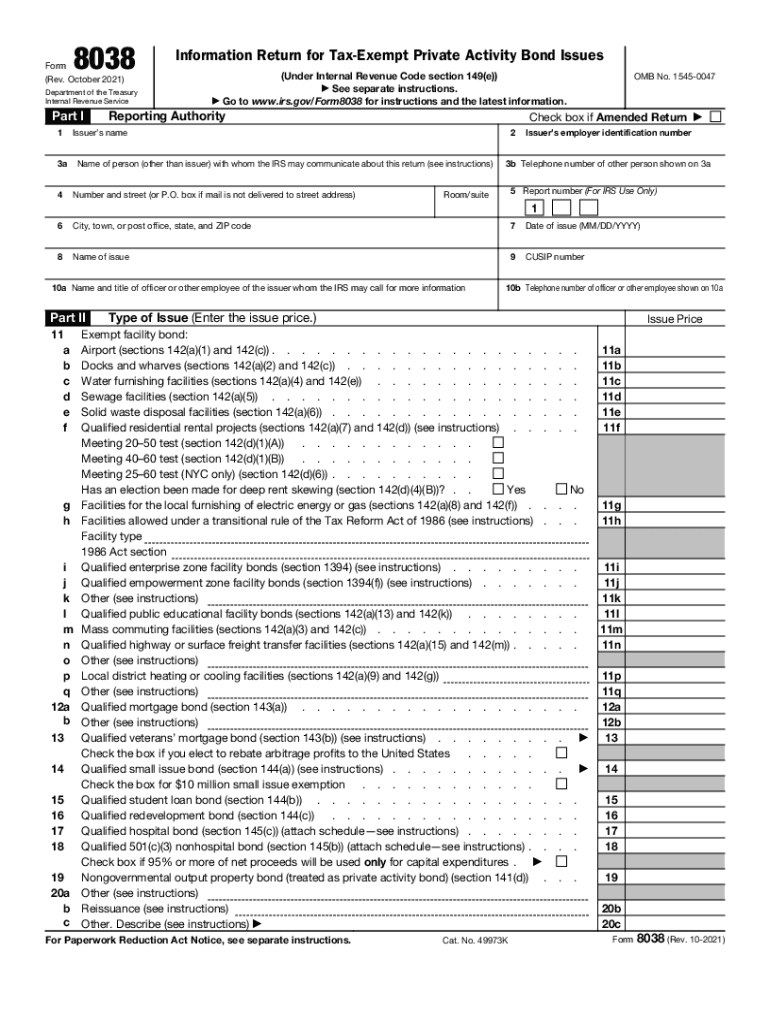
Form 8038, officially known as "Form 8038 (Rev October 2021) Information Return for Tax-Exempt Private Activity Bond Issues," is an essential document for reporting tax-exempt private activity bonds to the Internal Revenue Service (IRS). This form is crucial for entities that issue tax-exempt bonds, which are typically used to finance qualified projects in areas such as housing, education, and infrastructure. By filling out and submitting Form 8038, issuers ensure compliance with federal tax regulations and provide necessary information regarding the nature and volume of bonds issued.
Importance in the Tax Ecosystem
- Regulation Compliance: Ensures issuers adhere to the regulatory framework of the IRS.
- Information Provision: Delivers comprehensive data about bond issuance, aiding transparency.
- Tax-Exemption Status: Crucial for maintaining the tax-exempt status of bonds, fostering economic development projects.
How to Use the Form 8038
Issuers of tax-exempt bonds use Form 8038 to report in-depth details about their bonds to the IRS. It's essential to provide accurate information to avoid complications or penalties.
Step-by-Step Usage
- Gather Necessary Information: Collect all relevant data, including issuer and issue details.
- Complete Required Sections: Fill out parts of the form pertaining to issuer information, bond details, use of proceeds, etc.
- Review for Accuracy: Double-check that all entered data is correct to prevent issues during IRS processing.
Common Uses
- Reporting Bond Issues: Used by state and local government entities to report private activity and governmental bonds.
- Maintaining Compliance: Helps maintain adherence to the Internal Revenue Code by documenting tax-exempt bond details.
Steps to Complete the Form 8038
Completing the Form 8038 requires attention to detail and precision, given the complexity and significance of the information involved.
Detailed Steps
- Issuer Information: Input the issuer's name, address, and EIN. Ensure this information is current and accurate.
- Bond Description: Provide specifics such as the issue date, issuance amount, and type of bond.
- Proceeds Use: Detail how the bond proceeds will be utilized. It's vital to articulate their application in qualified projects.
- Verification: Certify the form with the issuer's authorized signature, confirming the validity of the entered information.
Tips for Accuracy
- Cross-Verifying Data: Use secondary sources to verify financial figures and ensure data consistency.
- Consulting with Experts: Engage with tax professionals if the form's requirements or terminologies are unclear.
Key Elements of the Form 8038
The form contains multiple sections designed to capture a wide array of details about bond issuance. Understanding these key components is fundamental for accurate filing.
Essential Sections
- Issuer Details: Covers the entity's name, identification data, and contact information.
- Bond Characteristics: Includes type, volume, and interest particulars.
- Proceeds Utilization: Describes how the funds will be directed, aligned with tax-exemption qualifications.
Subsections for Clarity
- Part II - Bond Issue Description: Detailed insights into the bonds being reported.
- Part III - Use of Proceeds: Narrates intended use and safeguards tax-exempt status through accurate usage documentation.
Important Terms Related to Form 8038
To correctly navigate Form 8038, there are several technical terms and definitions that are crucial for understanding.
Key Terminology
- Private Activity Bond (PAB): A type of bond that's used for private ventures but offers public benefit.
- Tax-Exempt Status: The classification that allows bonds to offer tax-free interest earnings.
- Issuance Date: The official date when the bond is issued and becomes effective.
Contextual Understanding
Understanding these terms and their implications helps ensure the form is filled with precision, safeguarding against misreporting.
Filing Deadlines / Important Dates
Timeliness in submitting Form 8038 is critical to prevent penalties and ensure the continued tax-exempt status of bonds.
Deadlines Overview
- Initial Filing: Typically required within a specified period following the bond's issuance.
- Annual Submissions: Adherence to IRS deadlines ensures compliance and avoids potential audits or sanctions.
Consequences for Late Filing
- Penalties: Failure to file on time may impede the tax-exempt status and result in financial penalties.
- Rectification Steps: Recognize the available remedies for late filing, such as extensions or amendments.
Who Typically Uses the Form 8038
Form 8038 caters to a specific group of users, primarily those in governmental and private sectors engaged in issuing bonds.


Key Users
- State and Local Governments: The primary issuers of tax-exempt bonds for public welfare projects.
- Nonprofit Organizations: Engage in issuing bonds for facilities like hospitals, schools, and housing.
Scenario-Based Examples
- Municipal Projects: Cities utilize bonds to finance infrastructure like roads and bridges.
- Educational Institutions: Universities may issue bonds to expand facilities, enhancing educational resources.
Penalties for Non-Compliance
Non-compliance with IRS regulations concerning Form 8038 can lead to severe repercussions for bond issuers.
Types of Penalties
- Monetary Fines: Financial repercussions scale with the severity and frequency of non-compliance.
- Legal Consequences: Persistent violations may lead to audits and potential legal action.
Mitigation Strategies
- Proactive Compliance: Regular checks and balances to ensure the form's timely and accurate submission.
- Consulting Professionals: Engage legal or tax advisors to navigate complex compliance landscapes effectively.