




01. Edit your california id renewal online
Type text, add images, blackout confidential details, add comments, highlights and more.

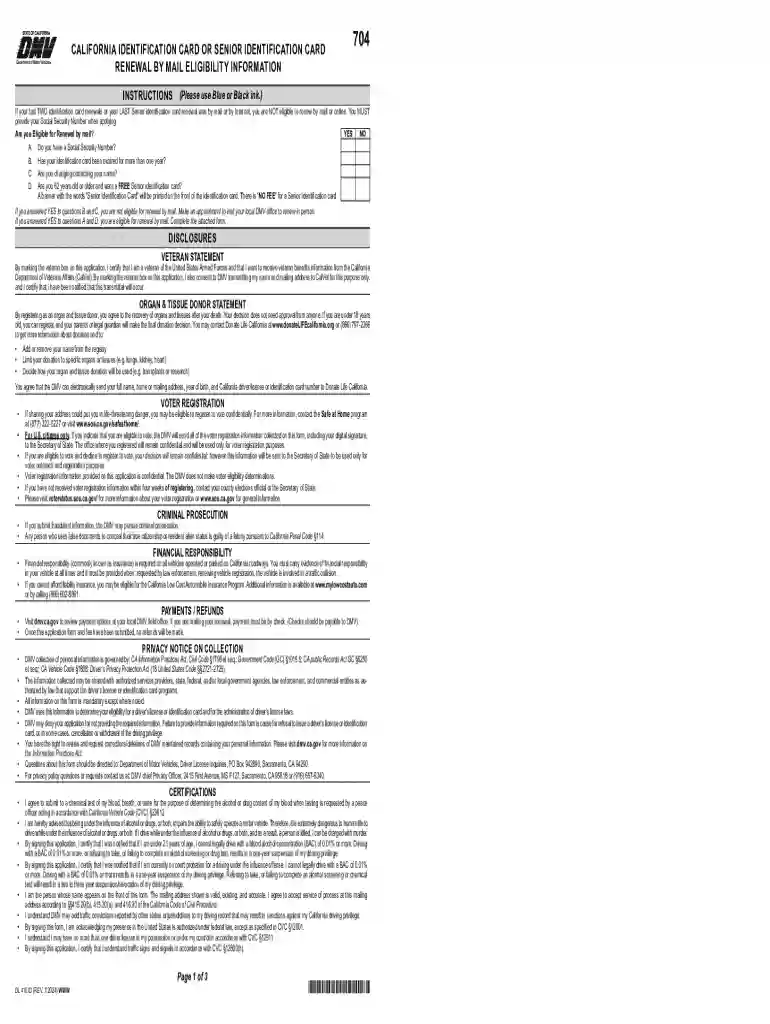
Type text, add images, blackout confidential details, add comments, highlights and more.

Draw your signature, type it, upload its image, or use your mobile device as a signature pad.

Send renew california id online via email, link, or fax. You can also download it, export it or print it out.
A California Identification (ID) Card serves as an official form of personal identification for residents who do not possess a driver's license. It provides a reliable means of verifying identity and age in various situations, such as accessing government services, verifying identity at airports, or opening bank accounts. Issued by the California Department of Motor Vehicles (DMV), the ID card is available to all California residents, regardless of age.
To apply for a California Identification Card, specific documentation is necessary to verify identity, residency, and legal presence in the United States. Applicants must provide:
Additional documentation may be required for applicants under 18 or for those who have recently changed their name. It is crucial to ensure that all documents are current and contain no discrepancies, as this can delay the application process.
Eligibility to apply for a California ID Card requires meeting specific conditions:
Exceptions exist for those who wish to hold both, such as seniors or individuals who may require an ID for non-driving purposes.


Applying for a California ID Card involves several steps to ensure all requirements are met:
Applicants should receive their California ID Card by mail within 60 days.
The California ID Card application can be submitted through various methods, providing flexibility to suit different needs:
Each method has distinct advantages and should be chosen based on the applicant's convenience and circumstances.
The application process for a California ID Card requires precise adherence to requirements for smooth approval. On average, the appointment and processing take around an hour. Applicants can expect:
Attention to detail in preliminary steps can significantly reduce approval times and potential setbacks.
California has specific rules and regulations for ID Card issuance:
These state-specific provisions ensure the ID card meets the unique regulatory standards of California, supporting identification accuracy and legal compliance.
The application form for a California ID Card consists of several key sections designed to capture all necessary personal and legal details:
Thoroughly completing each section is essential to avoid delays and ensure the application is processed efficiently.
While the California ID Card process has specific regulations, it is important to understand how it might differ from processes in other states:
Knowing these differences can assist individuals moving to or from California in understanding new regulatory requirements.
The California ID Card holds significant legal value as an official identification document:
Careful handling and timely renewal of the ID card ensure uninterrupted access to these critical services and functions.
We've got more versions of the california id renewal form. Select the right california id renewal version from the list and start editing it straight away!
At DocHub, your data security is our priority. We follow HIPAA, SOC2, GDPR, and other standards, so you can work on your documents with confidence.
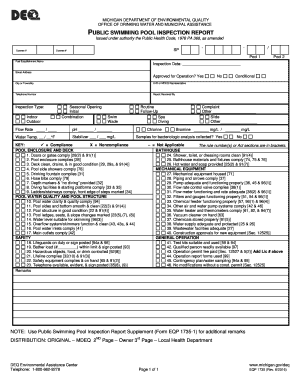


The online drivers license and ID card application saves you time by letting you complete the application before visiting a DMV field office.
Complete the California State ID online application schedule an appointment with the Department of Motor Vehicles (DMV) Santa Monica Office.


