







Definition & Meaning
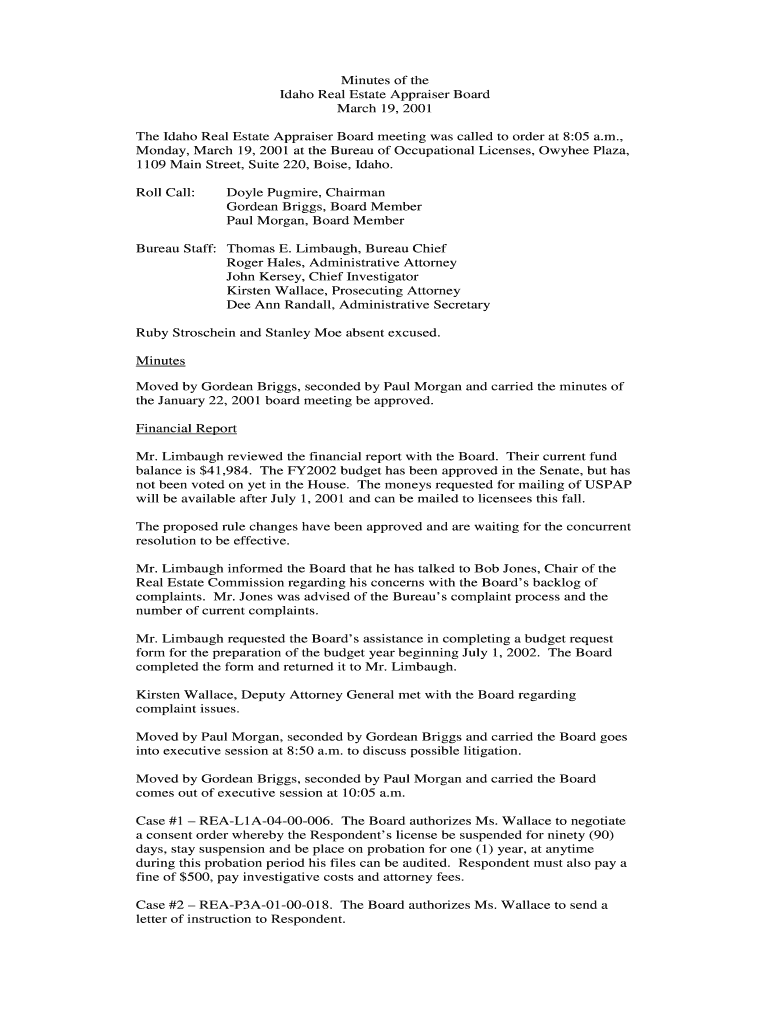
The "Minutes of the Idaho Real Estate Appraiser Board March 19, 2001" document serves as the official record of the discussions and decisions made during the board meeting on that date. These minutes detail various topics relevant to the Idaho real estate appraisal industry, including financial planning, complaint resolutions, rule proposals, and educational course approvals. As an official record, the minutes provide transparency and accountability for decisions affecting the appraiser community in Idaho.
Key Elements of the Minutes
The minutes document several crucial elements covered in the March 19, 2001, meeting:
- Financial Reports: Detailed examination and approval of the fiscal year 2002 budget request were discussed, reflecting the board's financial planning and resource allocation.
- Complaint Resolution: Addressing a backlog of complaints was a priority, including negotiation of consent orders for potential license suspensions and fines.
- Rule Changes: Any proposed rule changes impacting appraiser licensing and practice were deliberated for future implementation.
- Continuing Education: The approval of several continuing education courses, vital for maintaining licensure, was conducted.
- License Applications: Review and decision on appraiser license applications, ensuring adherence to state requirements.
- Reciprocity Agreements: Discussions with Oregon and Nevada regarding reciprocal agreements for appraiser licensure.
Importance of the Minutes
The minutes are essential for several reasons:
- Documentation: They preserve a detailed account of the board's activities and decisions, serving as a historical record.
- Compliance: Ensure that decisions align with state regulations and professional standards.
- Transparency: Provides industry stakeholders with insight into board operations and decision-making processes.
- Follow-up: Sets the agenda for future meetings and action items requiring further attention.
How to Use the Minutes
Practitioners and stakeholders can utilize the minutes in various ways:
- Verify Decisions: Review and confirm board decisions related to rules, complaints, and licensing matters.
- Educational Reference: Serve as a learning tool for new appraisers to understand regulatory processes and industry standards.
- Compliance and Audit: Act as a reference for auditing and ensuring compliance with established protocols and regulations.
How to Obtain the Minutes
To access the minutes from the Idaho Real Estate Appraiser Board meeting held on March 19, 2001, consider the following options:
- Online Retrieval: Check the Idaho state government or relevant departmental websites, which may host archives of past meeting minutes.
- Direct Request: Contact the Idaho Real Estate Appraiser Board directly to request a copy via email or phone.
- Public Records: Utilize state-run public record services that maintain archives of governmental documents.
Legal Use of the Minutes
The minutes are legally used to:
- Support Regulatory Compliance: Verify adherence to state appraiser regulatory framework.
- Resolve Disputes: Serve as evidence in disputes related to board decisions or licensee actions.
- Inform Policy Changes: Help in understanding the rationale behind rule changes or policy implementations.
State-Specific Rules
Outlined within the minutes are Idaho-specific rules and protocols:
- Licensure Requirements: Ensures compliance with Idaho-specific education and examination standards for appraisers.
- Complaint Procedures: Details the processes set by Idaho statutes for handling and resolving complaints against appraisers.
- Rule Making Authority: Showcases the board’s authority and the statutory backing for proposed or amended rules.
Examples of Using the Minutes
Real-world applications of using these minutes include:
- Policy Makers: Using the minutes to draft or adjust appraiser-related legislation.
- Appraisers: Reference for understanding past decisions affecting their practice.
- Educational Institutions: Incorporate into curriculum for regulatory and compliance courses.
Digital vs. Paper Version
Differences and considerations when choosing between digital and paper formats:
- Accessibility: Digital versions are easier to distribute and access via email or online portals.
- Searchability: Digital formats allow for keyword searches, making information retrieval quicker.
- Preservation: Digital formats ensure long-term preservation without the risk of physical damage.




