







Definition & Meaning
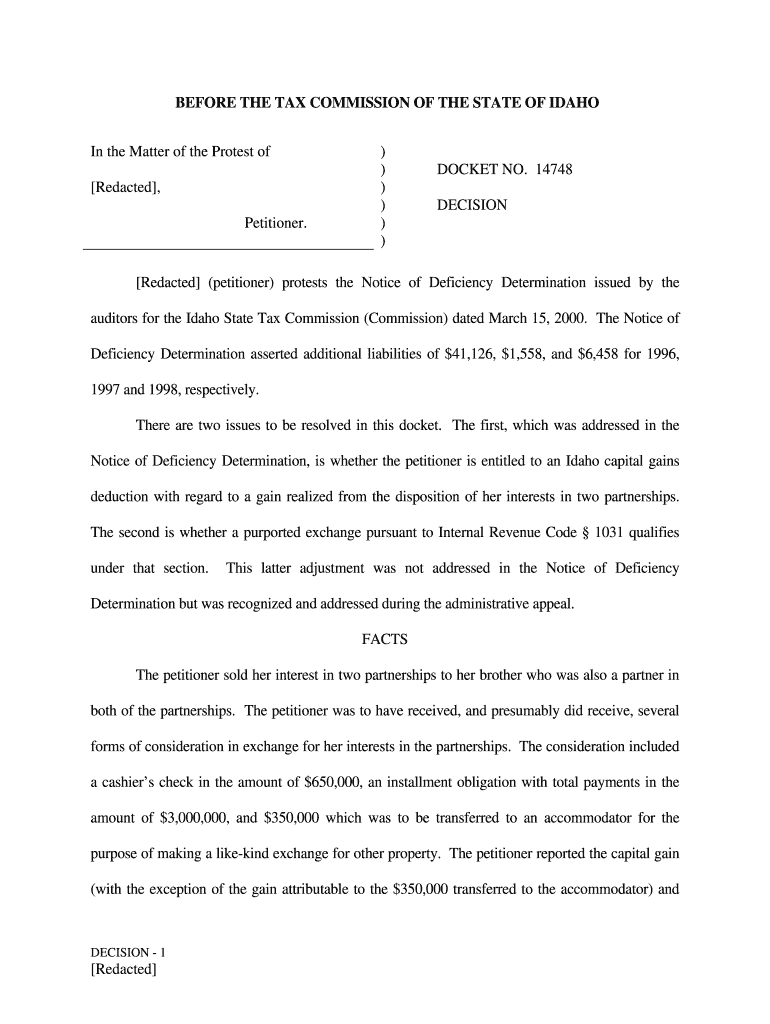
The "14748 DECISION Redacted (petitioner) protests the Notice of Deficiency Determination" is a formal document issued by a state tax authority, in this case, the Idaho State Tax Commission. It pertains to a tax assessment dispute where the petitioner challenges a deficiency notice related to prior tax years. This document typically includes the legal rationale for the protest, the specific tax years in question, and the financial implications of the dispute. It clarifies the positions of both the taxpayer and the tax authority, particularly regarding disallowed deductions or misapplied tax treatments, such as eligibility for capital gains deductions or like-kind exchange qualifications.
Steps to Complete the Form
-
Identify the Notice Details:
- Review the Notice of Deficiency Determination to pinpoint the tax items being contested, such as disallowed deductions or incorrect computations.
-
Preparation of Supporting Documentation:
- Gather all necessary financial records, transaction documents, and relevant tax returns for the years in question. This may include evidence of partnership interests and any documentation related to capital gains or like-kind exchanges.
-
Draft the Protest Letter:
- Draft a comprehensive protest letter outlining the points of contention with the Notice of Deficiency, referencing applicable tax laws and regulations, like Internal Revenue Code § 1031, if relevant.
-
Submission of the Protest:
- Submit the protest letter and documents to the appropriate tax authority before the prescribed deadline to ensure that your protest is considered timely and valid.
-
Await Response and Prepare for Hearings:
- After submission, be prepared for any requests for additional information or a hearing to discuss the issues presented in your protest.
Important Terms Related to the Form
- Notice of Deficiency Determination: A formal notification by a tax authority indicating that a taxpayer owes additional taxes.
- Capital Gains Deduction: A tax deduction applicable to profits from the sale of certain investment assets.
- Like-Kind Exchange: A tax-deferred exchange of similar properties often used in real estate transactions.
- Internal Revenue Code § 1031: A section of the tax code that outlines the criteria for qualifying like-kind exchanges.
- Intangible Assets: Non-physical assets such as patents, trademarks, and partnership interests, often significant in tax assessments.
Legal Use of the Form
The 14748 decision document operates within a legal framework, where it serves as an official protest and appeals mechanism for taxpayers disputing non-compliance or disagreement over tax assessments. The document must adhere to state and federal tax codes, comprising arguments that align with regulations such as IRC § 1031. It is essential to note that the legal precedents set within the document can impact future interpretations of similar cases.
Examples of Using the Form
-
Case Study: Disallowed Deductions:
- A taxpayer challenges the omission of a capital gains deduction related to partnership interests. The document outlines the reasoning for qualification, citing comparable transactions previously approved.
-
Scenario: Misclassification of Transactions:
- Disputes arise where like-kind exchanges were improperly classified, leading to unexpected tax liabilities. The protest document clarifies adherence to conditions under IRC § 1031.
State-Specific Rules for the Form
While this form addresses a decision by the Idaho State Tax Commission, it is pertinent to understand that each U.S. state may have distinctive rules regarding the protest of tax assessments. These include variations in deadlines, acceptable documentation, and submission procedures. Taxpayers in Idaho must adhere to the state’s specific appeal processes and mandates.
Filing Deadlines / Important Dates
Timeliness is critical when filing a protest against a tax deficiency notice. Taxpayers must file the protest letter, and accompanying documents by the deadline specified within the notice to avoid automatic acceptance of the deficiency determination. Missing deadlines could result in penalties or the forfeit of the right to refute the assessment.
Penalties for Non-Compliance
Failing to respond appropriately to a Notice of Deficiency Determination can lead to severe penalties, such as additional tax liabilities, accrued interest on unpaid taxes, and potential legal action. Non-compliance in addressing a deficiency determination may also impact a taxpayer’s credit rating and generate liens against property.
Software Compatibility (TurboTax, QuickBooks, etc.)
Those responding to a Notice of Deficiency may find it beneficial to use software like TurboTax or QuickBooks for precise record-keeping, financial analysis, and the preparation of supporting documentation. These tools aid in compiling comprehensive financial records to augment a protest in response to a tax authority's notice.




