
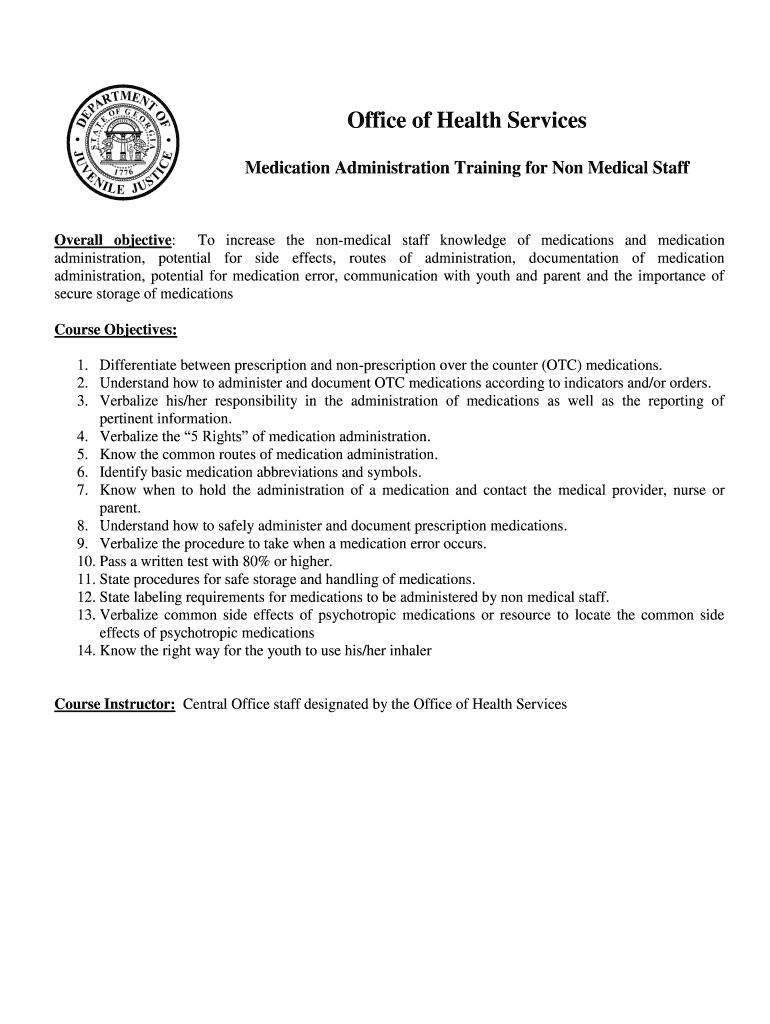







Definition & Purpose of Medication Administration Training for Non-Medical Staff
Medication Administration Training for Non-Medical Staff is an essential program aimed at equipping non-medical personnel with the fundamental skills and knowledge required to safely administer medications. This training focuses on increasing staff competence in differentiating between types of medications, understanding potential side effects, and ensuring safe medication handling and administration practices. By teaching non-medical staff the '5 Rights' of medication administration—right patient, right medication, right dose, right time, and right route—this program plays a crucial role in minimizing medication errors and enhancing patient safety.
Key Elements of the Training Program
The Medication Administration Training program encompasses several core components designed to ensure comprehensive understanding and skill development among participants. Key elements include:
- Different Types of Medications: Participants learn to distinguish between prescription and over-the-counter (OTC) medications and gain insights into the administration of more complex medications like controlled substances and psychotropics.
- Documentation Requirements: Accurate record-keeping is emphasized, ensuring that all medication administration activities are logged properly, which is crucial for legal compliance and patient care continuity.
- Communication Skills: Effective communication strategies are taught to ensure that instructions are clearly conveyed and understood, reducing the risk of errors due to miscommunication.
Steps to Complete the Training
- Enrollment: Interested individuals must enroll in a certified Medication Administration Training program. Enrollment requirements may vary, including prior experience or basic medical knowledge.
- Completion of Coursework: Participants will engage in both theoretical and practical coursework. This includes lectures, hands-on practice, and potentially online modules covering the training's key components.
- Assessment: Upon course completion, participants undergo an assessment to evaluate their understanding and ability to safely administer medications.
- Certification: Successful completion of the assessment results in certification, a credential validating the individual’s ability to safely conduct medication administration.
Why Is This Training Important?
Medication Administration Training is critically important for several reasons:
- Enhanced Patient Safety: Proper training significantly reduces medication errors, thereby enhancing patient safety and care quality.
- Compliance with Legal Standards: This training ensures that facilities comply with legal and regulatory standards pertaining to medication administration by non-medical staff.
- Increased Confidence and Competence: Trainees gain the confidence and competence needed to perform medication administration tasks, which is essential in various healthcare and caregiving settings.
Who Typically Uses This Training?
The training is typically utilized by a diverse range of non-medical staff members, including:
- Care Aides and Support Workers: Those working in assisted living facilities, nursing homes, or residential care settings.
- School Personnel: Staff at educational institutions responsible for administering medications to students.
- Home Care Providers: Individuals providing in-home care services who need to manage and administer client medications safely.
Legal Use and Compliance Considerations
Understanding the legal implications of medication administration is key:
- State Regulations: Each state may have specific regulations regarding who can administer medications and under what conditions, making it essential for staff to be educated according to their local laws.
- Documentation: Proper documentation is legally required to protect both the patient and the staff administering medication. This training program provides detailed guidance on how to meet these documentation standards.
State-Specific Rules and Requirements
State-specific guidelines play a significant role in the administration of this training:
- Varied Content: While core skills remain consistent, the program may adjust certain content based on state laws. This might include additional focuses on state-approved medication documentation methods or particular legal requirements unique to a region.
- Certification Variations: The type of certification required and the governing body issuing it can differ from one state to another.
Important Terminology Related to Medication Administration
The training introduces important terminologies that are essential for understanding and effectively communicating within healthcare settings:
- Pharmacokinetics and Pharmacodynamics: Basic understanding of how drugs work and their effects on the body.
- Contraindications: Situations where certain medications should not be used due to the potential for harm.
Addressing these factors ensures that non-medical staff are well-equipped and informed about the critical aspects of medication administration both within their specific context and more broadly within the United States.




