






Definition & Meaning
The "Archaeological Survey of Three Areas of Fort Myer" refers to the systematic examination and evaluation of three distinct land parcels within Fort Myer. These surveys aim to assess the archaeological and historical significance of specific sites by documenting evidence of past human activity and determining their eligibility for inclusion in the National Register of Historic Places (NRHP).
Key Elements of the Archaeological Survey
Conducting an archaeological survey involves several key elements, including:
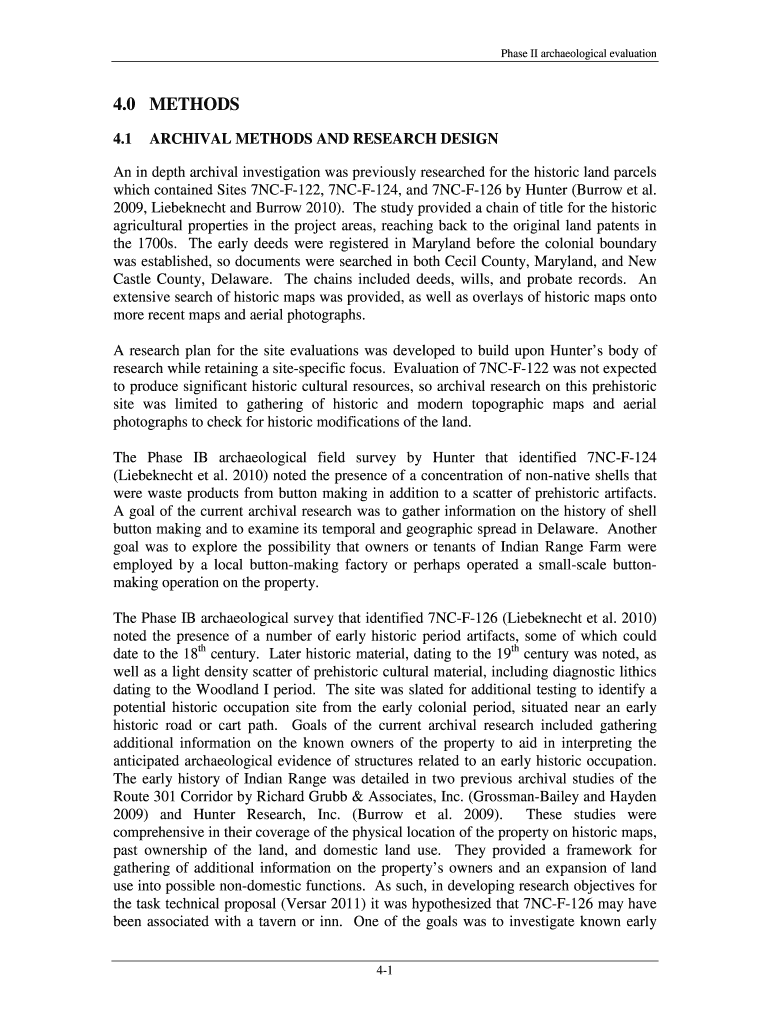
- Archival Research: Reviewing historical documents, maps, and previous studies related to land ownership and cultural resources to gain background knowledge.
- Field Methods: Employing techniques such as systematic shovel testing, geophysical surveys, and site mapping to collect data from the field.
- Laboratory Analysis: Analyzing collected artifacts to understand their context, origin, and significance, further informing about past human activities.
These elements collectively ensure a comprehensive evaluation of each site's archaeological and historical importance.
Steps to Complete the Archaeological Survey
Executing an archaeological survey follows a multi-step process:
- Pre-Survey Research: Conduct thorough archival research to understand previous findings and historical context.
- Field Work Preparation: Organize necessary equipment and personnel for onsite examination, ensuring compliance with safety and legal requirements.
- Field Investigation: Perform systematic testing and surveys to gather physical evidence from each site, documenting findings in detail.
- Post-Survey Analysis: Conduct laboratory analysis of collected artifacts to draw conclusions about the sites' historical significance.
- Final Report: Compile a comprehensive report outlining findings, interpretations, and recommendations for NRHP eligibility.
Why Conduct an Archaeological Survey of Fort Myer
Conducting this survey is pivotal for several reasons:
- Preservation: Identifying and protecting historically significant sites to ensure the preservation of cultural heritage.
- Research Contribution: Enhancing our understanding of historical and cultural contexts, providing data for further academic research.
- Development Assessment: Informing decisions related to land development, ensuring culturally sensitive planning and construction activities.
How to Obtain the Archaeological Survey
To access the results of the "Archaeological Survey of Three Areas of Fort Myer", interested parties should contact the relevant heritage and preservation offices or agencies responsible for Fort Myer. These offices can provide public access to findings and offer guidance on how to interpret the results.
Legal Use of the Archaeological Survey
The survey results must be used in compliance with legal guidelines related to historical preservation and land use:
- Historical Conservation Laws: Ensures findings are used to protect sites from unauthorized alterations or destruction.
- Land Use Regulations: Informing local and federal agencies about areas that may require conservation over development.
These legal considerations are crucial for maintaining the integrity and preservation of archaeological sites.
Important Terms Related to the Survey
Understanding the context of the survey may involve several important terms:
- Cultural Resources: Items, locations, or structures of historical or cultural significance.
- NRHP Eligibility: Criteria used to determine if a site can be listed in the National Register of Historic Places.
- Systematic Shovel Testing: Methodical excavation technique used to assess site content and distribution of artifacts.
Familiarity with these terms aids in comprehending the survey's scope and relevance.
Who Typically Uses the Archaeological Survey
The survey is typically utilized by:
- Historians and Archaeologists: Individuals researching historical patterns and cultural developments.
- Government Agencies: Departments responsible for heritage conservation and urban planning.
- Developers and Planners: Professionals involved in infrastructure projects to ensure compliance with preservation standards.


Examples of Using the Archaeological Survey
Practical applications of the survey include:
- Urban Development Planning: Integrating findings into city expansion plans to avoid compromising significant sites.
- Educational Programs: Utilizing data in academic settings to teach about local history and archaeological methods.
- Heritage Tourism: Developing heritage trails or informational exhibits that emphasize the site's historical importance.
These uses underscore the survey's multifaceted role in both academic and practical domains.