Definition & Meaning
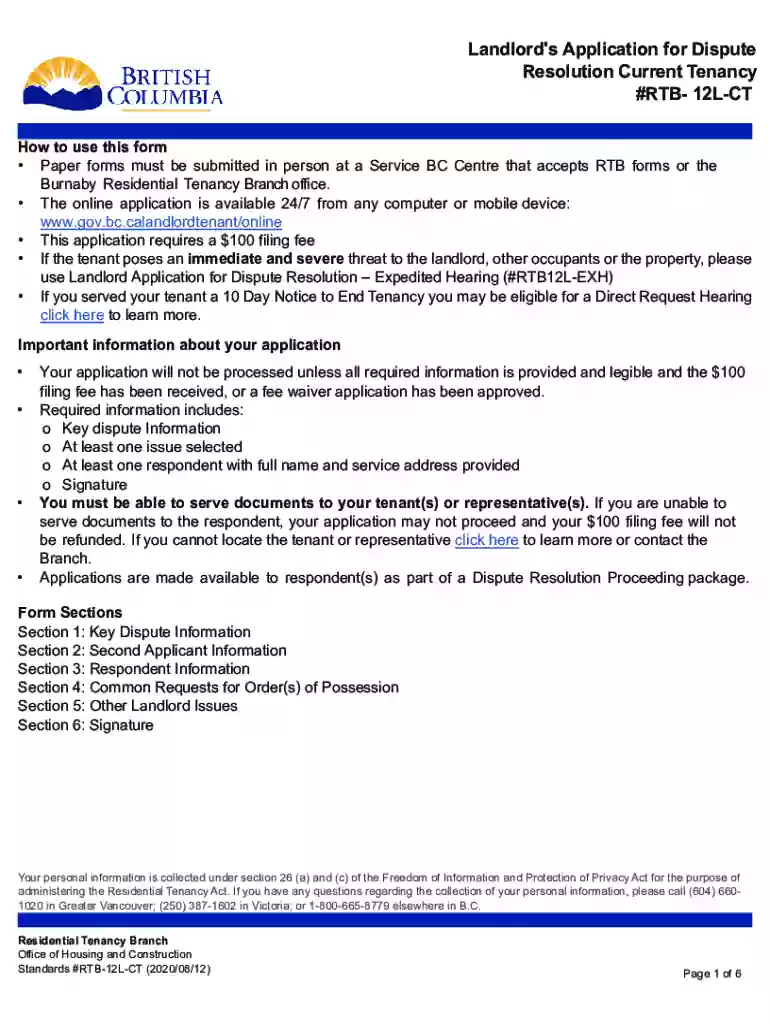
The "Landlord's Application for Dispute Resolution Current" is a formal document utilized by landlords to initiate a legal process to resolve disputes related to current tenancies in British Columbia. This application is essential for landlords who are involved in disagreements with tenants over various issues such as lease terms, rent payments, property damages, or eviction notices. By submitting this application, landlords can seek a structured and impartial review of their dispute through a legal framework designed to facilitate fair resolutions.
Key Components
- Applicant Details: Information about the landlord filing the application.
- Respondent Details: Tenant or party against whom the dispute is filed.
- Dispute Information: Specifics about the nature of the conflict.
- Requested Orders: What the landlord is seeking, such as possession or payment.
- Declarations: An affirmation of the truthfulness of the information provided.
How to Use the Landlord's Application for Dispute Resolution Current
To effectively use the application, a landlord must follow a series of structured steps. Each step is crucial in ensuring that the process is carried out efficiently and legally.
Step-by-Step Guide
- Gather Necessary Information: Collect details related to the tenancy agreement, including contact information for the tenant and any documentation that supports the landlord's claims.
- Complete the Application: Fill out each section of the form accurately, ensuring that all required fields such as personal information, dispute details, and requests for orders are completed.
- Review for Completeness: Double-check the application for any missing information or errors. Incomplete applications can result in delays or rejections.
- Submit the Form: Choose a submission method - online, mail, or in-person - and ensure that the application is sent with any required fees.
Common Use Cases
- Rent Arrears: When tenants fail to pay rent on time.
- Property Damage: Disputes arising from damages beyond normal wear and tear.
- Lease Violations: Issues such as unauthorized pets or subletting.
Steps to Complete the Landlord's Application for Dispute Resolution Current
Completing the form requires careful attention to detail and an understanding of the procedural requirements.
Detailed Instructions
- Applicant and Respondent Information: Provide full names, addresses, and contact information.
- Dispute Details: Clearly describe the issue, including dates, amounts, and any pertinent agreements.
- Requests for Orders: Specify what outcomes you are seeking, such as compensation or eviction.
- Supporting Documents: Attach any relevant documents that back your claims, like lease agreements or photographs.
- Read and Sign: Carefully read the declarations section and sign to affirm the accuracy of the provided information.
Important Tips
- Ensure all documentation is legible and well-organized.
- Double-check for any additional state-specific requirements that might be necessary.
Required Documents
To successfully submit the Landlord’s Application, certain documents are typically required to support the claims being made.
Essential Documentation
- Lease Agreement: Proof of the rental terms and conditions.
- Payment Records: Evidence of rent payments or arrears.
- Correspondence: Any communication that is pertinent to the dispute.
- Photographic Evidence: Pictures that document damages or breaches.
Why These Documents Matter
These documents provide the factual basis for the dispute, allowing the reviewer to evaluate the claims accurately and make a fair decision.
Legal Use of the Landlord's Application for Dispute Resolution Current
Understanding the legal framework underpinning this application is vital for its effective use.
Governing Laws
- Residential Tenancy Act: The legal basis for tenant and landlord rights in British Columbia.
- Landlord and Tenant Board Decisions: Precedents from previous rulings which can guide expectations.
Common Legal Scenarios
- Disputes over eviction notices where a tenant claims unlawful eviction.
- Cases involving unfulfilled maintenance obligations by either party.
Key Elements of the Landlord's Application for Dispute Resolution Current
Several crucial elements must be accurately represented to validate the application.
Core Components
- Applicant Information: Proper identification of the landlord.
- Dispute Details and Claims: Accurate description and quantification of the dispute.
- Signatures and Declarations: Confirmation of the truthfulness of the information.
Importance of Complete Submission
Submitting a thorough and accurate application helps prevent delays and enhances the likelihood of a favorable resolution.
State-Specific Rules for the Landlord's Application for Dispute Resolution Current
While the general structure of the application is standardized, certain state-specific nuances must be considered.
British Columbia Regulations
- Notice Requirements: Specific periods for serving notices to tenants.
- Tenant Rights: Unique protections afforded to tenants under provincial law.
How They Impact the Application Process
Understanding these regulations ensures compliance and helps protect against claims of improper procedure by the tenant.
Examples of Using the Landlord's Application for Dispute Resolution Current
Illustrating real-world applications can help elucidate the process.
Case Study Examples
- Late Rent Payment: A landlord uses the form to request arrears and legal possession due to consistent payment delays.
- Unauthorized Alterations: A tenant makes substantial alterations without approval, and the landlord seeks restoration to the original state.
Learning from Past Cases
Each example demonstrates different utilization strategies, offering insight into best practices and potential pitfalls.
Application Process & Approval Time
Understanding the timeline and procedural flow is critical for managing expectations.
Typical Process Flow
- Submission: Initial filing with all necessary documents.
- Review and Scheduling: Application is reviewed, and a hearing date is scheduled.
- Decision: A ruling is made based on the documentation and case assessment.
Expected Timeline
- Initial Review: Generally takes two to three weeks.
- Hearing Date: Typically set within one to two months, depending on caseload.
Factors Affecting Timing
- Complexity of the dispute and completeness of the documentation impact processing speed.
Versions or Alternatives to the Landlord's Application for Dispute Resolution Current
Exploring different forms or similar applications can offer flexibility.
Related Forms
- Tenant's Application for Dispute Resolution: If the tenant wishes to initiate the process.
- Alternative Dispute Resolution Methods: Mediation or arbitration as other means of settling disputes.
When to Use Alternatives
In situations where a mutual resolution is possible, or when the landlord prefers avoiding formal hearings.
Penalties for Non-Compliance
Failure to adhere to application requirements can lead to significant consequences.
Potential Outcomes
- Application Rejection: Due to incomplete or inaccurate submissions.
- Legal Penalties: If the landlord is found to be non-compliant with residential tenancy laws.
Avoiding Penalties
Ensure all submissions are accurate, complete, and timely, aligning efforts with legal standards and guidelines.