Definition & Meaning
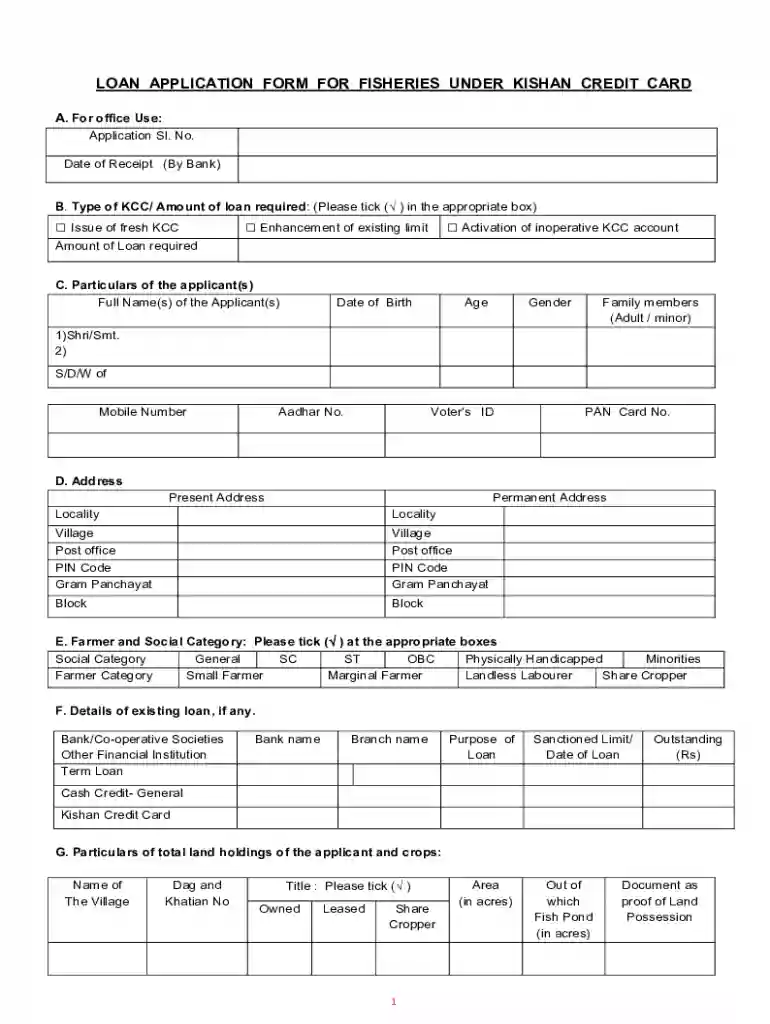
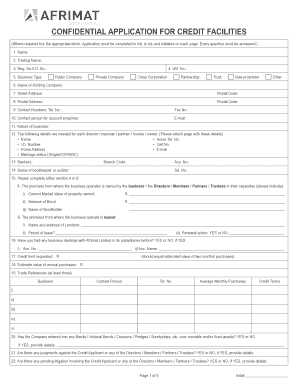
The loan application form for agricultural credit is a specialized document designed to facilitate agricultural loans for farmers and agribusinesses. It collects critical information about the applicant's personal details, financial status, farm operations, and credit needs. Primarily, this form serves to streamline the process by which financial institutions assess the risk and determine the eligibility of applicants for agricultural credit.
These forms are integral in providing financial assistance to the agricultural sector, enabling farmers to invest in essential farming activities such as buying seeds, equipment, or livestock. By consolidating detailed information into one document, both applicants and lenders can effectively communicate and align on the financial needs and the capacity to repay the loan within specified terms.
Key Elements of the Loan Application Form for Agricultural Credit
Agricultural loan application forms typically include several critical components to ensure comprehensive data collection.
- Applicant Information: This section captures personal details such as name, address, contact information, and social security number, providing a baseline for identity verification.
- Farm Details: It includes the type and size of the farm, crops or livestock produced, and geographic location to assess the agricultural operations.
- Financial Information: Applicants must disclose current debts, income sources, and previous loan history, offering a financial overview for risk assessment.
- Loan Details: Specification of the loan amount applied for, intended use of the funds, and proposed repayment schedule are essential for aligning the expectations of both parties.
- Collateral Offered: Information about assets that can be used as security for the loan ensures that lenders have a fallback in case of default.
- Signature and Declaration: A section typically ends the application, where the applicant declares the information's accuracy and agrees to the terms and conditions.
Steps to Complete the Loan Application Form for Agricultural Credit
Completing an agricultural credit application form can seem daunting, but following a step-by-step process can ease the process.
- Gather Necessary Documents: Before you begin, ensure you have all required documentation, including identification, financial records, and farm operation details.
- Fill Out Personal and Farm Information: Accurately enter your contact details and specific information about your farm and its operations.
- Detail Financial Information: Provide truthful and comprehensive data regarding your financial situation, including income, debts, and assets.
- Specify Loan Requirements: Clearly state the amount you wish to borrow and outline how these funds will be used within your agricultural activities.
- Review and Sign: Double-check all information for accuracy, then sign and date the document affirming your agreement with the stated terms.
- Submit the Form: Submit the completed form through the preferred channel, whether in-person at a bank, via postal mail, or electronically, if available.
Required Documents
To ensure a comprehensive evaluation, applicants usually need to submit various documents alongside their loan application form:
- Proof of Identity: Government-issued ID or social security number.
- Financial Statements: Recent bank statements, income tax returns, or financial records of the farm.
- Farm Ownership Papers: Proof of land ownership or lease agreements.
- Existing Debt Documents: Information about any current loans or financial obligations.
- Business Plan: Often necessary for larger loans, detailing operational plans and financial projections.
Legal Use of the Loan Application Form for Agricultural Credit
The loan application form serves as a legal document that underscores the borrower’s intention to obtain financing and outlines the terms and conditions agreed upon. Compliance with legal guidelines is critical:
- Truthful Representation: It's imperative that applicants provide accurate information to avoid penalties or legal action.
- Disclosure Agreement: Signing the form typically involves consenting to terms of credit checks and information sharing with relevant financial bodies.
- Legal recourse: Both parties agree to outlined terms concerning defaults, repayments, and any resultant legal proceedings.
Application Process & Approval Time
Understanding the application process and expected timeline for approval is critical for effective planning.
- Initial Submission: Once submitted, the financial institution begins the preliminary review, which may include credit checks and financial analysis.
- Evaluation Phase: Lenders assess risk factors such as credit history, farm viability, and repayment ability.
- Approval and Offer: If approved, an offer letter detailing the loan terms is sent to the applicant.
- Acceptance and Disbursement: Upon agreement, the funds are disbursed based on the agreed schedule.
Typically, the process may range from a few weeks to over a month, depending on the complexity of the application and the efficiency of the lender.
State-Specific Rules for the Loan Application Form for Agricultural Credit
Agricultural credit applications can be influenced by state-specific regulations and policies.
- Local Land Use Regulations: Certain states have specific stipulations regarding the use of land that might affect loan stipulations.
- Subsidy Programs: States may offer subsidies or incentives that reduce loan costs or affect repayment plans.
- Environmental Guidelines: Particular agricultural practices governed by state laws can directly impact loan applications, especially for environmentally sensitive areas.
Software Compatibility
Users looking to digitally manage their loan application forms should consider compatibility with productivity software suites.
- Document Editing Software: Compatibility with popular software like Adobe Acrobat, Microsoft Word, and Google Docs can streamline filling out and submitting forms.
- Financial Software Integration: Systems like QuickBooks or TurboTax may facilitate easier import of financial data, enhancing the accuracy of the form.
- Cloud Storage Services: The capability to save and retrieve documents from services like Google Drive or Dropbox simplifies document management.
Form Submission Methods (Online / Mail / In-Person)
The method of submitting the loan application form can vary depending on the lender's capabilities and the applicant's preference.
- Online Submission: Many financial institutions offer online portals for quick and efficient electronic submission.
- Mail Submission: A traditional option where all completed documents are posted to the lender’s address.
- In-Person Delivery: Direct submission at a branch location may allow for immediate query resolution and confirmation of receipt.
Each method has its advantages, with online submissions offering speed, while in-person submissions might provide personalized attention to queries or concerns.