






Definition & Meaning
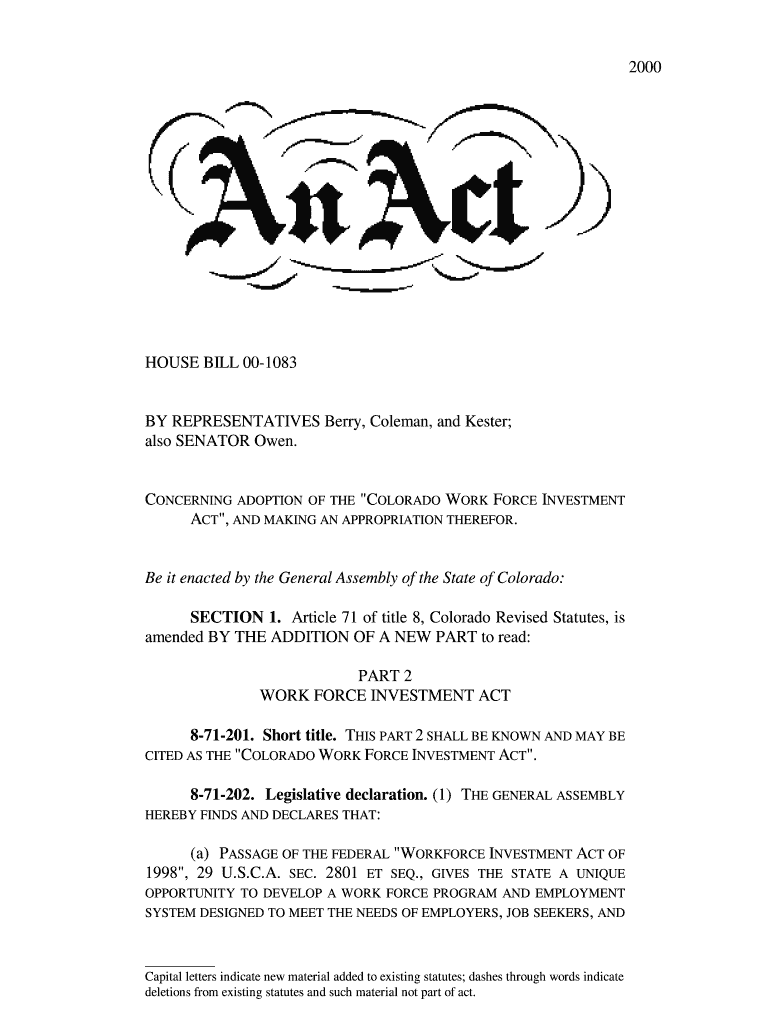
The "2000 House Bill 00-1083 by Representatives Berry" is a legislative act that establishes the Colorado Workforce Investment Act. This bill aligns state workforce programs with the federal Workforce Investment Act of 1998, emphasizing the importance of local control and flexibility. These aspects are crucial for catering to community-specific needs in workforce development, ensuring that training and employment programs are tailored effectively.
Key Elements of the 2000 House Bill 00-1083
This bill outlines several critical components:
- Workforce Investment Areas: Local governments are empowered to design and manage workforce programs.
- Investment Boards and Councils: These bodies are established to oversee workforce development initiatives, with clear membership requirements and roles.
- Funding Mechanisms: The bill details how workforce programs will be funded, supporting job training and employment services statewide.
Steps to Complete and Utilize the 2000 House Bill 00-1083
- Understand the Bill's Purpose and Provisions: Familiarize yourself with the act's objectives and how it integrates with existing programs.
- Identify Local Government Roles: Determine the responsibilities of your local workforce investment board.
- Engage with Community Members: Collaborate with local stakeholders to assess community workforce needs.
- Develop Workforce Programs: Create or adjust programs to align with bill requirements and community needs.
- Evaluate Program Effectiveness: Continuously assess the impact of programs to ensure objectives are met.
Who Typically Uses the 2000 House Bill 00-1083
- Local Government Officials: Responsible for implementing the bill's requirements and establishing workforce investment boards.
- Workforce Development Agencies: Utilize provisions to support and develop local training programs.
- Community Groups: Engage with local boards to communicate specific workforce needs and priorities.


Legal Use of the 2000 House Bill 00-1083
The bill serves as a legal framework for workforce development within Colorado. It allows local governments to manage their workforce programs with greater autonomy and ensures compliance with both state and federal requirements. This promotes efficiency and adaptability in addressing the unique job training needs of various communities.
State-Specific Rules for the 2000 House Bill 00-1083
- Autonomy in Program Design: Local areas have the flexibility to tailor programs to their economic and workforce needs.
- Membership Requirements: Investment boards must consist of representatives from both private and public sectors, forming a comprehensive approach to workforce development.
Examples of Using the 2000 House Bill 00-1083
- Rural Communities: A rural county might use the bill to develop programs focused on agricultural technology, addressing local workforce gaps.
- Urban Areas: A city could implement advanced manufacturing training under the legislation, responding to the higher demand in urban regions.
Business Types That Benefit Most from 2000 House Bill 00-1083
Businesses across various sectors can benefit, particularly those involved in:
- Manufacturing: Programs can enhance skilled labor availability.
- Information Technology: Training programs align with industry advancements, supporting local tech developments.
- Healthcare: Workforce initiatives can focus on increasing medical professionals in underserved areas.
Application Process & Approval Time
- Program Development: Local governments must outline workforce development plans for approval.
- Stakeholder Consultation: Engage with community entities to ensure comprehensive program development.
- Approval Process: Programs are reviewed by the appropriate state bodies to ensure alignment with the act's requirements and objectives.
Important Terminology Related to 2000 House Bill 00-1083
- Workforce Investment Board (WIB): A local body responsible for overseeing workforce development activities.
- Employment and Training Programs: Initiatives designed to enhance job readiness and skill acquisition.
- Local Control: The ability of municipalities to tailor solutions to their unique economic contexts.
Penalties for Non-Compliance
Failure to comply with the requirements of House Bill 00-1083 can result in:
- Loss of state funding for workforce programs.
- Increased scrutiny and potential sanctions against non-compliant local government entities.
- Delays in program implementation, negatively impacting community employment outcomes.