






Definition and Purpose
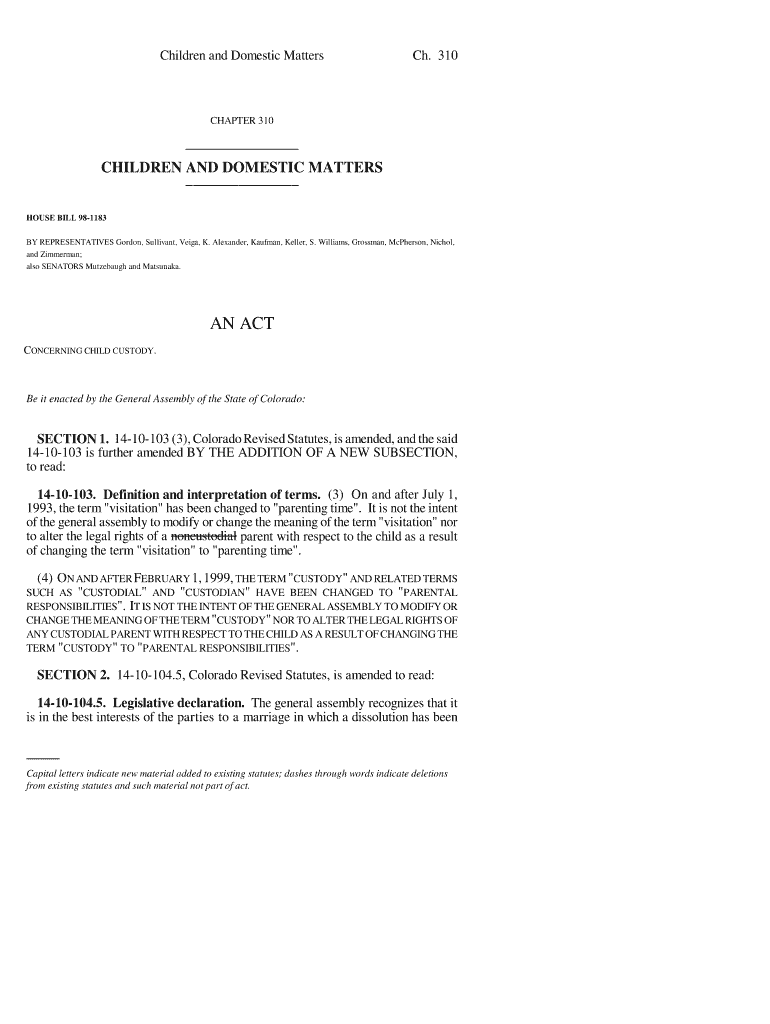
The "Children and Domestic Matters Ch - state co" refers to a set of legislative changes enacted by the State of Colorado, particularly through House Bill 98-1183. This bill revises terminology and guidelines concerning child custody and parental responsibilities. The principal aim of these provisions is to ensure that the best interests of the children are the primary focus in domestic cases involving custody and parenting time. By amending terms such as 'visitation' to 'parenting time,' the legislation reflects a more collaborative approach to post-divorce parental involvement, ensuring equitable contributions from both parents.
Steps to Complete the Form
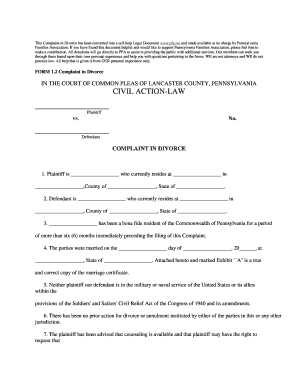
Completing the "Children and Domestic Matters Ch - state co" form involves several steps, primarily geared towards ensuring accurate documentation of parental responsibilities and custody agreements.
- Review Existing Legal Agreements: Start by reviewing any current custody or visitation paperwork to understand existing commitments and legal language.
- Identify Changes Needed: Consider any changes in circumstances that might necessitate adjustments to custody or parenting time, such as relocation, change in financial status, or the child's needs.
- Fill Out the Form Accurately: Use clear, precise language to fill out the form, ensuring all relevant details are included, such as the child's name, both parents' information, and the proposed changes.
- Attach Supporting Documents: Include any necessary documentation, such as financial statements, school reports, or other evidence supporting the proposed changes.
- Submission: Submit the form according to the state's filing procedures, which may include electronic submission, mailing, or direct filing at a local courthouse.
Important Terms Related to the Form
Understanding the terminology used in the "Children and Domestic Matters Ch - state co" can help in accurately completing the form and ensuring compliance with legal requirements.
- Parental Responsibilities: Refers to the rights and duties each parent has towards their child, previously termed as 'custody.'
- Parenting Time: The legally designated time a child spends with each parent, replacing the traditional term 'visitation.'
- Best Interests of the Child: A standard used to determine the most favorable arrangement for the child's well-being.
- Modification: The process of legally altering an existing custody or parenting time order.
Legal Use and Compliance
The legal framework surrounding the "Children and Domestic Matters Ch - state co" necessitates compliance to avoid potential legal complications. Adhering to this framework ensures that all variations or amendments to custody arrangements are legally recognized and enforceable.
- Ensure Accurate Representation: Misrepresenting information or failing to disclose significant changes can result in legal penalties or the invalidation of the agreement.
- Consult Legal Counsel: For complex cases, consulting with a family law attorney can ensure compliance and address any nuances in the legislation.
- Court Approval: Any changes proposed through this process typically require court approval to be legally binding.
Key Elements of the Form
The form encompasses several critical components that require careful attention to detail to ensure compliance and effectiveness.
- Child’s Information: Includes the full name, date of birth, and other identifying details of the child involved.
- Current Custody Arrangement: Documentation of existing agreements or court orders regarding parental responsibilities and parenting time.
- Proposed Changes: Detailed description of the desired changes to custody or parenting time arrangements, with justifications.
- Parental Information: Full details of both parents, including contact information and current custody status.
State-Specific Rules
The "Children and Domestic Matters Ch - state co" is governed by state-specific rules in Colorado, meaning nuances in the law should be understood to ensure proper adherence to legal standards.
- Colorado Parenting Guidelines: Provides the framework for determining and altering parental responsibilities, emphasizing the child's best interests.
- State Court Procedures: Understanding the filing processes and compliance with court deadlines is essential for a smooth legal process.
- Jurisdictional Requirements: Cases must be filed within the proper jurisdiction, often the county where the child resides.
Who Typically Uses the Form
The form is primarily utilized by parents involved in custody and parental responsibility cases within Colorado. It can also be employed by legal guardians or other parties acting in place of a parent.
- Divorced or Separated Parents: Those seeking to modify existing custody agreements post-divorce.
- Unmarried Parents: Individuals who need to establish or modify parenting arrangements.
- Guardians: Overseeing guardians may need to address the parental responsibility arrangements.


Examples of Using the Form
Several scenarios illustrate how the form might be beneficial in different circumstances:
- Relocation: A parent who needs to move to a different state may use the form to request changes in parenting time to accommodate the move.
- Change in Employment Status: A parent whose work schedule has changed could request an adjustment in parenting time.
- Child’s Academic Needs: If a child’s school schedule necessitates changes in parental care, the form can formalize these adjustments.
Penalties for Non-Compliance
Failure to adhere to the rules outlined in the form or state regulations may result in specific penalties:
- Legal Sanctions: Non-compliance can lead to contempt of court charges or other legal penalties.
- Loss of Custody Rights: Repeated violations or failure to adhere to agreed terms can lead to modifications in custody arrangements.
- Financial Penalties: Courts may impose fines for non-compliance or failure to fulfill parental responsibilities.
Form Submission Methods
The "Children and Domestic Matters Ch - state co" offers flexibility in how the form can be submitted to accommodate various preferences and needs.
- Online Submission: Many jurisdictions offer electronic filing systems that streamline the submission process.
- Mailing: Forms can be sent via certified mail to ensure receipt and tracking.
- In-Person Filing: Individuals can file directly with their local court to guarantee the immediate processing of their paperwork.