







Definition & Meaning
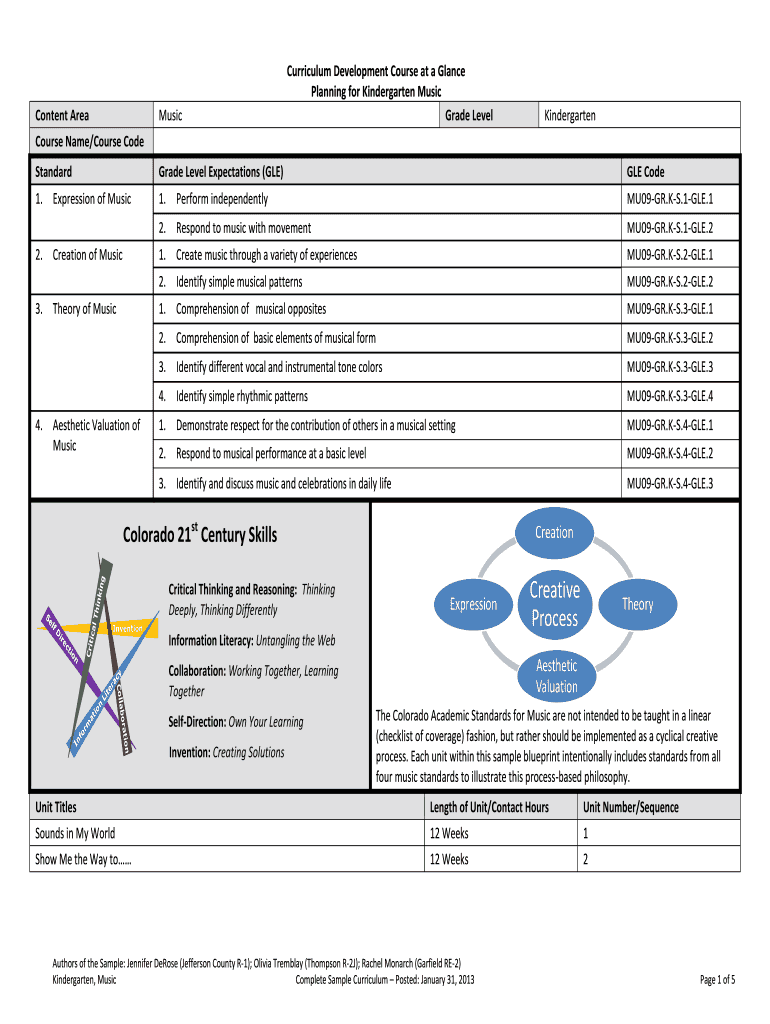
The "Planning for Kindergarten Music - cde state co" is a form utilized in the context of developing a structured music curriculum for kindergarten students. This document outlines the essential elements required to create a dynamic and engaging music education plan that aligns with state-level educational standards. It serves as a guide for educators to instill foundational musical skills, foster creativity, and cultivate an appreciation for music among young learners. The content outlined within the form directs instructors on how to effectively engage students with musical performance, understanding musical elements, composition, and movement.
Key Elements of the Planning for Kindergarten Music
This form covers several critical components vital for constructing a comprehensive kindergarten music curriculum:
- Grade-Level Expectations: It sets clear benchmarks for what students should achieve in their musical education by the end of the academic year.
- Core Units: It suggests essential units such as ‘Sounds in My World’ and ‘Show Me the Way to…’. Each unit spans approximately 12 weeks and focuses on different musical concepts.
- Musical Elements: The form emphasizes teaching rhythm, patterns, cultural influences, and music creation. These elements help children develop a better understanding of music theory and practice.
- Skill Development: Teachers are encouraged to help students learn important skills such as listening, performing, and creating music in a collaborative environment.
How to Use the Planning for Kindergarten Music
Utilizing this form requires a step-by-step approach to effectively implement the curriculum:
- Review Curriculum Standards: Begin by examining state educational standards to ensure alignment with broader educational goals.
- Identify Key Concepts: Use the form to pinpoint the main musical concepts and skills that need to be addressed within the classroom.
- Plan Instructional Units: Divide the academic year into units, basing themes on those recommended within the form.
- Design Assessments: Develop methods for evaluating student progress against the expectations set forth.
- Adapt and Customize: Adjust the curriculum plan to fit the specific needs and interests of your classroom environment.
Steps to Complete the Planning for Kindergarten Music
Completing the form involves several stages, each aiming to ensure a comprehensive music teaching plan:
- Gather Necessary Information: Collect all relevant educational standards and guidelines.
- Outline Learning Outcomes: Define what students should learn by the completion of each unit.
- Develop Specific Activities: Create daily or weekly activities that correspond with the learning outcomes.
- Incorporate Diverse Music Styles: Ensure a variety of music genres and cultures are included to enhance learning.
- Finalize and Review: Once the plan is complete, review it for completeness and alignment with educational standards.
Important Terms Related to Planning for Kindergarten Music
Understanding specific terminology improves the application of this form:
- Cylical Creative Process: A teaching approach that involves repeated exploration, creation, reflection, and iteration in music.
- Movement Response: Activities that combine physical movement with musical rhythms to reinforce student engagement and understanding.
- Performance Skills: Basic skills that students develop which involve singing, playing instruments, or other forms of musical expression.
Examples of Using the Planning for Kindergarten Music
Real-world examples illustrate how the form can be used:
- Example 1: A teacher may focus on cultural music, introducing students to traditional songs from around the world, while highlighting patterns and rhythms unique to each.
- Example 2: Another classroom might prioritize a project where students create their own simple musical instruments, encouraging creativity and a practical understanding of sound.
- Example 3: Utilizing group sing-alongs to promote collaboration, improve rhythm-keeping, and enhance memory recall are common practices.
Who Typically Uses the Planning for Kindergarten Music
The form is primarily designed for:
- Kindergarten Teachers: Educators responsible for implementing music education into their regular curriculum.
- Music Specialists: Individuals specializing in music education who might develop resources or supplemental activities for classrooms.
- Curriculum Planners: Educational planners who create or oversee the implementation of teaching plans across multiple classes or schools.


Who Issues the Form
Typically, this form is distributed by educational authorities or departments at the state level:
- State Department of Education: Offers guidelines and resources to district schools.
- School Administrators: Ensure teachers and music educators are equipped with the necessary forms and curriculum support.
- Educational Resource Providers: Companies or non-profits that produce educational materials focusing on music and arts.
Form Submission Methods
Educators often do not "submit" this form externally as it is an internal educational planning tool. However, the results or plans derived from it can be documented or shared through:
- Online Portfolios: Digital collection of teaching plans and student assessment documentation.
- Printed Curriculum Reports: Physical copies or booklets that outline the planned activities and learning outcomes for kindergarten music.
- Presentations: Used in professional development or school meetings to demonstrate planned curriculum activities and outcomes to parents or educational peers.




