
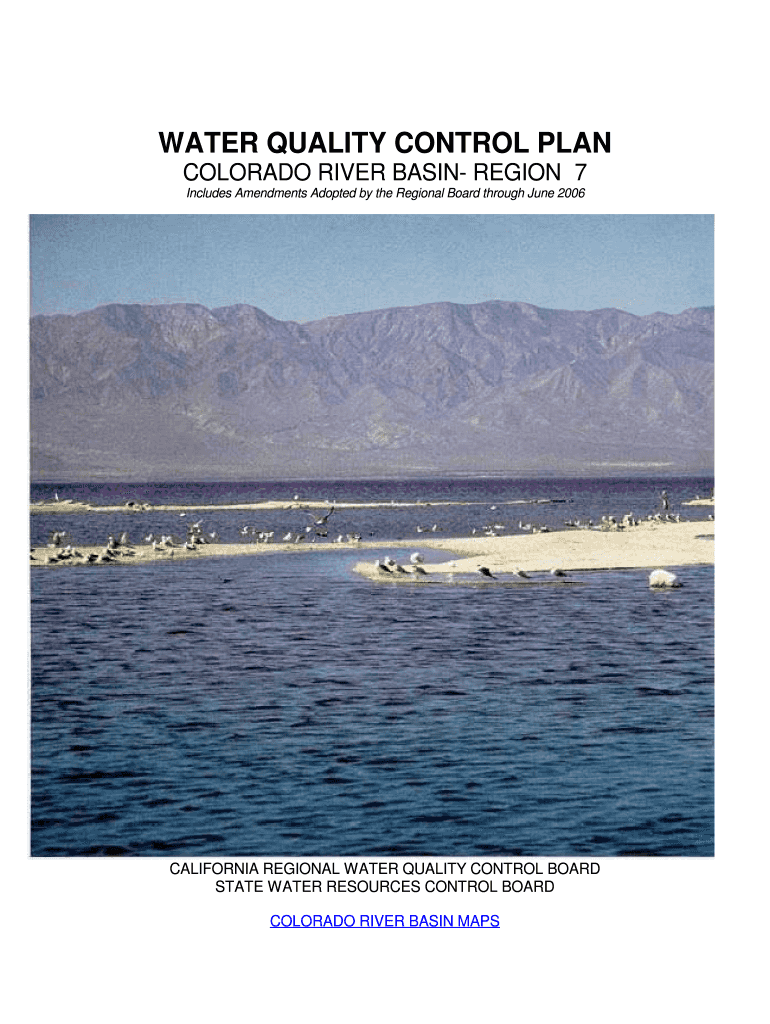







Definition and Intent of the Water Quality Control Plan
The Water Quality Control Plan for the Colorado River Basin is a regulatory framework established by the California Regional Water Quality Control Board. Its core aim is to protect and enhance water quality in the Colorado River region by setting forth clear guidelines and regulatory requirements. This document specifically addresses water pollution control, emphasizing both point and nonpoint source pollution management. By defining beneficial uses of water, the plan seeks to ensure that water resources are sustainably managed for agricultural, industrial, recreational, and ecological purposes.
Key Elements of the Water Quality Control Plan
The plan encompasses several critical elements designed to maintain water quality standards:
- Legal Framework: Establishes the statutory foundation under which water quality regulations are enforced.
- Beneficial Uses: Defines different categories for water use, such as ecological preservation, drinking water supply, and recreational activities.
- Water Quality Objectives: Sets target levels for pollutants to safeguard adopted beneficial uses.
- Implementation Plans: Details strategies to combat pollution, including measures for both point and nonpoint sources.
How to Use the Plan Effectively
Understanding how to navigate and use the Water Quality Control Plan is crucial for stakeholders involved in water management:
- Identify Relevant Sections: Determine which parts of the plan pertain to your interests or obligations. For example, agricultural operations may focus on runoff and pesticide regulations.
- Compliance and Monitoring: Use the plan's guidelines to meet regulatory compliance standards, ensuring that activities align with water quality objectives.
- Reporting and Documentation: Follow specified protocols for documenting pollutant levels and reporting to the California Regional Water Quality Control Board.
Accessing the Plan
The plan is available through the California Regional Water Quality Control Board’s official website and can often be accessed directly via local environmental agencies. It is typically available in both digital and paper versions. The electronic format allows for quick navigation and the ability to search specific terms or sections directly.
Legal Use and Compliance
Compliance with the Water Quality Control Plan falls under both state and federal jurisdiction. Entities must adhere to legal requirements to avoid penalties, which could include fines or operational restrictions. Effective adherence involves regular monitoring, timely reporting of pollution levels, and implementing corrective actions when deviations are identified.
Important Terms Related to the Plan
Understanding key terminology is essential for interpreting the plan:
- Point Source Pollution: Includes any singularly identifiable source of pollution, such as a pipe or canal, from which pollutants are discharged.
- Nonpoint Source Pollution: Refers to diffuse pollution sources that are not from a single point, often resulting from stormwater runoff.
- Sedimentation: A process by which eroded material is transported into waterways, often needing management within water quality control efforts.
Examples of Plan Implementations
The plan has been successfully used in various real-world situations to:
- Reduce Agricultural Runoff: Implementing best management practices in farming reduces nutrient and pesticide runoff into the Colorado River.
- Manage Urban Development: Collaborating with local governments to design urban runoff controls helps mitigate nonpoint source pollution.
- Conserve Natural Habitats: Efforts include preserving wetlands and riparian zones to naturally filter pollutants and improve water quality.
State-Specific Rules and Adaptations
The Water Quality Control Plan includes adaptations specific to California’s environmental and legal landscape. These adaptions take into account the unique ecological challenges and regulatory environment within the state, ensuring the plan is robust and applicable to regional conditions.




