







Definition and Meaning
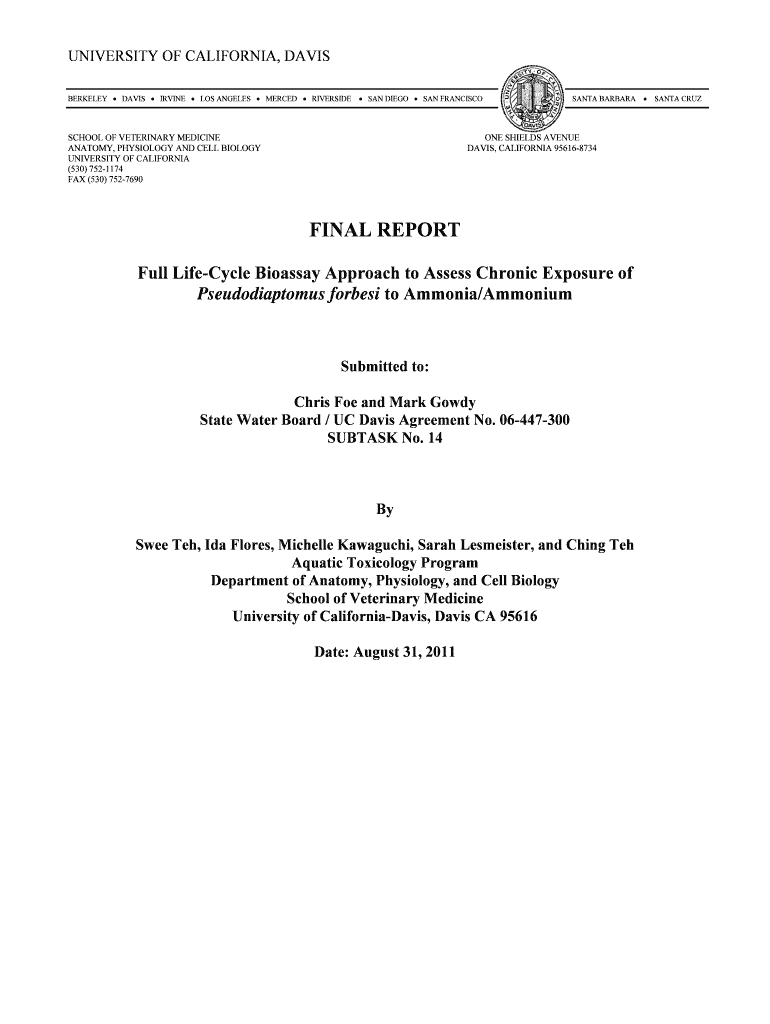
The "Full Life-Cycle Bioassay Approach to Assess Chronic - State Water" refers to a comprehensive testing method used in the environmental sciences to evaluate the long-term effects of various substances on aquatic life. This method involves exposing organisms, such as Pseudodiaptomus forbesi, to a particular substance over their entire life cycle to assess potential chronic toxic effects. These studies are crucial for understanding the impact of pollutants like ammonia on aquatic ecosystems, particularly in regions like the San Francisco Estuary.
Key Elements of the Full Life-Cycle Bioassay
This approach includes several fundamental components:
- Test Organisms: Typically, species that are considered indicators of ecosystem health, such as calanoid copepods.
- Exposure Conditions: Controlled environment settings that mimic natural conditions and expose organisms to varying concentrations of the test substance.
- Assessment Criteria: Parameters such as growth, reproduction, and survival rates are monitored to understand the chronic effects on organisms.
- Data Analysis: Results are analyzed to determine the concentration levels at which significant toxic effects occur, guiding environmental regulations.
Steps to Conduct the Full Life-Cycle Bioassay
- Select Test Species: Choose appropriate aquatic organisms based on their ecological relevance and sensitivity to pollutants.
- Prepare Test Environment: Create conditions that closely resemble their natural habitat, maintaining consistent temperature, pH, and other relevant factors.
- Determine Concentration Levels: Establish a range of pollutant concentrations for testing, including controls and environmentally relevant levels.
- Conduct Exposure Trials: Introduce the organisms to these conditions over a set period, usually spanning an entire life cycle.
- Monitor and Record Data: Continuously track key indicators such as survival, growth, and reproductive success.
- Analyze Results: Use statistical methods to assess the impact of the pollutant at different concentrations.
Importance of Using This Approach
The full life-cycle bioassay approach is vital for several reasons:
- Regulatory Compliance: Helps meet environmental standards that protect ecosystems.
- Informed Decision-Making: Provides data to inform policy and preserve aquatic life.
- Conservation Efforts: Aids in identifying harmful substances and their impact, supporting conservation initiatives.
State-Specific Rules
While the fundamental scientific principles of the bioassay are consistent, implementation may vary by state. States could have different regulatory frameworks governing how these bioassays are conducted, particularly in regions with sensitive or unique aquatic environments. It's important to consult with local environmental agencies to understand specific state requirements.
Who Typically Uses This Approach
This bioassay approach is primarily utilized by:
- State Water Agencies: For monitoring and regulating water quality standards.
- Environmental Researchers: Aiming to understand long-term effects of pollutants.
- Conservation Organizations: Working to protect aquatic ecosystems.
Examples of Using the Bioassay Approach
- San Francisco Estuary Study: Assessed the impact of ammonia on the calanoid copepod Pseudodiaptomus forbesi, highlighting significant sensitivity at lower pH levels.
- Industrial Applications: Monitoring effluent impacts from wastewater treatment plants on local aquatic life.
Legal Use and Compliance
The results from such bioassays are often utilized in legal frameworks to define permissible pollutant levels in water bodies. They contribute to regulations like the Clean Water Act, ensuring that discharged pollutants do not adversely affect aquatic life.
Required Documentation
When conducting this bioassay, the following documents are typically required:
- Experimental Protocols: Detailed procedures outlining how the bioassay will be conducted.
- Data Collection Sheets: For recording observations and results.
- Statistical Analysis Plans: Describing methods for evaluating data.
Digital vs. Paper Version
For institutions managing data from these bioassays, a digital format is often preferred due to:
- Ease of Data Manipulation: Facilitates complex statistical analyses.
- Data Security: Protects sensitive information with encryption and password protection.
By comprehensively structuring and executing the full life-cycle bioassay approach, stakeholders in environmental protection can derive valuable insights into the chronic effects of pollutants on aquatic life, enabling them to formulate informed, effective conservation strategies.




