







Definition & Meaning
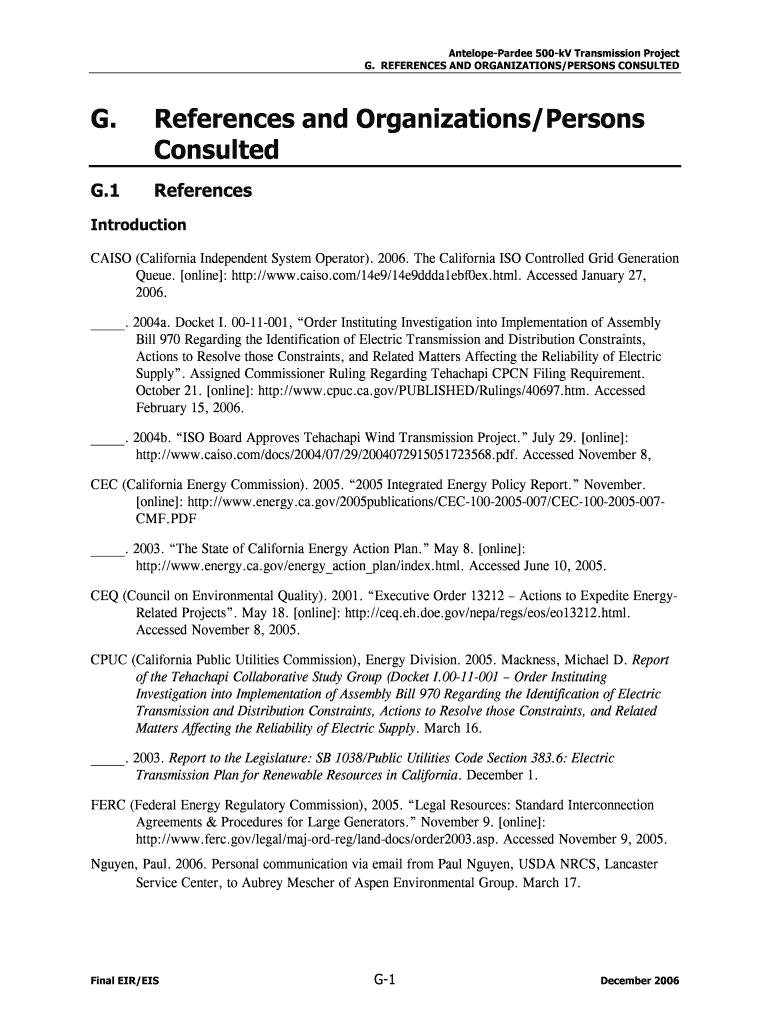
"Section G-References - California Public Utilities Commission - cpuc ca" refers to a specific section within documents overseen by the California Public Utilities Commission (CPUC). This section typically includes a comprehensive list of references and sources utilized during the preparation of regulatory documents such as Environmental Impact Reports (EIRs) or Environmental Impact Statements (EISs). This includes attribution to individuals, organizations, and agencies that provided input, studies, or data essential for the assessment processes conducted by the CPUC.
- Comprehensive Coverage: The section covers various resources that are fundamental to understanding and evaluating different aspects of regulatory compliance and environmental assessments.
- Key Components: It includes bibliographies of studies related to air quality, biological resources, cultural impacts, and more.
- Purpose: The intention is to ensure transparency and integrity in how data and insights are gathered and applied within official documents.
How to Use the Section G-References
Using the "Section G-References" involves understanding its role in documenting the sources and inputs involved in the preparation of CPUC reports. Here’s how it can be effectively engaged:
- Consult for Verification: Users can refer to this section to verify the sources of information used in the report.
- Research Aid: It serves as a guide for further research, as the references can be a starting point for in-depth exploration on particular topics.
- Educational Insight: Provides students and researchers with a deeper understanding of regulatory processes and the breadth of consultation involved.
Practical Example
- Case Study In Research: For a study on the environmental impact of a new transmission line, researchers can trace back to original studies and data tables referenced in the CPUC documents.
- Due Diligence Verification: Legal professionals may use this section to verify the authenticity and comprehensiveness of the data used during the project approval phases.
Steps to Complete the Form
When dealing with the Section G-References for the CPUC, certain steps should be followed to ensure comprehensive and proper documentation:
- Gather Information: Accumulate data from various stakeholders including environmental specialists, project engineers, and public health experts.
- Document Compilation: List all references including articles, reports, individual expert consultations, and institutional sources.
- Organize by Theme: Group references by categories such as hydrology, land use, or visual resources for easy navigation.
- Review for Accuracy: Verify the citations for correctness and ensure every data point in the EIR/EIS is backed by an appropriate source.
Detailed Example
- Expert Testimony: Include written attestations from consulted experts to solidify claims within the environmental report.
- Technical Studies Reference: Incorporate detailed technical studies on biological resources to provide evidence supporting project approvals.
Key Elements of the Section G-References
The Section G-References includes several critical elements that facilitate a thorough understanding of the document’s background:
- List of Consulted Entities: Identifies all agencies, nonprofits, and academic bodies that contributed to the report.
- Types of References: Includes journal articles, books, digital resources, and previously filed CPUC documents.
- Specific Contributions: Highlights contributions from various fields like traffic and transportation, visual resources, and cultural studies.
Legal Use of the Section G-References
The Section G-References serves several legal purposes in the context of regulatory documents:
- Basis for Impact Assessments: Legally, this section forms the backbone for justifying conclusions drawn in environmental assessments.
- Transparency and Accountability: It fulfills legal transparency requirements, ensuring accountability in how impact assessments are formulated.
- Mitigation Plans Alignment: Helps align mitigation plans with documented expert recommendations and established research.
Who Issues the Form
The form and its respective sections, including Section G-References, are issued by the California Public Utilities Commission (CPUC). The CPUC is responsible for regulating privately owned public utilities in California and is tasked with ensuring safe, reliable utility service at reasonable rates, protecting customers, and safeguarding the environment.
- Regulatory Authority: The CPUC provides guidance and oversight for utility project approvals, including environmental documentation.
- Public Accessibility: They've made the references section accessible for public scrutiny to promote transparency throughout the regulatory process.
State-Specific Rules
In California, certain state-specific regulations apply that involve the CPUC and Section G-References:
- California Environmental Quality Act (CEQA): This act requires detailed records like Section G-References to ensure informed and publicly accessible environmental planning.
- Public Participation Requirements: California mandates public input and consultation, as reflected in the wide array of references from various stakeholders in the section.
Example
- CEQA Guidelines: In California, the CEQA necessitates that every environmental impact report provide a comprehensive reference index, ensuring public access to resource documentation.
Penalties for Non-Compliance
Failure to appropriately document and utilize the Section G-References in CPUC reports can lead to several penalties:
- Project Delays: Incomplete references can result in project delays due to additional review periods.
- Regulatory Sanctions: Non-compliance with documentation standards may attract fines or sanctions as determined by the CPUC.
- Reevaluation Demands: Projects could be subject to complete reevaluation, leading to increased costs.
Understanding and properly using the Section G-References are critical components to ensure compliance with the regulatory expectations set forth by the CPUC. This section facilitates transparency and integrity in environmental documentation processes.




