
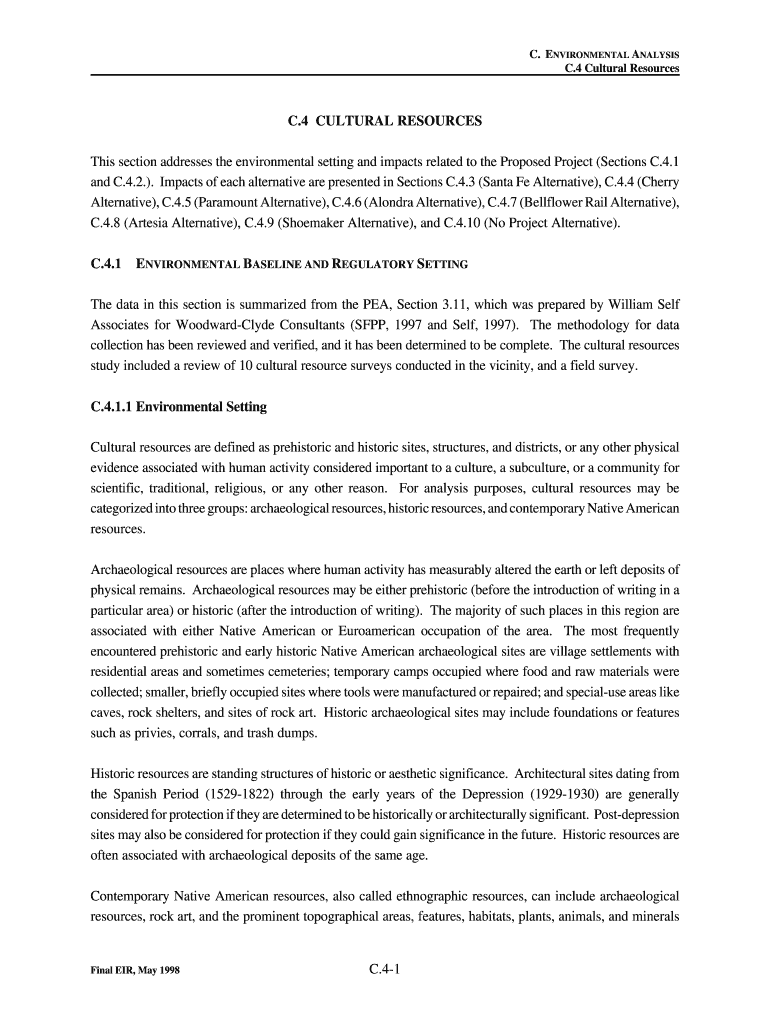







Definition and Meaning of the C 4 CULTURAL RESOURCES - California Public Utilities Commission
The C 4 Cultural Resources form, as related to the California Public Utilities Commission (CPUC), is a comprehensive document that outlines the evaluation and management of cultural resources within the framework of construction projects overseen by the CPUC. This form is essential for detailing the environmental settings, anticipated impacts, and proposed mitigation measures to protect cultural assets. Cultural resources can include archaeological sites, historical landmarks, and contemporary Native American resources. The form serves both as an inventory and as a guide to ensure compliance with state and federal preservation regulations.
How to Use the C 4 CULTURAL RESOURCES - California Public Utilities Commission
Individuals or organizations involved in CPUC projects should use this form to systematically assess the potential impacts on cultural resources within a project area. To effectively utilize this form:
- Identify Resource Types: Distinguish among archaeological, historical, and indigenous cultural resources.
- Conduct Surveys: Undertake field surveys to identify existing resources.
- Assess Impact: Evaluate how project activities may affect these resources.
- Develop Mitigation Strategies: Propose measures to alleviate negative impacts, aligning with regulatory standards.
- Documentation: Ensure all findings and plans are comprehensively documented within the form.
Steps to Complete the C 4 CULTURAL RESOURCES - California Public Utilities Commission
To accurately complete the C 4 form, follow these steps:
- Gather Background Information: Collect data on historical and cultural significance in the project vicinity.
- Perform Field Evaluations: Use trained archaeologists and historians to survey areas of potential impact.
- Analyze Data: Compare survey results against known inventories of cultural resources.
- Draft Findings and Recommendations: Clearly articulate any resources found and propose mitigation tactics.
- Review and Revise: Ensure all entries meet CPUC standards and address public concerns.
- Submission: Submit the completed form along with any supplementary materials as per CPUC guidelines.
Key Elements of the C 4 CULTURAL RESOURCES - California Public Utilities Commission
This form is structured around key components that guide users through a thorough analysis:
- Description of Survey Methodology: Document all methods and tools used for cultural examination.
- Resource Inventory: A detailed list of all identified cultural assets, including physical descriptions and significance.
- Impact Assessment: An evaluation of potential impacts tied directly to project activities.
- Mitigation Measures: Detailed strategies to lessen or prevent adverse effects.
- Compliance Statements: Assertions of adherence to CPUC, state, and federal guidelines.
Legal Use of the C 4 CULTURAL RESOURCES - California Public Utilities Commission
The legal use of this form involves ensuring that construction and development activities comply with heritage preservation laws. It supports transparency and accountability by demonstrating due diligence in cultural resource protection. The form assists in meeting statutory obligations under the California Environmental Quality Act (CEQA) and the National Historic Preservation Act (NHPA).
Who Typically Uses the C 4 CULTURAL RESOURCES - California Public Utilities Commission
Those who most often engage with the C 4 form include:
- Project Developers: Responsible for ensuring that projects comply with cultural resources legislation.
- Archaeologists and Historians: Conducting surveys and providing expert analysis.
- Environmental Consultants: Offering guidance on compliance and mitigation strategies.
- Government Agencies: Reviewing submissions for adherence to regulations.


Important Terms Related to the C 4 CULTURAL RESOURCES - California Public Utilities Commission
- Cultural Resources: Items, structures, or locations holding historical, archaeological, or cultural significance.
- Mitigation Measures: Actions intended to reduce or negate negative project impacts.
- Environmental Compliance: Adherence to laws regulating the impact of projects on the environment and its resources.
Examples of Using the C 4 CULTURAL RESOURCES - California Public Utilities Commission
In practice, many infrastructure projects have successfully utilized the C 4 form:
- Transport Projects: Highway expansions in culturally rich areas have required detailed C 4 forms to prevent destruction of ancient sites.
- Renewable Energy Projects: Wind farm developments have leveraged the form to safeguard historical landmarks while promoting sustainable energy solutions.
- Urban Development: City expansions have used the C 4 document to balance growth with cultural preservation, ensuring robust documentation and protective measures.




