







Definition & Meaning
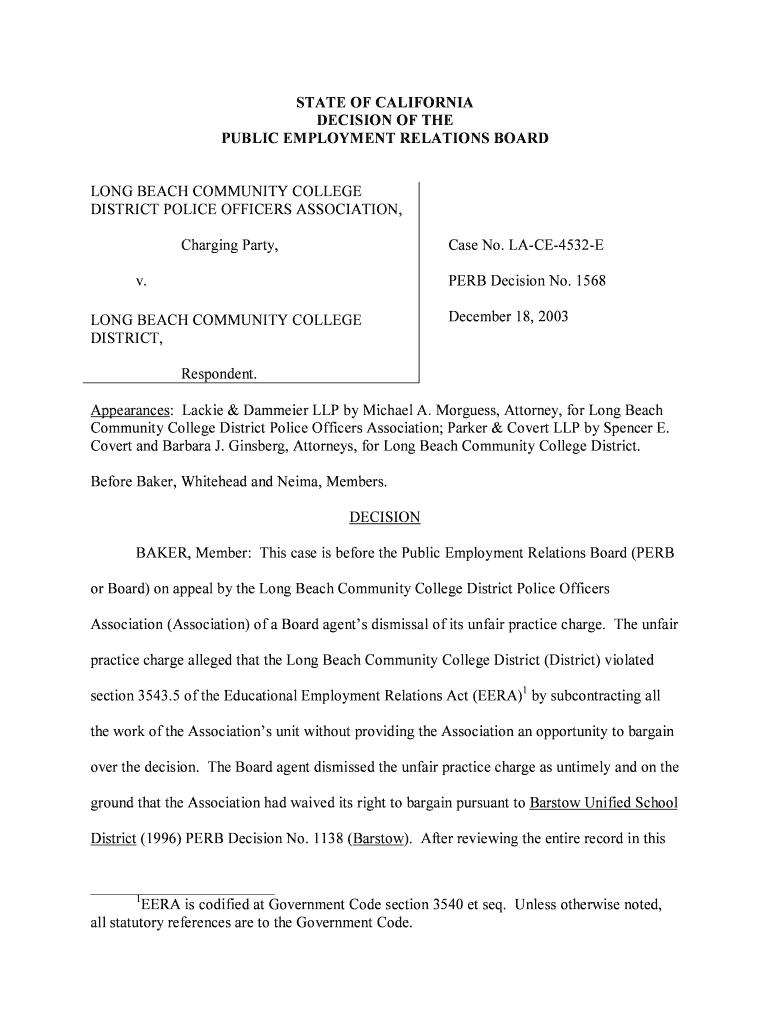
The "Decision - Public Employment Relations Board - State of California - PERB CA" refers to the formal outcomes released by the Public Employment Relations Board (PERB). This state entity manages employment relations within the public sector, focusing on resolving labor disputes, enforcing collective bargaining rights, and issuing rulings on unfair labor practices. A PERB decision serves as a formal resolution to employment-related conflicts between unions and public agencies, ensuring compliance with California labor laws such as the Educational Employment Relations Act (EERA).
How to Use the PERB Decision
Using a PERB decision involves carefully reviewing both the decision and any directives or orders included therein. Relevant parties, such as labor unions and public agencies, must:
- Examine the decision's findings of fact and conclusions of law.
- Implement required changes to practices or policies according to the decision.
- Prepare for further proceedings if the decision calls for return to legal or administrative processes.
- Communicate with affected employees, providing details on how the decision impacts their rights or responsibilities.
Steps to Complete the PERB Form
Filing a case with the Public Employment Relations Board involves several steps:
- Identify the specific nature of the dispute or unfair labor practice.
- Complete the necessary form, detailing the parties involved and specific allegations.
- Submit the form to the PERB office via mail or online submission, adhering to official guidelines.
- Respond to any additional requests from the PERB for further information or documentation.
- Attend hearings if the case proceeds to a formal hearing stage.
Important Terms Related to PERB Decisions
Understanding PERB decisions requires familiarity with relevant employment law terminology:
- Unfair Practice Charge: A formal allegation claiming violation of employee or union rights.
- Educational Employment Relations Act (EERA): Legislation governing labor relations in California's public education sector.
- Collective Bargaining: The process of negotiation between employers and a group of employees aimed at reaching agreements that regulate working conditions.
Key Elements of PERB Decisions
PERB decisions typically comprise:
- Introduction and Background: Contextual information about the dispute.
- Findings of Fact: Detailed accounts of the situations described in the complaint.
- Legal Conclusions: An analysis of how the facts align with the law.
- Orders or Remedies: Specific instructions or actions required to resolve the issue, which may include retracting certain actions or engaging in mandatory bargaining.
Examples of Using PERB Decisions
Case studies illustrate how PERB decisions can impact various organizations:
- A school district might need to revisit its policies if a decision reveals non-compliance with bargaining obligations.
- A union could gain reinstatement of employees unfairly laid off due to retaliation, as determined by a PERB ruling.
Legal Use of the Decision
PERB decisions are legally binding in the state of California. They serve as authoritative resolutions and can be enforced by the courts if necessary. Compliance with these decisions is crucial for maintaining lawful operation under state employment statutes, and failure to comply can result in penalties or additional legal action.
Penalties for Non-Compliance
Failing to adhere to a PERB decision can lead to various consequences, including:
- Fines or sanctions: Imposed on the entity or individuals responsible for the breach.
- Legal injunctions: Orders to compel or prevent actions in accordance with the decision.
- Additional legal cases: Resulting from continuous non-compliance or challenges to the decision.
Form Submission Methods
The submission methods for a PERB-related form include:
- Online: Through the PERB website, using digital forms.
- Mail: Sending completed documents to designated PERB mailing addresses.
- In-Person: Direct submissions at PERB offices, facilitating immediate processing and feedback.
In summary, the "Decision - Public Employment Relations Board - State of California - PERB CA" is integral to upholding fair labor practices in public employment sectors. Understanding its processes, implications, and compliance mechanisms ensures proper adherence to state labor laws and supports a harmonious labor environment.




