






Definition & Meaning
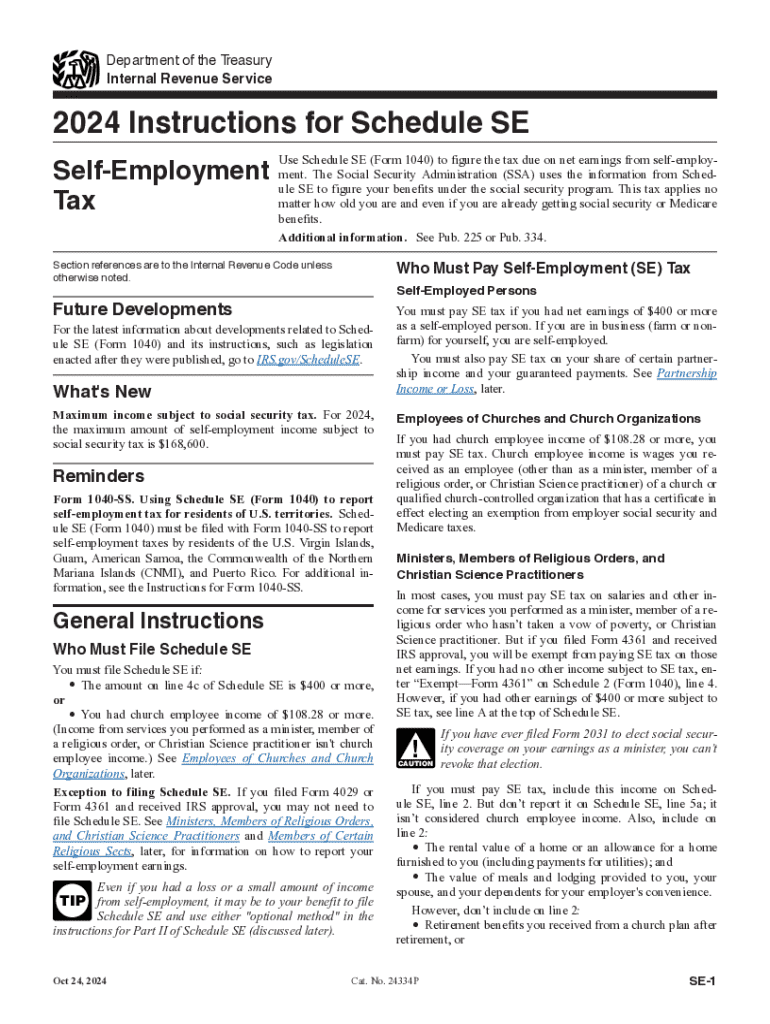
Schedule SE (Form 1040) is an essential tax form used by self-employed individuals in the United States to calculate their self-employment tax. This tax consists of Social Security and Medicare taxes primarily for those who work for themselves. Unlike employed individuals whose employers withhold these taxes from their paychecks, self-employed people must calculate and pay these taxes independently. Schedule SE helps determine the amount owed based on net earnings from self-employment.
Steps to Complete Calculate Self-Employment Tax with Schedule SE
-
Determine Net Earnings: Begin by calculating your net earnings from self-employment, which involves subtracting allowable deductions from your gross income. This net figure is the basis for calculating the self-employment tax.
-
Complete Part I or Part II: Depending on the complexity of your situation, fill out either Part I (Short Schedule SE) or Part II (Long Schedule SE). Part I is used if your total net earnings are $400 or less. Otherwise, you'll use Part II.
-
Calculate Social Security and Medicare Tax: Multiply your net earnings by the Social Security and Medicare tax rates. These rates are 12.4% for Social Security and 2.9% for Medicare.
-
Report on Form 1040: The calculated self-employment tax from Schedule SE is then reported on Form 1040. Include this figure in your total tax liability for the year.
-
Subtract Allowable Deduction: You can deduct half of your self-employment tax from your income, reducing taxable income and thus, your overall tax liability.
-
Finalize Submission: Ensure all calculations are accurate and submit your Schedule SE along with Form 1040 by the tax filing deadline.
Who Typically Uses Calculate Self-Employment Tax with Schedule SE
The primary users of Schedule SE are individuals who earn income through self-employment. This includes freelancers, independent contractors, sole proprietors, and certain types of partnerships. Specific groups like church employees or those exempt under religious grounds might also use this form.
Important Terms Related to Calculate Self-Employment Tax with Schedule SE
- Net Earnings: The total income from self-employment after deductions.
- FICA: Federal Insurance Contributions Act, which funds Social Security and Medicare. Schedule SE calculates taxes similar to FICA.
- Gross Income: The total revenue from all sources before deductions.
- Deduction: Expenses allowed by the IRS to reduce taxable income.
IRS Guidelines
The IRS provides comprehensive guidelines to help taxpayers accurately complete Schedule SE. These guidelines cover eligibility criteria, the types of income that need to be reported, and special rules for specific professions. Users must ensure all instructions are closely followed to avoid discrepancies and penalties.
Filing Deadlines / Important Dates
The standard deadline for filing Schedule SE is aligned with the tax filing deadline for Form 1040, typically on April 15th each year. Extensions are available but must be applied for in advance.
Required Documents
To complete Schedule SE, individuals need documentation that includes:
- Records of all income and expenses related to their self-employment activities.
- Forms 1099-NEC or 1099-MISC if applicable.
- Previous years' tax returns for reference.
Penalties for Non-Compliance
Failing to file Schedule SE accurately or on time can lead to penalties. These might include fines, interest on unpaid taxes, and other legal repercussions. It is critical for self-employed individuals to understand their obligations and ensure compliance.
Taxpayer Scenarios
Schedule SE is applicable to a range of scenarios:
- Freelancers: Writers, designers, and developers providing services directly to clients.
- Small Business Owners: Sole proprietors operating local shops or online stores.
- Consultants: Professionals offering expert advice on a contractual basis.
In conclusion, completing Schedule SE requires attention to detail and an understanding of self-employment finances. It is a crucial component in ensuring compliance with tax obligations for those working independently.