






Definition and Purpose of Filing a Claim for Camp Lejeune Water Contamination
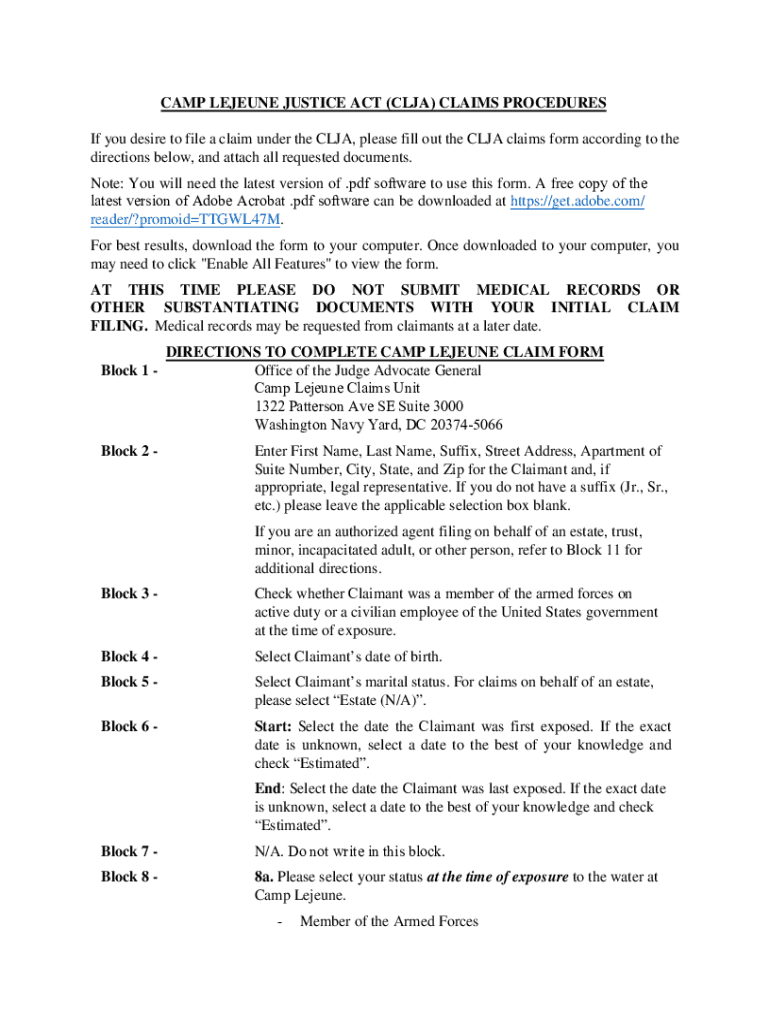
The "4 Steps to File a Claim for Camp Lejeune Water Contamination" document is a structured guide aimed at assisting individuals affected by the water contamination at Camp Lejeune. This document is associated with the Camp Lejeune Justice Act (CLJA). The primary purpose is to provide clear instructions on how to complete the claims form for those seeking compensation due to exposure to harmful substances in the water supply, resulting in injuries or health issues.
- Step-by-Step Instructions: The instructions are broken down into four actionable steps to streamline the process for claimants.
- Personal and Exposure Details: Ensure accuracy in personal information and details of exposure, which are crucial for the validation of the claim.
- Injury Claims: Individuals must detail the health injuries or conditions caused by the contamination.
Steps to Complete the Camp Lejeune Water Contamination Claim
Completing the claim involves several critical steps, each of which must be followed meticulously to ensure success:
-
Gathering Required Information:
- Collect personal details, including full name, date of birth, and social security number.
- Document exposure details, specifying the duration and location of exposure to contaminated water at Camp Lejeune.
-
Filling Out the CLJA Claims Form:
- Enter personal information and exposure data.
- Provide a detailed description of medical conditions linked to the contamination.
-
Submission Methods:
- Claims can be submitted either via email or traditional mail.
- Adhere to naming conventions and submission protocols to prevent delays.
-
Awaiting Approval and Further Instructions:
- After submission, await confirmation and further steps.
- Be prepared to provide additional documentation, such as medical records, if requested.
How to Use the Form
Utilizing the form correctly involves understanding how each section integrates into the overall application:
- Personal Information Section: Fill out personal data accurately to ensure identification matches with supporting documents.
- Exposure Details: Clearly define the specifics of when, where, and how the exposure occurred to validate claims effectively.
- Injury or Health Claims: Thoroughly document any health issues associated with water contamination, which forms the basis of the claim.
Eligibility Criteria
To qualify for filing a claim under the CLJA, there are defined eligibility requirements that applicants must meet:
- Status of Residency: Claimants should have resided or worked at Camp Lejeune during the contamination period.
- Medical Proof: Must provide evidence showing a link between health issues and exposure to the contaminated water.
- Time Period: Eligible individuals are those exposed between August 1, 1953, and December 31, 1987.


Required Documents
To reinforce the credibility and completeness of the claim, applicants should prepare several key documents:
- Identification Documents: Valid ID such as a driver’s license or passport.
- Proof of Residence or Employment: Documents proving presence at Camp Lejeune during the specified period.
- Medical Records: Initial submission does not require them, but they may be requested later to substantiate claims.
Legal Use and Compliance
Understanding the legal implications and requirements when filing the claim helps avoid complications:
- Right to Compensation: Under the CLJA, eligible individuals are entitled to seek compensation for proven health impacts.
- Accuracy and Truthfulness: Ensure all information provided is accurate and truthful to avoid any legal repercussions or claim rejections.
Examples and Case Studies
Exploring case studies provides insight into practical application and successful claims:
- Case Study 1: Example of a former Marine who successfully filed a claim after proving the connection between his illness and the water contamination.
- Case Study 2: A civilian employee obtained compensation after demonstrating sufficient evidence related to her presence and exposure at Camp Lejeune.
Form Variants and Alternatives
While the primary document remains standard, it's important to understand alternatives or related forms:
- Related Forms: In some cases, additional forms may be required, especially when multiple family members are filing claims.
- Updates and Revisions: Stay updated with any revisions to the form that may impact submission processes or requirements.
Key Takeaways
- Comprehensive Documentation: The form is not merely a paper submission; it requires detailed and precise documentation to support eligibility and claims.
- Legal and Health Implications: Recognize the significant legal and health implications, ensuring all required documentation and steps are completed.
- Structured Process: Adhere to the structured process outlined to maximize the chances of a successful claim outcome.