




01. Edit your form online
Type text, add images, blackout confidential details, add comments, highlights and more.

Type text, add images, blackout confidential details, add comments, highlights and more.

Draw your signature, type it, upload its image, or use your mobile device as a signature pad.

Send it via email, link, or fax. You can also download it, export it or print it out.
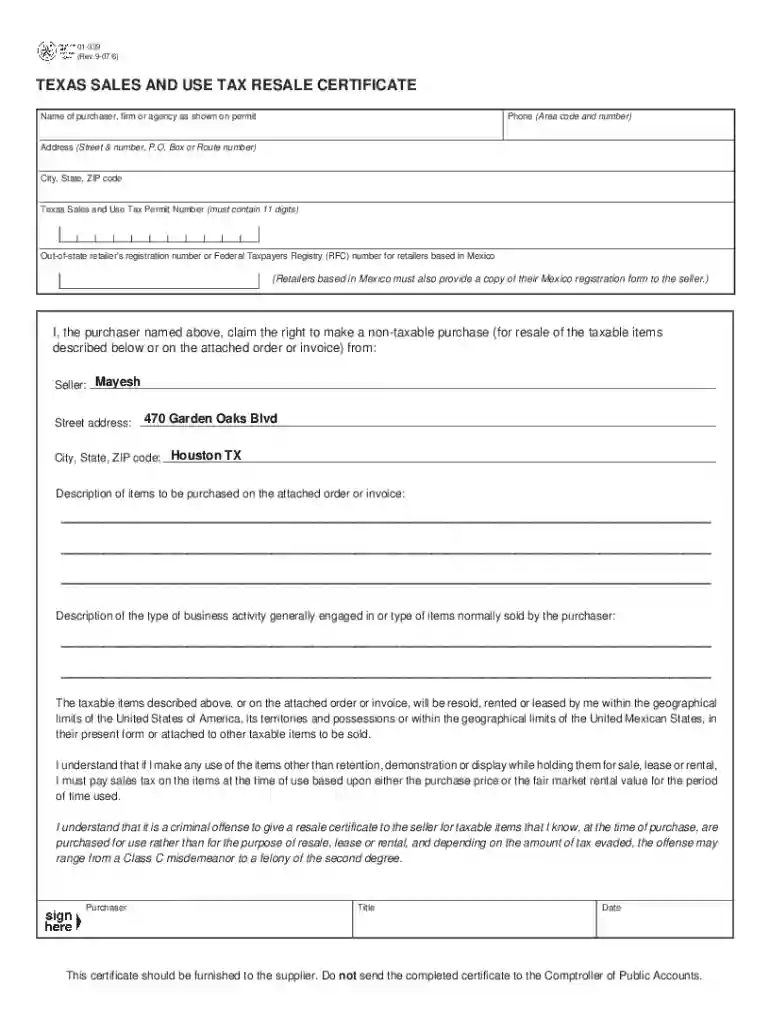
A Texas Sales and Use Tax Resale Certificate is a document used by purchasers in Texas to buy goods tax-free that they intend to resell. When a business purchases items for resale, the state of Texas allows them to claim these purchases as non-taxable by using this resale certificate. The primary components of the certificate include the purchaser's information, vendor details, and a description of the items being purchased. Proper utilization assumes the purchaser will genuinely resell the acquired items, as misuse can result in legal penalties. This document is essential for businesses looking to optimize their tax dealings related to inventory and resale goods.
Obtaining a Texas Sales and Use Tax Resale Certificate involves a few key steps. First, businesses must ensure they have a current Texas Sales Tax Permit, as it's required to issue a resale certificate. Once the permit is secured, you can obtain the resale certificate template from the Texas Comptroller's website or other legitimate sources like DocHub. It's crucial to fill out this certificate correctly to avoid issues with compliance. The certificate contains details about the business, the seller, and the types of goods being acquired for resale.
Completing the Texas Resale Certificate involves several steps.
Understanding the key elements of the Texas Resale Certificate is crucial for compliance and effective use.
Legal use of the Texas Resale Certificate requires strict adherence to state tax regulations. The certificate must be used only for purchasing items that the business intends to resell. Misusing the certificate for personal or non-resale purchases can lead to serious legal repercussions, including fines and criminal charges. It is mandatory to retain copies of all resale certificates issued to your vendors for potentially reviewing by the Texas Comptroller's office.
The Resale Certificate is typically utilized by businesses that frequently purchase goods for resale. Retailers, wholesalers, and manufacturers are common users. The certificate allows these businesses to buy without paying sales tax on items that are intended to be resold to customers. This exemption helps in maintaining cash flow, crucial for operating businesses and preventing tax burdens from hindering business growth.


Understanding several terms is critical when handling a resale certificate:
Texas, like many states, has specific rules governing the use of a resale certificate. Texas law mandates that businesses actively engaged in reselling goods must hold a valid sales tax permit. The resale certificate cannot be used for purchases of items not intended for resale, such as office supplies or equipment for business use. The Texas Comptroller’s Office provides comprehensive guidelines and expects businesses to maintain accurate records of transactions involving resale certificates.
Failure to comply with the correct use of a Texas Resale Certificate results in significant penalties. Misuse can lead to fines, revocation of sales tax permits, and even criminal charges. The onus is on the purchaser to ensure items are truly intended for resale. Businesses must maintain meticulous records of their resale certificate usage, as audits by state tax authorities can impose retrospective charges on incorrectly processed purchases, creating unexpected financial liabilities.
Consider scenarios such as a clothing retailer purchasing apparel from a wholesaler. The retailer can provide a resale certificate to the wholesaler, ensuring the purchase is tax-exempt, thereby optimizing profitability on subsequent sales. Similarly, an electronics distributor buying large quantities of gadgets for resale would apply this certificate during transactions to maintain a competitive edge in pricing due to tax-free procurement.
At DocHub, your data security is our priority. We follow HIPAA, SOC2, GDPR, and other standards, so you can work on your documents with confidence.



I, the purchaser named above, claim the right to make a non-taxable purchase (for resale of the taxable items described below or on the attached order orRead more
The Texas Sales and Use Tax Exemption Certification form is available from the Texas Comptroller of Public Accounts. This form should only be used for official


