




01. Edit your notice of commencement michigan online
Type text, add images, blackout confidential details, add comments, highlights and more.

Type text, add images, blackout confidential details, add comments, highlights and more.

Draw your signature, type it, upload its image, or use your mobile device as a signature pad.

Send notice of commencement michigan pdf via email, link, or fax. You can also download it, export it or print it out.
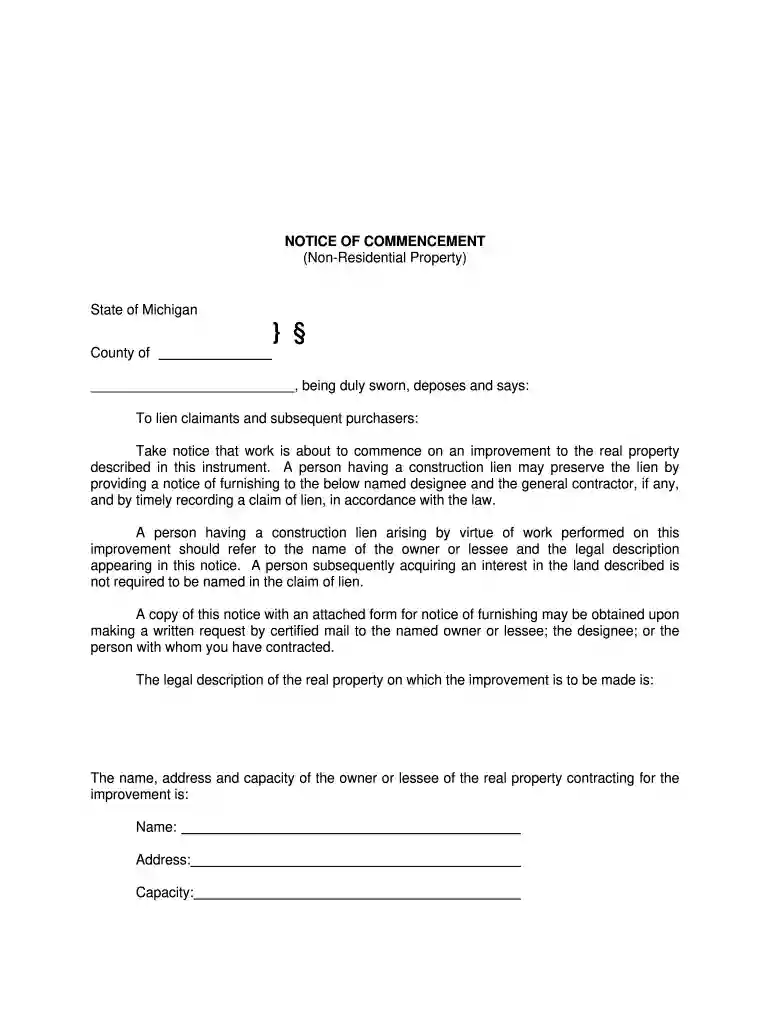
The "Notice of Commencement" in Michigan is a formal document used primarily in non-residential property improvement projects. It serves to inform potential lien claimants and subsequent purchasers about the beginning of construction work. This notice is crucial because it outlines the steps for preserving construction liens. It acts as a public declaration that alerts all parties involved in the construction process about the legal obligations and expectations during the project. This notice ensures transparency and helps manage the interests of contractors, property owners, and suppliers involved in the construction or improvement project.
To obtain a Notice of Commencement in Michigan, property owners or their legal representatives need to prepare the document based on the state's construction lien law requirements. The notice can typically be drafted using a template obtained from Michigan's legal resources or construction authorities. Once prepared, the notice must be filled out with accurate information about the property, including the location, property owner details, contractor, and description of the improvement work. After completing the document, it needs to be filed with the appropriate local office, such as the Register of Deeds, to ensure it is publicly recorded and accessible to all potential lien claimants.
Gather Required Information: Ensure you have all essential details, such as the legal property description, names and addresses of the property owner, contractors, and any preliminary lien notices.
Draft the Document: Use a validated template to structure the document. Fill in all required fields accurately.
Verify Details: Double-check all entered information to ensure correctness and compliance with Michigan's legal standards.
Notarize the Document: Depending on local requirements, you may need to have the document notarized to legitimize its legality.
File with the Register of Deeds: Submit the notice to the local Register of Deeds office to make it official.
Distribute Copies: Provide copies to all key stakeholders, including contractors, subcontractors, and lenders involved in the project.
The Notice of Commencement is legally significant because it establishes a timeline for all involved parties, marking the legal start of the project and setting deadlines for subsequent lien claims. If disputes arise, the notice provides documented evidence of when work commenced, which can be crucial in resolving conflicts about payment and compliance with lien laws. Furthermore, it outlines responsibilities for various parties, ensuring all are aware of their obligations under Michigan's construction lien law. Non-compliance with the notice requirements can lead to loss of lien rights or legal challenges.
In Michigan, the Notice of Commencement must be filed before any physical work begins on the project. It is primarily the responsibility of the property owner or the lessee to ensure it is properly recorded. If the property is sold or transferred, the new owner must file an updated notice to maintain compliance. Michigan law requires that this document be accessible to all contractors and suppliers, providing them with the necessary information to safeguard their lien rights. Additionally, strict adherence to filing deadlines and content accuracy is imperative to avoid any legal ramifications.
Failure to file a Notice of Commencement can result in several penalties. Property owners may face challenges in defending against construction lien claims if they fail to notify all relevant parties. Furthermore, non-compliance can lead to disputes and financial losses if contractors or suppliers place liens due to misunderstanding or lack of communication about property improvements. Consistently, ensuring proper filing and distribution safeguards all parties involved from these legal and financial risks. Penalties may also include invalidation of lien rights and possible court disputes that can be costly and time-consuming.
The Notice of Commencement can be prepared and stored in both digital and paper formats, depending on the preference and capabilities of the property owner or contractor. Many legal service platforms offer digital templates which streamline the process. Electronic versions allow easier sharing and distribution among multiple parties, ensuring prompt communication and record-keeping. However, physical copies might still be necessary for official filings in certain jurisdictions. It's important to verify local office requirements for submissions to prevent administrative issues that could delay construction projects.
Consider a scenario where a developer intends to upgrade an office building in Michigan. They must file a Notice of Commencement before starting renovations to inform all contractors and protect against unwarranted liens. In another example, a property owner might need to comply with construction lien laws when adding new facilities to a manufacturing plant. Providing a detailed notice helps ensure that all suppliers and subcontractors are aware of the project, safeguarding the owner from lien claims while maintaining open communication throughout the project lifecycle.
At DocHub, your data security is our priority. We follow HIPAA, SOC2, GDPR, and other standards, so you can work on your documents with confidence.


Notice Requirements: All notices required by this section may be made by personal service or by certified mail, mailed to the licensees address as itRead more
Mich. Admin. Code R. 567.5 - Notice of commencement of examination (i) The notice shall state that the state will conduct an examination of the person and


