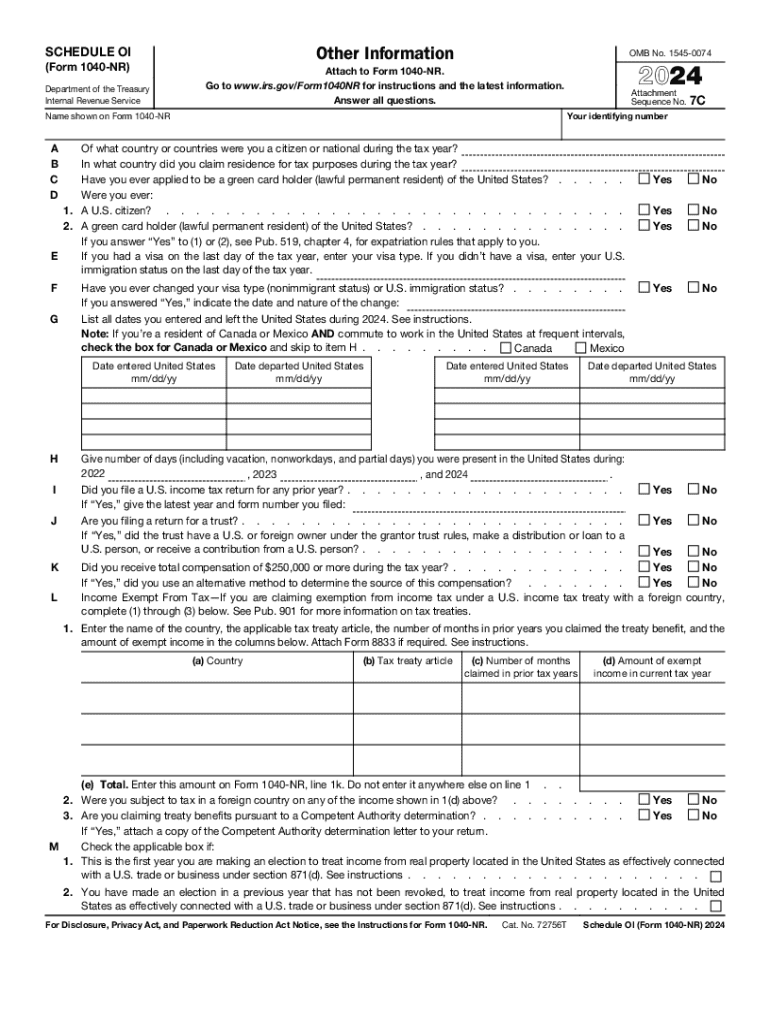







Definition and Purpose of Form 1040-NR
Form 1040-NR, also known as the U.S. Nonresident Alien Income Tax Return, is a critical document filed with the Internal Revenue Service (IRS) by nonresident aliens who have U.S. income. It serves the dual purpose of reporting income from U.S. sources and determining the tax obligations of nonresident aliens based on their earnings within the United States.
-
U.S. Sourced Income: Income earned from employment, business operations, or other sources within the United States must be reported on this form. Understanding what qualifies as U.S.-sourced income is essential for accurately completing the form.
-
Tax Obligations: The form helps in calculating the correct amount of tax owed, considering any applicable deductions or exemptions. This ensures compliance with U.S. tax laws for nonresident aliens.
Steps to Complete Form 1040-NR
Completing Form 1040-NR requires careful attention to detail and understanding of IRS instructions. Here are the steps:
-
Personal Information: Enter the taxpayer's full name, identification number, and current address. Ensure accuracy to avoid processing delays.
-
Income Reporting: List all income from U.S. sources. This includes wages, rental income, or other earnings that are considered taxable by the IRS.
-
Deductions and Adjustments: The form allows certain deductions specific to nonresident alien status. Indicate any eligible deductions to reduce taxable income.
-
Tax Calculation and Payment: Use the provided schedules to calculate the total tax due. If any tax was withheld during the year, it can be subtracted from the total owed.
-
Signature and Date: A signed and dated form certifies the accuracy and truthfulness of the provided information.
Eligibility Criteria for Filing Form 1040-NR
Not every nonresident in the U.S. needs to file Form 1040-NR. Eligibility is determined based on the type and source of income:
-
Residency Status: Only those who qualify as nonresident aliens based on the IRS's substantial presence test should file this form.
-
Income Thresholds: Those earning income above certain thresholds from U.S. sources are required to file. Specific thresholds vary depending on taxpayer circumstances.
-
Exempt Activities: Certain activities, like income from scholarships or fellowships, might alter filing requirements based on tax treaties.


Key Elements of Form 1040-NR
Understanding the primary sections of the form can facilitate accurate and efficient completion:
-
Income Section: Here, detail all income received from U.S. sources. Accuracy is paramount, as omissions can lead to penalties.
-
Exemptions and Deductions: Identify any deductions that may apply to reduce taxable income. Nonresident aliens often have unique considerations for deductions.
-
Tax Computation: Using provided IRS tables and schedules, compute the tax owing based on reported income and allowed deductions.
IRS Guidelines and Resources
Following IRS guidelines ensures compliance and reduces the risk of errors:
-
IRS Publication 519: Offers detailed explanations on nonresident alien tax obligations, including when to file and how.
-
Tax Treaties: Some countries have agreements with the U.S. that affect taxation. Familiarizes yourself with these treaties, as they can significantly impact tax liabilities.
Filing Deadlines and Important Dates
Deadlines are critical for timely submissions, and late filing can incur penalties:
-
Standard Deadline: Typically, Form 1040-NR is due by the same date as regular individual tax returns, generally April 15. This can vary if April 15 falls on a weekend or holiday.
-
Extensions: Extensions are possible, but they must be filed before the deadline. This provides additional time to gather necessary information.
Required Documents for Submission
Gathering the necessary documents in advance can streamline the filing process:
-
Form W-2: If wages were earned from a U.S. employer, this form is essential for reporting earned income.
-
Form 1042-S: Used to report various types of income, including scholarships or fellowships.
-
Supporting Documentation: Any other relevant documents, such as travel records or visa information, may be required to substantiate claims and deductions.
Penalties for Non-Compliance
Failure to comply with filing requirements can result in significant penalties:
-
Late Filing: Penalties accrue daily for submitting forms past the due date without a valid extension.
-
Underpayment: If taxes owed are not fully paid by the deadline, interest and penalties can apply until the balance is settled.
Understanding and adhering to these requirements not only ensures compliance but also mitigates the potential for costly penalties.