




01. Edit your form 5498 online
Type text, add images, blackout confidential details, add comments, highlights and more.

Type text, add images, blackout confidential details, add comments, highlights and more.

Draw your signature, type it, upload its image, or use your mobile device as a signature pad.

Send irs form 5498 via email, link, or fax. You can also download it, export it or print it out.
Form 5498 serves as a crucial document for individuals with IRAs, detailing contributions, rollovers, required minimum distributions (RMDs), and the fair market value (FMV) of the account as of the end of the calendar year. This form is submitted by financial institutions to the IRS, verifying that the reported figures align with the account holder's tax filings. It plays a pivotal role in ensuring IRAs are used correctly, adhering to tax regulations.
Once received, review Form 5498 to confirm that the information regarding contributions and RMDs is accurate. It's vital for ensuring compliance with IRS requirements. You should compare this with your records to verify that all data aligns. The form helps in calculating potential tax benefits or obligations, such as tax deductions for contributions. If discrepancies exist, it’s advisable to contact the issuing financial institution for correction.
Review Instructions: Begin by thoroughly reading the IRS guidelines on completing Form 5498 to understand which sections apply to your IRA.
Detail Contributions: Enter any contributions made to the IRA, including rollovers and any Roth conversions.
Report RMD Information: Indicate any distributions that meet the requirement for minimum distributions, based on age and type of account.
Fair Market Value: Include the FMV of the account as of December 31, 2023. This requires you to have the year-end statement from your financial institution.
Double-Check Details: Ensure all figures match the records maintained by your IRA custodian and address any discrepancies directly with them.
Box 1 (IRA Contributions): Covers all traditional IRA contributions made during the year, including traditional contributions and rollovers.
Box 2 (Rollover Contributions): Specifically lists rollover contributions, capturing funds moved from other tax-deferred accounts.
Box 5 (Fair Market Value): Represents the total value of the account, essential for calculating RMDs.
Box 11 (RMD Required in Future Year): Indicates if an RMD is required the following year, alerting taxpayers to potential distribution obligations.
Taxpayers must adhere to IRS guidelines outlining the obligations of financial institutions to report accurate information and submit it timely. The guidelines specify reporting deadlines and clarify any penalties for inaccuracies. Institutions must ensure that copies are filed with both the IRS and provided to the account holder.
The financial institution must submit Form 5498 to the IRS by May 31, 2024. This timeline allows enough time for individuals to receive the form after the April tax deadline, ensuring all contributions made before the tax filing deadline are reported.
Failure to file Form 5498 accurately and on time can result in penalties. For financial institutions, this includes fines for late submission or false reporting. Individuals are urged to check for any discrepancies, as failure to report accurate information can lead to increased tax liabilities or missed tax benefits.
Account Statements: These outline year-end balances and contribution details.
Contribution Records: Verification of all deposit activities in the IRA during the tax year.
Rollover Documentation: Records that indicate any IRA transfers or conversions.
Prior Tax Returns: Offers insight into past contributions and distributions which may affect current reporting.
The primary responsibility for issuing Form 5498 lies with financial institutions that manage the IRA accounts. These entities are well-equipped to provide accurate reporting based on their account records.
While financial institutions file the form electronically with the IRS, copies are typically mailed to account holders. Individuals can opt to receive their copies electronically if the financial institution offers such a service, providing quicker access and improved record-keeping efficiency.
Eligibility for inclusion on Form 5498 primarily hinges on whether the individual has made contributions, rollovers, or holds an IRA. Both traditional and Roth IRAs are covered by this form, with specific boxes catering to each account type.


We've got more versions of the form 5498 form. Select the right form 5498 version from the list and start editing it straight away!
| Versions | Form popularity | Fillable & printable |
|---|---|---|
| 2025 | 4.9 Satisfied (40 Votes) | |
| 2024 | 4.8 Satisfied (51 Votes) | |
| 2023 | 4.4 Satisfied (59 Votes) | |
| 2022 | 4.3 Satisfied (47 Votes) | |
| 2021 | 4.8 Satisfied (88 Votes) | |
| 2020 | 4.4 Satisfied (203 Votes) | |
| 2019 | 4.3 Satisfied (176 Votes) | |
| 2018 | 4.1 Satisfied (74 Votes) | |
| 2017 | 4.5 Satisfied (21 Votes) | |
| 2017 | 4.2 Satisfied (54 Votes) | |
| 2016 | 4.4 Satisfied (94 Votes) | |
| 2015 | 4.1 Satisfied (42 Votes) | |
| 2014 | 4.2 Satisfied (30 Votes) | |
| 2013 | 4.2 Satisfied (69 Votes) | |
| 2012 | 4 Satisfied (28 Votes) |
At DocHub, your data security is our priority. We follow HIPAA, SOC2, GDPR, and other standards, so you can work on your documents with confidence.
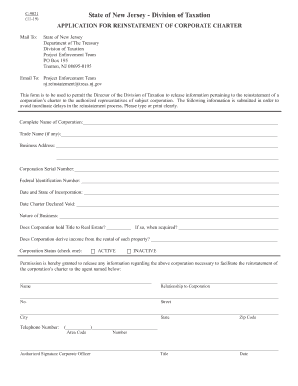



Jun 27, 2026 Product Number Form 5498 Title IRA Contribution Information (Info Copy Only), Revision Date 2024 ; Product Number Form 5498 Title IRARead more
Contribution Limits Vary Based on Circumstances Also see the new Form 8995 and Form 8995-A required to be attached to theRead more
Wage and Income Transcript shows data from. Form 5498, IRA Contribution Information. This transcript can be submitted in lieu of W2s and is available using Get


