
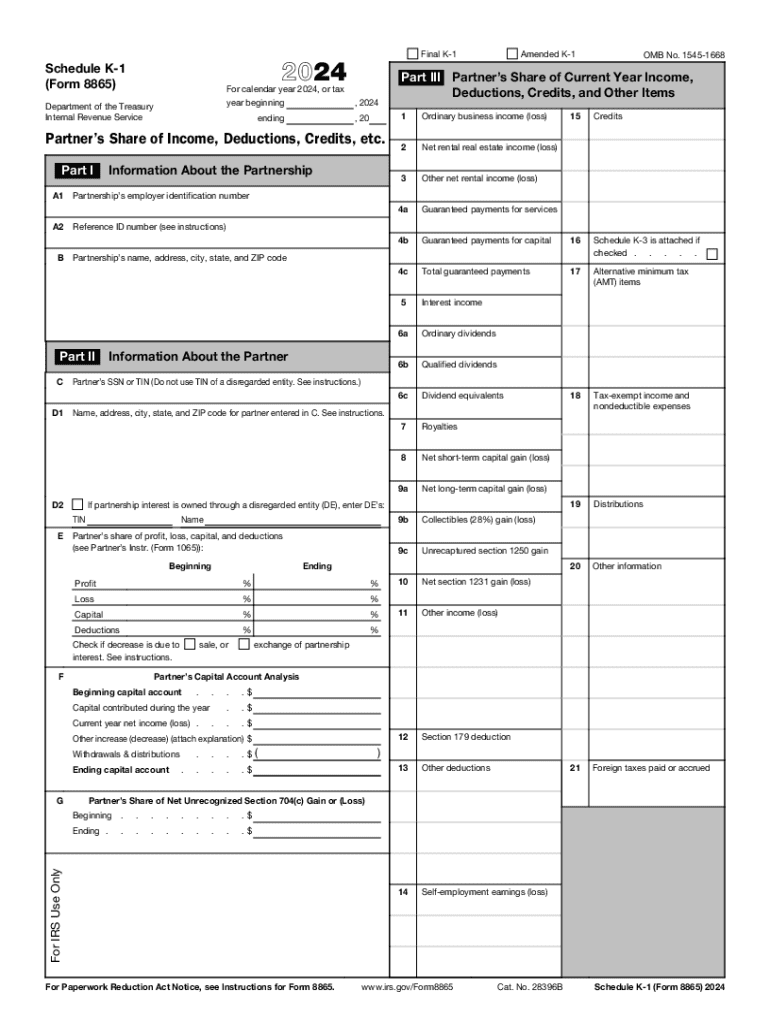







Understanding IRS Form 8865
IRS Form 8865 is essential for U.S. persons who are involved with foreign partnerships. This form serves multiple purposes, such as reporting information regarding the partnership and disclosing transactions between controlled foreign partnerships and the taxpayer. Filers typically include U.S. citizens involved with foreign partnerships, ensuring compliance with specific reporting obligations.
Filing Purposes and Requirements
IRS Form 8865 is used by U.S. persons who possess a significant interest in foreign partnerships. It encompasses four categories of filers, depending on the level of control and financial interest in the foreign partnership:
- Category 1 Filers are U.S. persons, generally controlling at least 50% of the partnership.
- Category 2 Filers deal with U.S. persons who hold 10% or more in partnerships controlled by U.S. persons.
- Category 3 Filers cover U.S. persons contributing property to partnerships in exchange for interest.
- Category 4 Filers require U.S. persons who disconnect from the foreign partnerships to fulfill specific criteria.
The categories ensure that the form covers a range of scenarios related to foreign partnerships, and understanding each category is key to determining the appropriate filing obligations.
How to Obtain IRS Form 8865
IRS Form 8865 can be accessed online via the IRS website. The form is readily available as a downloadable PDF or can be retrieved through tax preparation software like TurboTax or QuickBooks, which often include this form as part of their offerings for international tax filings. The ease of obtaining the form caters to both individuals and businesses with various software preferences.
Steps to Complete IRS Form 8865
- Gather Necessary Information: Ensure that partnership details, financial records, and any transaction histories are on hand.
- Complete Relevant Sections: Depending on the category of filer, fill in the appropriate schedules and sections.
- Schedule A lists interests in foreign partnerships.
- Schedule N reveals transfer pricing and transaction disclosures.
- Attach Supporting Documents: Include financial statements or proof of transactions if necessary.
- Review for Accuracy: Errors can lead to penalties, so verify every section attentively before submission.
Filing Deadlines and Important Dates
Form 8865 follows the same deadline as other tax forms filed by U.S. persons, typically due on the 15th day of the third month following the end of the partnership's tax year. For the 2024 tax year, this means forms are generally due by March 15, 2025, with extensions available if filed by this initial deadline.
Penalties for Non-Compliance
Failing to file Form 8865, incomplete disclosures, or inaccuracies can result in significant penalties. U.S. persons may face up to $10,000 in fines per unreported foreign partnership. Moreover, further penalties might be imposed if non-compliance continues beyond the stipulated period, emphasizing the need for accurate and timely submission.
IRS Guidelines and Compliance
The IRS provides detailed instructions to guide filers through Form 8865. These guidelines explain each part of the form, detail specific filing categories, and clarify how to handle more complex transactions with foreign partnerships. Ensuring compliance necessitates adherence to these instructions to avoid misunderstandings or filing errors.
Digital vs. Paper Version of Form 8865
Filers can submit Form 8865 both digitally and via paper. Tax preparation software often supports electronic filing, offering a streamlined process with error-checking features. In contrast, the paper submission may require physical mailing to specified IRS locations, which can be prone to postal delays but may be preferred by those less comfortable with digital platforms.
Business Entity Types and IRS Form 8865
This form is particularly relevant for specific business entities such as LLCs, corporations, and partnerships engaged in foreign operations. The need to report foreign partnerships typically stems from movements of capital or business activities beyond U.S. borders, thereby ensuring global transparency and adherence to international tax obligations.




