Plumbing Fittings Test Laboratory Application - California Energy 2025

Get Form
Plumbing Fittings Test Laboratory Application - California Energy Preview on Page 1

Here's how it works

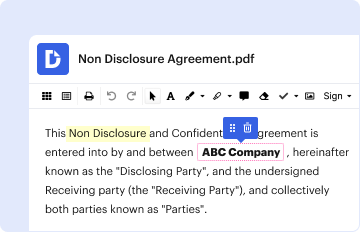
01. Edit your form online
Type text, add images, blackout confidential details, add comments, highlights and more.
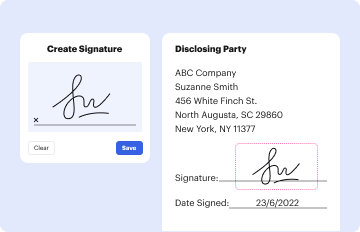
02. Sign it in a few clicks
Draw your signature, type it, upload its image, or use your mobile device as a signature pad.
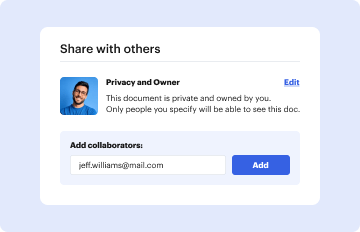
03. Share your form with others
Send it via email, link, or fax. You can also download it, export it or print it out.

How to use or fill out Plumbing Fittings Test Laboratory Application - California Energy with our platform

Form edit decoration
9.5
Ease of Setup
DocHub User Ratings on G2
9.0
Ease of Use
DocHub User Ratings on G2
  1. Click ‘Get Form’ to open the Plumbing Fittings Test Laboratory Application in the editor.
  2. Begin by filling in the 'Contact Person Name' and 'Company / Laboratory Name' fields. Ensure that all contact information, including phone numbers and email addresses, is accurate for seamless communication.
  3. Specify the physical address of the testing location in the designated field. This is crucial for processing your application efficiently.
  4. Select the types of plumbing fittings you will be testing from the provided options, such as faucets or showerheads. This helps categorize your application correctly.
  5. Indicate which test procedures you will be using by checking the appropriate boxes. Make sure to attach completed sample test reports as required.
  6. Review all entered information for accuracy before signing. You must declare that all information is true and complete under penalty of perjury.
  7. Once completed, print, sign, and submit your application electronically as an email attachment to appliances@energy.ca.gov.

Start using our platform today to streamline your application process for free!

be ready to get more

Complete this form in 5 minutes or less

Get form

Got questions?

We have answers to the most popular questions from our customers. If you can't find an answer to your question, please contact us.
Contact us
Title 20 compliance requires bulbs to meet specific efficacy requirements measured in lumens per watt (LPW). General service lamps (GSLs) must achieve a minimum of 45 LPW, while state-regulated LED lamps (SLEDs) and small diameter directional lamps (SSDLs) must docHub 80 LPW.
California Title 20 lighting compliance requires LED bulbs to give illumination for general lighting with a brightness equal to or less than 2600 lumens and greater than or equal to 200 lumens or 150 lumens (for candelabra bases).
Regulated appliances that have not been certified to the Energy Commission cannot be legally sold or offered for sale in the state of California. Certification of appliance data (a maximum of 1000 data entries per submittal) is submitted through the modernized appliance efficiency database system (MAEDBS).
Rated life of greater than 10,000 hours is acceptable for Title 20, while the acceptable rated life should be equal to or greater than 15,000 hours for Title 24 compliance. Based on these differences, an LED light bulb can be Title 20-compliant and not Title 24-compliant.
If a product complies with Title 20, that means it meets the energy efficiency standards set by the California Energy Commission. This impacts three main categories of lighting: state-regulated LED lamps, state-regulated small diameter directional lamps, and state-regulated general service lamps.

People also ask

CEC certification is an appliance efficiency regulation implemented by the California Energy Commission in the United States on December 30, 2005. The purpose of this regulation is to improve the efficiency of power products, save energy, reduce gas emissions and the greenhouse effect.

Related links