







Definition and Meaning
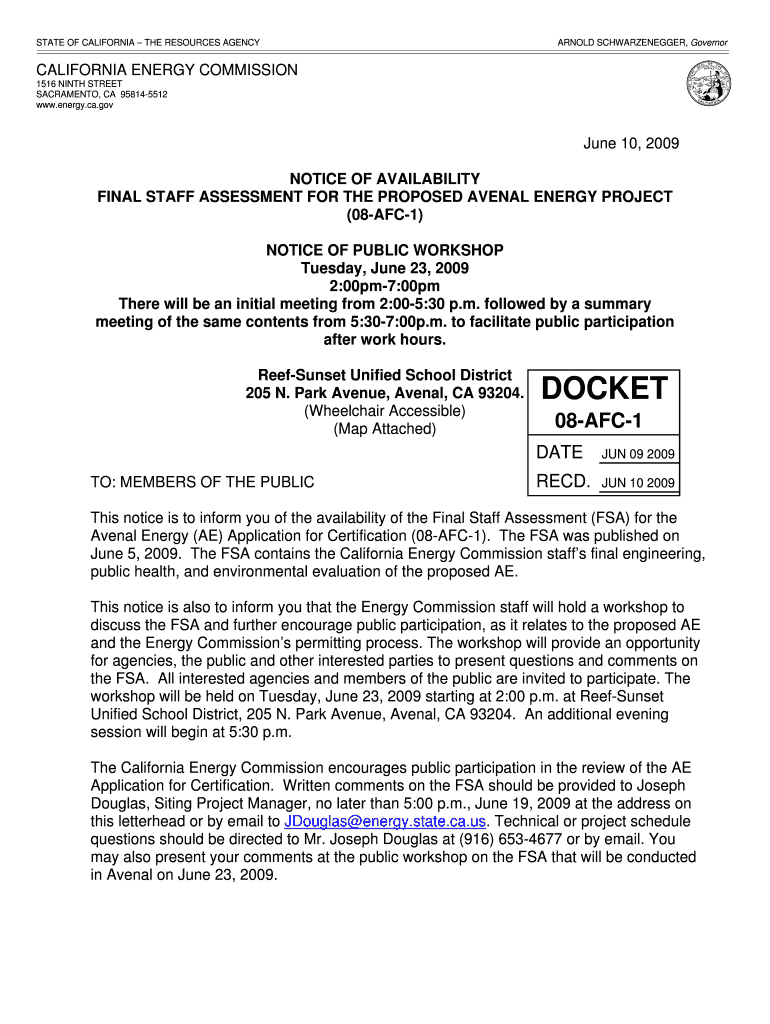
The "June 23, 2009 - California Energy Commission - State of California - energy ca" refers to a notice issued by the California Energy Commission (CEC) regarding the availability of the Final Staff Assessment (FSA) for the Avenal Energy Project. This notice highlights important aspects of a proposed energy project intended to construct a 600-megawatt natural gas-fired power plant in California. The document provides an overview of the project assessment, including its potential engineering, public health, and environmental impacts.
Significance of the FSA
- The FSA represents a comprehensive evaluation of the energy project by the CEC.
- It addresses the engineering design, environmental concerns, and public safety considerations.
- Serves as a foundation for public discussions and decision-making related to the implementation of the project.
Key Elements of the June 23, 2009 Notice
This notice incorporates several critical components necessary for stakeholders to understand the scope and implications of the Avenal Energy Project.
Project Overview
- Description of the proposed 600-megawatt natural gas-fired power plant.
- Details on the advanced cooling technology aimed at minimizing water use.
Environmental Impact
- Analysis of potential environmental repercussions with proposed mitigation strategies.
- Evaluation of the project's ability to meet public health standards and regulatory requirements.
Steps to Utilize the Notice
Understanding how to effectively use the information within the June 23, 2009 Notice involves several actions.
-
Review the Notice Thoroughly
- Familiarize yourself with the project's specifics and the FSA findings.
- Identify key environmental and public health considerations.
-
Participate in Public Workshops
- Engage in the scheduled public workshop to discuss the FSA in detail.
- Provide input and raise concerns regarding the project's impact.
-
Submit Feedback
- Utilize the mechanisms provided by the CEC to submit comments or objections.
- Focus on areas that require further clarification or additional mitigation measures.
Who Typically Uses This Notice?
The primary audience for this notice includes a diverse range of stakeholders who hold vested interests in the proposed energy project.
Stakeholder Groups
-
Local Residents and Communities: Interested in understanding the potential local impacts of the project on their environment and health.
-
Environmental Organizations: Focus on analyzing the project's environmental footprint and advocating for sustainable practices.
-
Regulatory Bodies and Government Agencies: Ensure the project complies with legal standards and regulations.
-
Private Sector Entities: Companies involved in the engineering, construction, and energy sectors evaluate business opportunities and partnerships.
Legal Use and Compliance
Engaging with the notice in a legal capacity involves understanding regulatory obligations and frameworks related to energy projects in California.
Regulatory Framework
- Adherence to state and federal guidelines governing energy project assessments.
- Implementation of proposed mitigation measures as specified in the FSA.
Examples of Using the Notice for Advocacy
Stakeholders can leverage the information in this notice for advocacy and decision-making.
Practical Advocacy Examples
-
Community Activism: Use data from the FSA to mobilize community efforts in favor of or against the project, focusing on public health and environmental protection.
-
Policy Change Initiatives: Advocate for changes in state policy based on the FSA findings, emphasizing alternative energy solutions if necessary.
Important Terms Related to the Notice
Familiarity with specific terminologies used within the notice can enhance understanding and facilitate more effective communication among stakeholders.
Key Terms
- Final Staff Assessment (FSA): The comprehensive review conducted by the CEC.
- Mitigation Measures: Strategies proposed to minimize adverse impacts.
- Advanced Cooling Technology: Innovations designed to reduce water usage in energy production.
State-Specific Considerations
The State of California's unique policies and regulations play a crucial role in shaping the implementation and review process for energy projects.
California Energy Regulations
- Compliance with California’s rigorous environmental and public health standards.
- Coordination with statewide initiatives focused on sustainable energy development.
Understanding these aspects provides stakeholders a well-rounded perspective on the proposed energy project detailed in the notice issued by the California Energy Commission on June 23, 2009.




