MCP Form MCP 002 - New Garnishments Vendor Request 2026

Get Form
MCP Form MCP 002 - New Garnishments Vendor Request Preview on Page 1

Here's how it works

01. Edit your form online
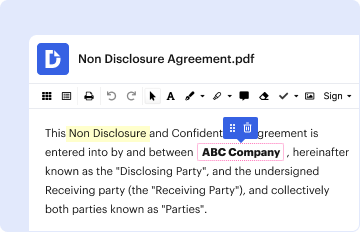
Type text, add images, blackout confidential details, add comments, highlights and more.
02. Sign it in a few clicks
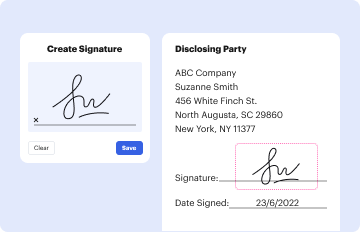
Draw your signature, type it, upload its image, or use your mobile device as a signature pad.
03. Share your form with others
Send it via email, link, or fax. You can also download it, export it or print it out.

How to use or fill out MCP Form MCP 002 - New Garnishments Vendor Request with DocHub

Form edit decoration
9.5
Ease of Setup
DocHub User Ratings on G2
9.0
Ease of Use
DocHub User Ratings on G2
  1. Click ‘Get Form’ to open the MCP Form MCP 002 in our platform's editor.
  2. Begin by filling out the 'REQUESTING DEPARTMENT' section. Enter your department name, return email address, and telephone number accurately to ensure proper communication.
  3. Next, move to the 'VENDOR INFORMATION' section. Input the vendor's name and address, including city, state, and zip code. This information is crucial for processing the garnishment request.
  4. Select the appropriate 'Garnishment Category' from the provided options to categorize the request correctly.
  5. Complete the 'Form Submitted By' section by printing your contact name, providing your telephone number, date of submission, fax number, and email address for follow-up.

Start using our platform today to streamline your form completion process for free!

be ready to get more

Complete this form in 5 minutes or less

Get form

Got questions?

We have answers to the most popular questions from our customers. If you can't find an answer to your question, please contact us.
Contact us
A creditor may not garnish more than 25% of your wages per pay period. For individuals earning minimum wage or near minimum wage, you must be left with an amount equal to 30 times the Maryland minimum hourly wage.
Most, but not all creditors, are required to go to court to get a garnishment order. You can challenge a garnishment if youre receiving certain types of income that are exempt from garnishment like Social Security, unemployment, and retirement benefits.
Programs like Social Security (Retirement, Survivor or Disability Insurance) and Veterans Benefits are also exempt from garnishment. This money is automatically protected when you have less than 2 months of benefits in your account.
A writ of garnishment is a process by which the court orders the seizure or attachment of the property of a defendant or judgment debtor in the possession or control of a third party. The garnishee is the person or corporation in possession of the property of the defendant or judgment debtor.
You have two main options: you can either negotiate a settlement to pay off the remaining balance or file a motion in court to contest the garnishment, especially if it was obtained without your knowledge or by default. You can choose to handle this yourself or hire a local attorney to assist you.

People also ask

In general, a writ of execution allows the sheriff or constable to seize property and assets in satisfying the judgment. Many types of property, money, and assets are included and can be seized as a result of a writ of execution.
So, yes, your employer will know that your wages have been garnished. Your immediate supervisor may not, but if theres an HR department, it will know, and whoever in your company has legal authority to sign the response to the court will also know.
Issuance of Writ of Garnishment After the request is filed, the court clerk or a judge signs the Request, and it becomes a Writ of Garnishment. The Writ of Garnishment orders the employer to hold any property (typically wages) of the employee that the employer has at the time the Writ is filed.
Creditors generally cannot garnish more than 25 percent of your disposable wages. Disposable wages are the earnings that remain after deducting all withholdings required by law, or any of your disposable wages if you make less than $380 per week. These limits do not apply to judgments for child support.

Related links