
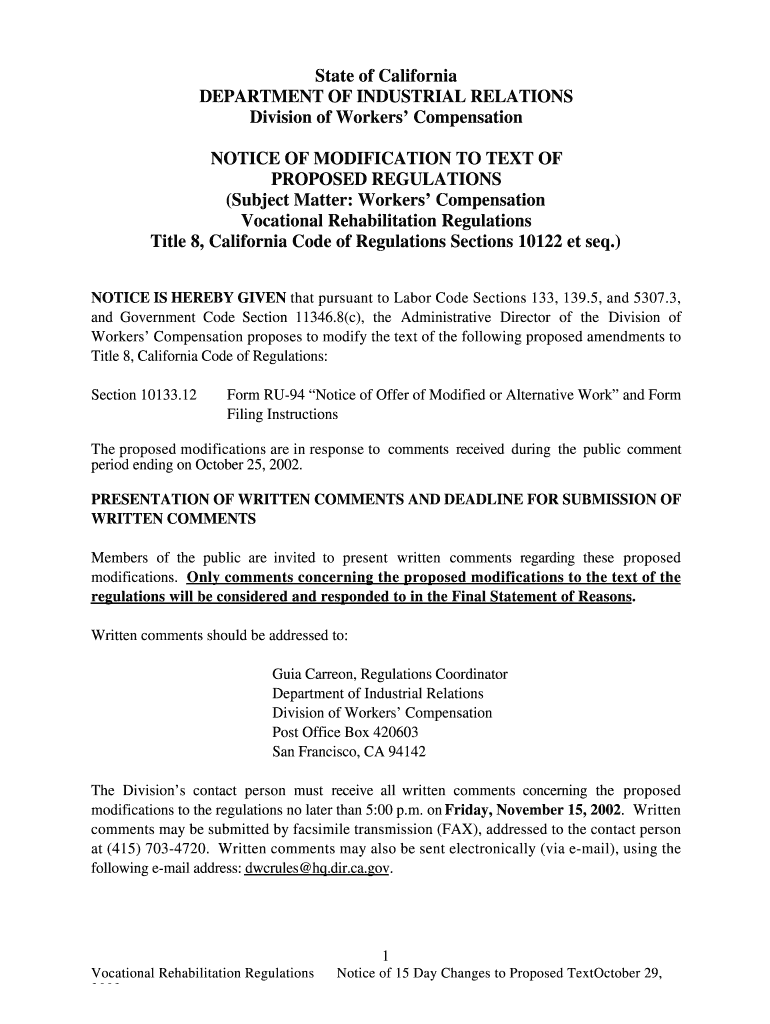







Definition and Meaning of Workers' Compensation
Workers' compensation is a form of insurance providing wage replacement and medical benefits to employees injured during employment, in exchange for mandatory relinquishment of the employee's right to sue their employer for negligence. Originating in the United States, workers' compensation aims to protect both employees and employers by fixing liability regardless of fault. This means that work-related injuries and illnesses are covered under this system without requiring proof of employer negligence.
Key Characteristics
- No-Fault System: Employees receive compensation without proving employer fault.
- Covers Medical Expenses: Includes hospital bills, medical treatments, and rehabilitation costs.
- Income Replacement: Provides partial wage replacement for lost income due to injury.
- Return-to-Work Programs: Focus on helping injured workers return to their jobs.
How to Use the Workers' Compensation Form
The workers' compensation form is critical for initiating a claim if one sustains a work-related injury or illness. It captures essential information that ensures an employee's situation is properly reviewed and compensated under the law.
Process Overview
- Immediate Reporting: Notify the employer about the injury or illness promptly.
- Form Completion: Fill out the workers' compensation claim form provided by the employer.
- Details Accuracy: Ensure all sections are complete and accurate, including the nature of the injury and circumstances.
- Submit Forms: Send completed forms to the employer or insurance provider as per instructions.
Steps to Complete the Workers' Compensation Form
Completing the workers' compensation form can be straightforward if you follow the prescribed steps.
- Personal Information: Enter personal details such as name, address, and employment information.
- Incident Description: Provide a detailed account of how, when, and where the incident occurred.
- Medical Assessment: Include initial medical diagnosis and any treatment received.
- Witness Reports: If applicable, attach statements from coworkers or witnesses.
- Submission: Ensure submission through the right channels – either online or mailed to the appropriate authorities.
Important Tips
- Check for Errors: Double-check for spelling and factual errors.
- Consult HR: Seek assistance from your Human Resources department if unsure.
Key Elements of the Workers' Compensation Form
This form is pivotal in documenting the injury or illness, hence requiring accurate and comprehensive information.
- Injury Details: Thorough narrative of the incident, including time and location.
- Medical Records: Attach medical reports and prognosis related to the injury.
- Employer's Section: Employer comments and their acknowledgment of the claim.
- Witness Information: Relevant if there were eyewitnesses to the incident.
Eligibility Criteria for Workers' Compensation
Workers' compensation eligibility depends on several key factors.


Primary Requirements
- Employee Status: Must be classified as an official employee.
- Work-Related Incident: The injury must occur in connection with job duties.
- Notification Timeliness: Prompt notification to the employer.
- State Compliance: Follow specific state laws governing workers' compensation.
State-Specific Rules for Workers' Compensation
Workers' compensation varies significantly across different U.S. states, each with its rules and regulations.
Differences and Nuances
- Benefits Calculation: States differ in calculating wage compensation.
- Statute of Limitations: Varying timelines for filing a claim, ranging from 30 days to a couple of years.
- Medical Providers: Some states specify which doctors can be visited for claims.
- Appeals Process: Varies in complexity and time across state lines.
Legal Use of the Workers' Compensation Form
The form ensures compliance with legal requirements to secure rightful benefits.
Coverage
- Legally Binding Claims: Once processed, the claims are legally recognized.
- Documentation Backup: Provides documented evidence necessary for legal processes.
- Fraud Prevention: Utilizes accurate documentation to prevent fraudulent claims.
Penalties for Non-Compliance
Failure to comply with workers' compensation procedures can impose significant penalties on both employees and employers.
Consequences
- Delayed Benefits: Incomplete forms can cause delays or denial of benefits.
- Employer Penalties: Employers may face fines for failing to report injuries.
- Legal Repercussions: Non-compliance can lead to litigation or policy reviews.
Digital vs. Paper Version of the Workers' Compensation Form
The administration of workers' compensation forms can be facilitated through both digital and paper formats.
Digital Benefits
- Easier Access: Fill and submit forms efficiently online.
- Quicker Processing: Faster turnaround and tracking of claims.
- Environmentally Friendly: Reduces paper use and physical document storage needs.
Paper Benefits
- No Technical Requirement: Can be filled without needing internet access.
- Tangible Record: Provides a hard copy for personal records or legal back-up.
Application Process & Approval Time for Workers' Compensation
Understanding the application process and typical approval timeline ensures preparedness.
General Timeline
- Initial Reporting: Within 30-90 days depending on the state.
- Employer Review: Immediate to 14 days for employer response.
- Claim Processing: Typically 21-30 days after all documents are submitted.
Factors Influencing Timeline
- State Laws: Different jurisdictions have distinct processing times.
- Complexity of Case: More complicated cases may require a longer review period.
- Documentation Completeness: Missing information can delay the process.
Choosing to approach the workers' compensation form with thoroughness and attention to detail is critical in ensuring a smooth claim process. Understanding state-specific guidelines and taking advantage of the benefits of digital submission can greatly enhance efficiency.




