
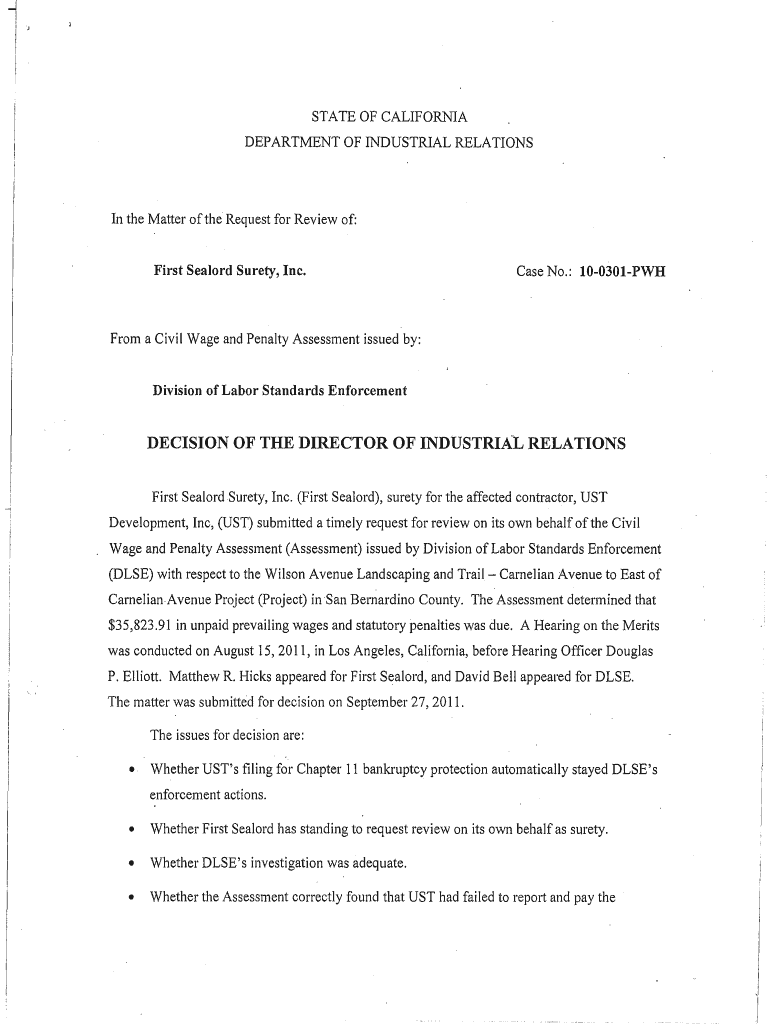







Definition and Meaning of the Decision by the Director of Industrial Relations
The "decision of the director of industrial relations" from the California Department refers to a formal determination made by the state’s labor authority concerning issues such as wage disputes, enforcement of labor laws, and other employment-related matters. These decisions are crucial in interpreting compliance with labor regulations and resolving conflicts. They typically detail the findings and rulings made in specific cases, thus serving as a reference for legal precedents and future enforcement actions.
Practical Examples
- In cases where a company has been found to violate wage laws, the decision would outline the specific violations and any penalties to be imposed.
- When a contractor disputes a wage assessment from the Division of Labor Standards Enforcement, the decision will include the justification for upholding or dismissing the appeal.
How to Use the Decision of the Director of Industrial Relations
Understanding how to interpret and apply these decisions is vital for employers, employees, and legal practitioners. They serve as a guide to navigate the complexities of labor laws in California.
Key Utilizations
- For Employers: These decisions can help employers adhere to labor laws by providing clear examples of compliance and non-compliance.
- For Employees: Workers can reference these decisions to ensure they are receiving fair treatment and compensation.
- For Legal Professionals: Attorneys might leverage these outcomes as precedents in similar cases.
How to Obtain the Decision of the Director of Industrial Relations
Accessing these decisions requires familiarity with the process of retrieving official documents from government sources.
Retrieval Steps
- Visit the California Department of Industrial Relations Website: The official site sometimes publishes recent decisions related to labor disputes and enforcement actions.
- Request via Public Records Act: Submit a formal request for specific decision documents if they're not readily available online.
- Library and Archives: Some large legal libraries maintain comprehensive collections of decisions on labor relations.
Steps to Complete the Decision Request Process
Completing a request for a decision statement involves several steps to ensure accuracy and adherence to legal requirements.
Detailed Steps
- Determine Specifics: Know the exact decision or case you are interested in, including parties involved and decision date.
- Prepare Documentation: Have any relevant personal identification or business credentials ready if needed for access.
- Submit Request: Provide details through the appropriate channels like online forms or physical submissions to the department.
- Follow Up: Maintain contact with the department's records office for updates on your request.
Why Understanding These Decisions is Critical
Decisions made by the Director of Industrial Relations shape the enforcement landscape of labor laws and have lasting implications on employment practices across the state.
Key Implications
- They act as benchmarks for acceptable labor practices.
- Influence future legislative changes.
- Educate stakeholders on legal precedents and case law.
Who Typically Uses These Decisions
Various groups benefit from understanding and applying these rulings, ranging from legal entities to individual workers seeking justice.


Primary Users
- Legal Firms and Practitioners: To inform strategy in employment law cases.
- Human Resources Departments: To design compliant workplace policies.
- Labor Unions and Advocacy Groups: To protect workers' rights and interests.
Important Terms Related to the Decision Document
Familiarity with the specific terminology used in these decisions ensures accurate understanding and application.
Commonly Used Terms
- Prevailing Wage: The standard wage set for certain work categories typically related to government contracts.
- Civil Wage and Penalty Assessment: A determination by labor authorities of owed wages and penalties.
- Bankruptcy: Legal status often affecting liability and enforcement capabilities in wage disputes.
Legal Use and Compliance with the Decision
For those engaged in legal proceedings or workplace compliance initiatives, understanding the legal context and enforcement mechanisms of these decisions is essential.
Compliance Factors
- Integration with State Laws: Ensures all activities adhere to Californian labor codes and regulatory standards.
- Impact on Future Cases: They provide insights into potential legal consequences of actions by employers and other stakeholders.
State-Specific Rules Impacting Decisions
California has unique labor statutes and court interpretations that influence these decisions, making state-specific knowledge indispensable.
State Regulations
- Labor Codes: Comprehensive rules governing employment contracts, wages, and working conditions.
- Enforcement Actions: Specific protocols for initiating and contesting wage and labor disputes.
Examples of Using the Decision in Legal Scenarios
Real-world case studies illuminate the practical use of these decisions within legal and corporate settings.
Illustrative Cases
- A construction company facing wage disputes can use past decisions to evaluate their defense.
- Employees can cite relevant decisions when negotiating terms or disputing employer actions.
Key Elements of the Decision Document
The document itself often contains standardized components providing clarity and structure to the director's findings.
Document Structure
- Introduction and Overview: Brief outline of the case, including disputing parties.
- Findings of Fact: Evidence and factual determinations that form the basis of the decision.
- Conclusions and Rulings: The final judgment and any penalties or corrective actions mandated.




