







Definition & Meaning
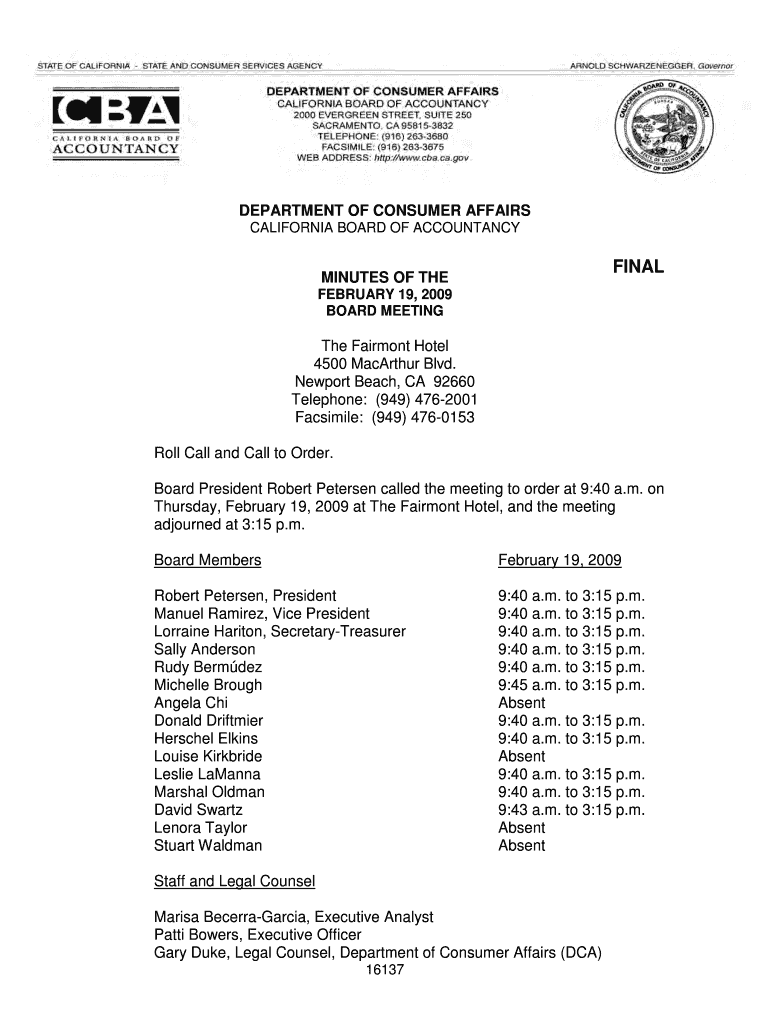
Board Meeting Minutes are formal records of the proceedings and decisions made during a board meeting. In the context of the California Board of Accountancy's meeting on February 19, 2009, these minutes serve as an official account of discussions, resolutions, and actions taken by the board during this session. They outline key topics such as legislative strategies, peer review standards, and committee structures. These documents are essential for transparency and accountability, providing a reference for both board members and the public.
How to Use the Board Meeting Minutes 2/19/2009
To use the minutes effectively, review the document to understand the decisions made and the discussions held during the meeting. This is crucial for stakeholders such as board members, auditors, and the public to stay informed about the board's activities and directions. The minutes can be used to:
- Verify attendance and participation of board members.
- Track progress on ongoing projects and initiatives discussed during the meeting.
- Reference past discussions and decisions for future meetings.
How to Obtain the Board Meeting Minutes 2/19/2009
To access the California Board of Accountancy Board Meeting Minutes from February 19, 2009, you can typically visit the official website of the California Board of Accountancy. The minutes are often available in the public records or meetings section. If unable to find them online, contact the board directly to request a copy. Access might be provided via:
- Downloadable PDF format
- Request via email
- Physical copies at the board’s office
Key Elements of the Board Meeting Minutes
The February 19, 2009, board meeting minutes include several critical elements:
- Attendance: Lists present board members and other key attendees.
- Peer Review Discussions: Covers updates on peer review legislation and enforcement.
- Legislative Strategies: Discusses various legislative approaches and their implications.
- Salary Legislation: Includes discussions on salary adjustments for Investigative Certified Public Accountants.
- Committee Reports: Summarizes reports from different committees.
- Adjournment Time: Notes the official closing time of the meeting.
Legal Use of the Board Meeting Minutes
The board meeting minutes serve a legal function by documenting formal decisions and discussions. They can be used in legal contexts to:
- Verify decisions made by the board.
- Provide evidence in legal disputes regarding board actions.
- Ensure compliance with regulations governing board activities.
- Support transparency and accountability in board functions.
Important Terms Related to Board Meeting Minutes
Understanding the terminology used in board meeting minutes is essential:
- Quorum: The minimum number of members required to officially conduct the meeting.
- Resolution: Formal decisions voted on and passed by the board.
- Motion: Proposals put forward during the meeting for discussion or decision.
- Adjournment: Formal conclusion of the meeting.
State-Specific Rules for the Board Meeting Minutes
The California Board of Accountancy operates under specific state regulations that influence its meeting procedures:
- Open Meeting Laws: Require that meetings be open to the public and minutes accessible.
- Record Keeping: Specifies how minutes should be recorded and preserved.
- Notification Requirements: Guidelines on how meetings and actions should be announced to the public.
Examples of Using the Board Meeting Minutes
Board meeting minutes can be utilized in various practical scenarios:
- Policy Development: Reference past discussions to inform new policy creation.
- Audit Processes: Use minutes to provide auditors with a clear record of decisions and rationales.
- Public Inquiries: Address questions from the public or press about board decisions.
- Training New Members: Educate new board members on historical decisions and ongoing matters.
Business Types That Benefit Most
Businesses that regularly interact with the California Board of Accountancy, particularly accounting firms and related entities, benefit most from access to these meeting minutes. They provide insights into regulatory changes, compliance requirements, and industry standards that directly impact their operations.




