
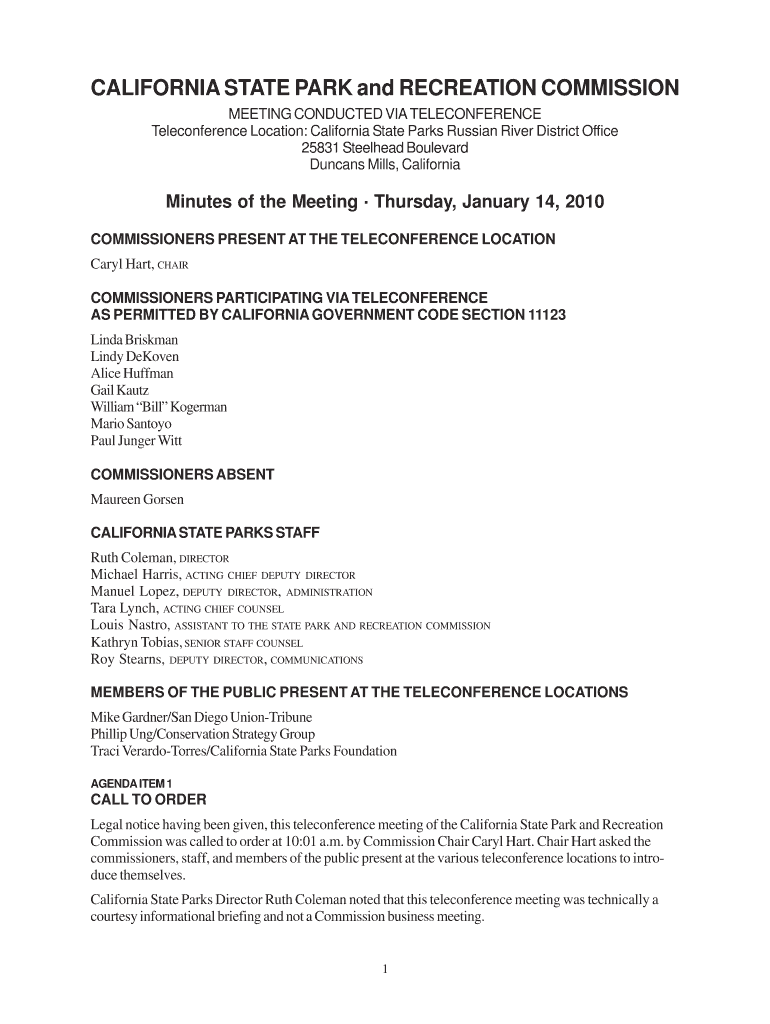







Definition & Purpose of "Minutes - California State Parks - parks ca"
The "Minutes - California State Parks - parks ca" document serves as an official record of meetings held by the California State Park and Recreation Commission. It details the discussions, decisions, and actions taken during these meetings. This can include updates on state budgets, conservation efforts, and strategic plans for park management. The minutes ensure transparency and accountability by providing a comprehensive account of the meeting proceedings.
How to Use the Document
To effectively utilize the "Minutes - California State Parks - parks ca," follow these steps:
-
Locate Specific Information:
- Use the indexed sections to find topics like budget updates, personnel plans, or conservation initiatives.
- Look for summaries at the beginning of each agenda topic to understand the core discussion points.
-
Understand Decision Context:
- Review background information provided in the minutes to grasp the context of decisions made by the commission.
-
Reference for Future Actions:
- Utilize the decisions and discussions documented as references for future planning or policy formulation.
Steps to Complete the Minutes
Completing the minutes involves several precise steps:
-
Preparation Before the Meeting:
- Draft an agenda outlining key topics and distribute to participants.
- Gather all necessary materials such as reports or proposals that will be discussed.
-
Recording During the Meeting:
- Note the date, time, and location of the meeting.
- Record attendees and any absentees.
- Document each agenda item discussed, ensuring thorough coverage of decisions and key points raised.
-
Post-Meeting Process:
- Review and refine draft minutes for clarity and accuracy.
- Distribute draft minutes for approval at the next meeting.
Legal Use of the Minutes
The minutes can serve various legal purposes:
- Official Record: They are recognized as the formal record of what transpired during the meetings and can be used in legal settings to verify discussions and decisions.
- Compliance Evidence: Demonstrate adherence to required procedures and protocols outlined by state law.
Key Elements of the Minutes
Key components that should be integrated into the minutes:
- Meeting Date and Attendance: Record of who attended and the meeting schedule.
- Agenda Items: Detailed account of each topic discussed.
- Decisions Made: Documentation of resolutions passed or actions agreed upon.
- Public Comments: Summary of statements or questions made by public participants.
Important Terms Related to the Document
Understanding certain terminologies is crucial:
- Quorum: The minimum number of members required to conduct official business.
- Motion: A formal proposal put forward for discussion or decision.
- Adjournment: The formal closing of a meeting or session.
Who Typically Uses the Minutes
Various stakeholders benefit from access to these minutes:
- Government Officials: Use them to inform policy-making and budget allocation.
- Environmental Advocates: Access for insights into conservation strategies and park management.
- General Public: Reference for understanding state park initiatives and ensuring government transparency.


Examples of Using the Minutes
Real-world scenarios illustrate practical applications:
- Policy Development: Lawmakers refer to previous decisions documented in minutes to formulate new policies.
- Academia and Research: Researchers analyze minutes to study government approaches to environmental conservation.
State-Specific Rules Governing the Minutes
While the specific rules can vary, California mandates:
- Public Accessibility: Minutes must be accessible to the public as part of California’s open meeting laws.
- Timely Submission: Minutes should be prepared and available within a certain period post-meeting to ensure public accessibility.
How to Obtain the Minutes
Acquiring the minutes can be done through:
- State Park Websites: Many minutes are published on official websites for public access.
- Public Records Requests: Submit requests under the California Public Records Act for access to detailed minutes.
Important Deadlines and Dates
Be aware of critical timelines:
- Meeting Schedule: Regular meetings are often scheduled quarterly or biannually, with specific dates outlined for the public.
- Approval Timeline: Minutes are typically reviewed and approved at the subsequent commission meeting.
Form Submission Methods (Online, Mail, In-Person)
Submitting comments or engaging with the meeting process might involve:
- Online Platforms: Utilizing state websites for digital submissions.
- Mail: Sending formal inquiries or comments via postal services.
- In-Person Participation: Attending meetings or hearings to provide input directly.




