




01. Edit your free federal tax forms printable online
Type text, add images, blackout confidential details, add comments, highlights and more.

Type text, add images, blackout confidential details, add comments, highlights and more.

Draw your signature, type it, upload its image, or use your mobile device as a signature pad.

Send how to fill out pdf forms via email, link, or fax. You can also download it, export it or print it out.
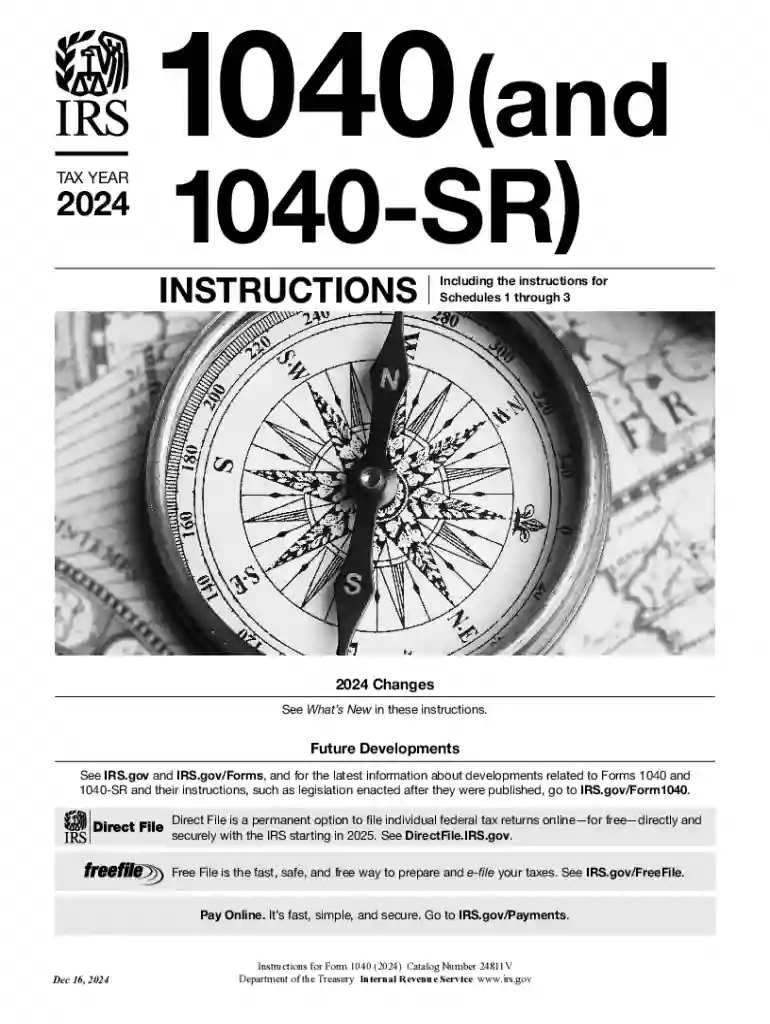
The 2024 Form 1040-SR is a simplified tax return form specifically designed for seniors aged 65 and older in the United States. It is intended to provide an easier way for retirees to report their taxes. The form allows for larger print and a standard deduction table tailored for senior taxpayers, making it more straightforward and accessible compared to the traditional Form 1040. Providing the same tax reporting functionality, this form ensures seniors can efficiently manage their tax responsibilities with no loss in comprehensiveness or regulatory compliance.
Using the 2024 Form 1040-SR involves several steps to ensure accurate tax reporting. Begin by gathering all necessary forms of income, including Social Security benefits, retirement distributions, and any dividends or interest. Next, use the form to detail income sources while applying specific credits and deductions applicable to seniors. The form provides a clear structure to input this information along with sections for adjustments to income, potentially calculating tax credits unique to senior taxpayers. Finally, review all entered information for accuracy before filing the form with the Internal Revenue Service (IRS).
The filing deadline for the 2024 Form 1040-SR is typically April 15, 2025. However, if this date falls on a weekend or federal holiday, the deadline would be extended to the next business day. Make sure to file your return by this deadline to avoid penalties and interest. Extensions can be requested using Form 4868, granting an additional six months to file but not to pay taxes due.
To complete the 2024 Form 1040-SR effectively, gather the following documents:
The IRS provides specific guidelines for filling out the 2024 Form 1040-SR, emphasizing accuracy in reporting all income sources and appropriately applying deductions and credits. It is essential to follow these guidelines closely to avoid any issues or inaccuracies that might lead to audits or payment discrepancies. Furthermore, seniors should consult the IRS instructions specific to Form 1040-SR for detailed explanations on each section.
Failure to file the 2024 Form 1040-SR by the stipulated deadline can result in several penalties. These include a late filing fee of 5% of the unpaid taxes for each month, up to 25%. Additionally, understated tax may lead to a penalty of 20% of the additional tax owed. Ensuring timely and accurate filing is critical to avoid such penalties, making the adherence to filing schedules and accurate completion imperative for financial welfare.
We've got more versions of the free federal tax forms printable form. Select the right free federal tax forms printable version from the list and start editing it straight away!
| Versions | Form popularity | Fillable & printable |
|---|---|---|
| 2025 | 4.9 Satisfied (40 Votes) | |
| 2024 | 4.6 Satisfied (50 Votes) | |
| 2023 | 4.1 Satisfied (57 Votes) | |
| 2022 | 4.8 Satisfied (25 Votes) | |
| 2021 | 4.8 Satisfied (71 Votes) | |
| 2020 | 4.3 Satisfied (157 Votes) | |
| 2019 | 4.4 Satisfied (250 Votes) | |
| 2018 | 4.4 Satisfied (196 Votes) | |
| 2017 | 4.4 Satisfied (202 Votes) | |
| 2016 | 4.4 Satisfied (113 Votes) | |
| 2015 | 4.3 Satisfied (126 Votes) | |
| 2014 | 4.4 Satisfied (560 Votes) | |
| 2011 | 4 Satisfied (25 Votes) | |
| 2006 | 4.3 Satisfied (51 Votes) |
At DocHub, your data security is our priority. We follow HIPAA, SOC2, GDPR, and other standards, so you can work on your documents with confidence.


The Cisco 2-, 5-, 8-, and 10-Port Gigabit Ethernet SPAs enables deployment of different interfaces (Packet over SONET/SDH [PoS], ATM, Ethernet) on the same
Jan 21, 2026 s 1040 Individual Income Tax Return form. You must file your return by Monday, April 15, 2024 unless you request an automatic six month


