




01. Edit your form 8888 online
Type text, add images, blackout confidential details, add comments, highlights and more.

Type text, add images, blackout confidential details, add comments, highlights and more.

Draw your signature, type it, upload its image, or use your mobile device as a signature pad.

Send irs form 8888 via email, link, or fax. You can also download it, export it or print it out.
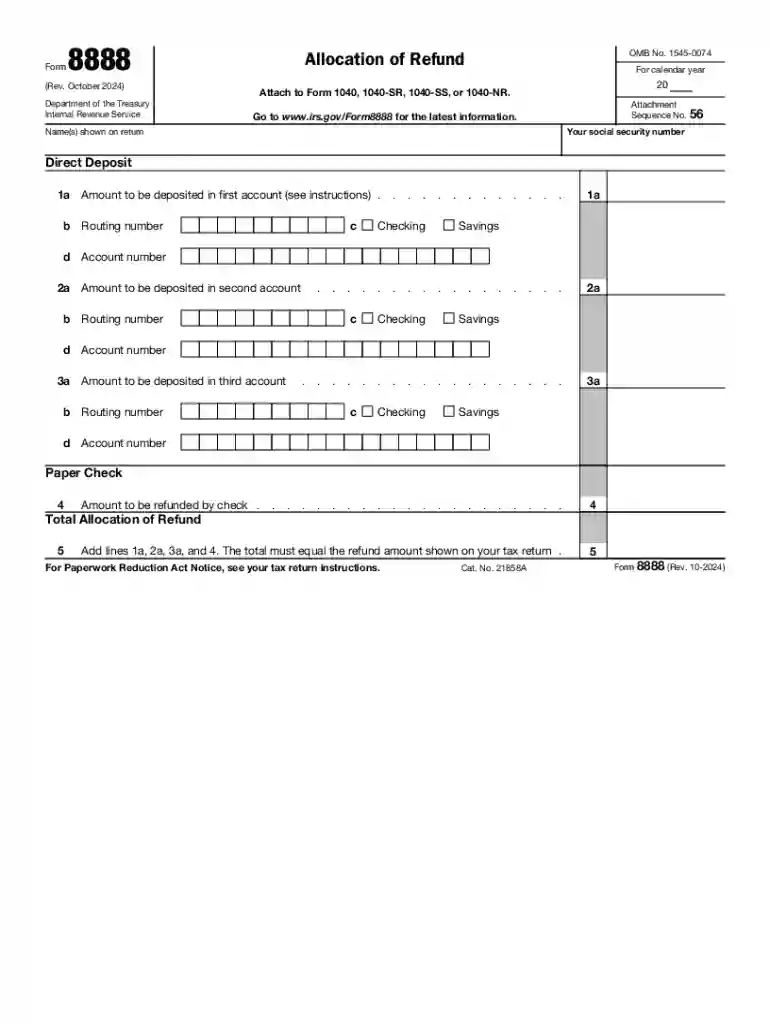
Form 8888, also known as the Allocation of Refund, is primarily used by taxpayers in the United States to direct their federal tax refund into multiple financial accounts. It supports allocations for up to three different accounts, such as checking, savings, and retirement accounts. In the 2024 tax filing season, Form 8888 no longer facilitates purchasing Series I Savings Bonds with tax refunds. This revision redirects the form's focus toward maximizing direct deposit benefits, like increased security and quicker refund processing times.
Form 8888 remains an optional tool for taxpayers wishing to allocate their tax refund efficiently. It is especially beneficial for those seeking to distribute their refund across various savings and investment accounts, supporting better financial management and savings discipline.
For the 2024 filing season, using Form 8888 involves several key steps to ensure accurate completion:
Personal and Tax Information: Begin by entering your personal and tax-related information. Ensure that the taxpayer identification number is correctly inputted.
Account Details: Specify the financial institution's routing number and your account numbers for each allocation. Each account type should be clearly marked, whether it's a checking, savings, or another type of account.
Allocation Amounts: Designate the specific amounts to be allocated to each account. The sum of the amounts directed into these accounts should match the total refund you expect.
Verification: Double-check all numbers and account details to prevent errors that might lead to delays or incorrect deposits.
Submission: Attach Form 8888 to your Form 1040 or other applicable tax return when filing electronically or via mail. The form should be filed according to the standard submission methods outlined by the IRS.
Completing Form 8888 requires detailed attention to ensure the refund is allocated correctly:
Understanding specific terms related to Form 8888 clarifies the allocation process for users:
A comprehensive list of documents aids in accurate form completion:
Failing to adhere to Form 8888 guidelines may incur consequences:
The IRS provides comprehensive guidelines to facilitate the correct use of Form 8888:
To maximize efficiency with Form 8888, note these critical deadlines:
Form 8888's compatibility with various tax preparation software facilitates its use:
We've got more versions of the form 8888 form. Select the right form 8888 version from the list and start editing it straight away!
| Versions | Form popularity | Fillable & printable |
|---|---|---|
| 2025 | 4.5 Satisfied (32 Votes) | |
| 2024 | 4.3 Satisfied (27 Votes) | |
| 2022 | 4.2 Satisfied (49 Votes) | |
| 2021 | 4.8 Satisfied (47 Votes) | |
| 2020 | 4.2 Satisfied (90 Votes) | |
| 2019 | 4.3 Satisfied (134 Votes) | |
| 2018 | 4.4 Satisfied (129 Votes) | |
| 2017 | 4.4 Satisfied (216 Votes) | |
| 2016 | 4.4 Satisfied (159 Votes) | |
| 2015 | 4.1 Satisfied (71 Votes) | |
| 2014 | 4.3 Satisfied (51 Votes) | |
| 2013 | 4 Satisfied (37 Votes) | |
| 2012 | 4.1 Satisfied (40 Votes) | |
| 2011 | 4.1 Satisfied (70 Votes) | |
| 2010 | 4.3 Satisfied (57 Votes) |
At DocHub, your data security is our priority. We follow HIPAA, SOC2, GDPR, and other standards, so you can work on your documents with confidence.

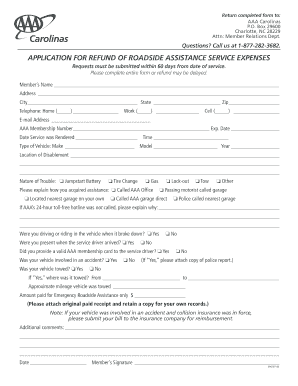
Use Form 8888 to split your refund. Entry to win with SaveYourRefund starts with splitting your refund into savings. Save $ 50 or more of your tax refund.
Jan 9, 2013 You can fill out IRS Form 8888 and they will divide your refund payment between up to three accounts that you designate. buy U.S. Series I


