
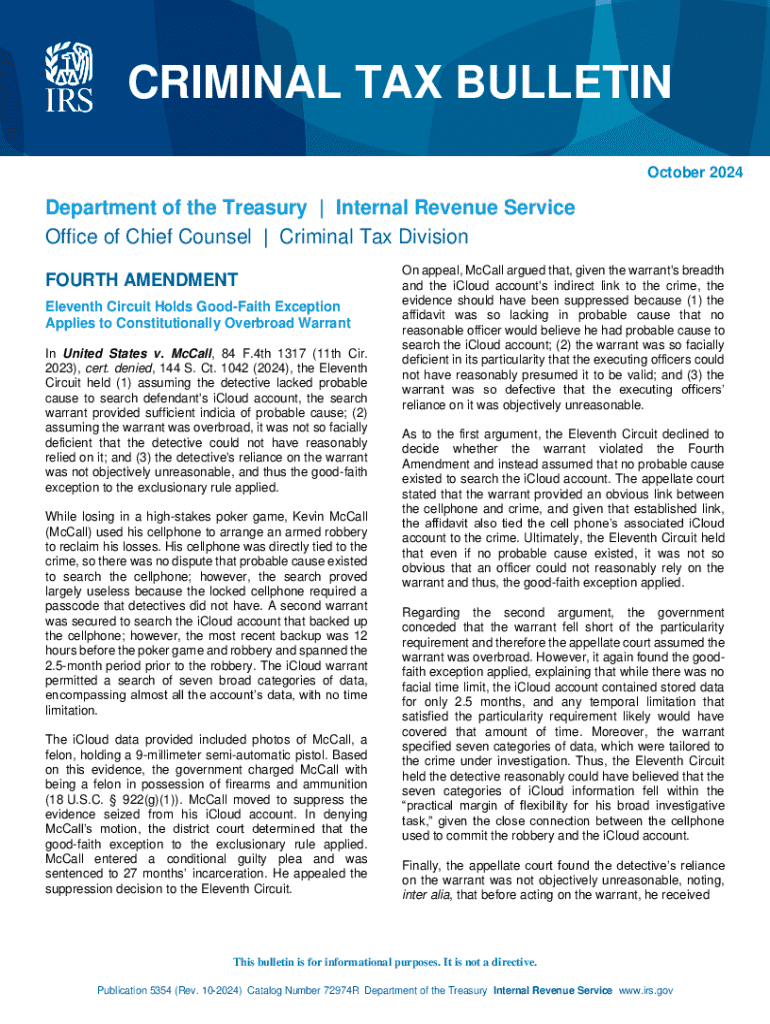







Definition & Meaning
The Chief Counsel Bulletins issued by the Internal Revenue Service (IRS) are crucial interpretive documents that provide insight into legal interpretations and administrative rulings pertaining to tax laws. They serve as a significant resource for understanding how the IRS intends to apply tax code provisions in various scenarios. These bulletins often include clarifications on complex tax regulations, interpretations of tax-related court rulings, and procedural guidance to aid taxpayers and practitioners in navigating tax obligations more effectively.
How to Use the Chief Counsel Bulletins from the IRS
Tax professionals and individuals can use these bulletins as authoritative guidance to better interpret specific areas of tax law. By reviewing recent issued bulletins, users gain insight into new IRS stances on evolving tax issues or precedents that may impact tax planning and compliance strategies. The bulletins might also assist in formulating arguments for or against certain tax positions in case of audits or disputes.
How to Obtain the Chief Counsel Bulletins
The Chief Counsel Bulletins are publicly accessible through the official IRS website. Users can search the IRS website's archive for current and past bulletins categorized by year and subject matter. This ensures that practitioners and taxpayers alike can stay informed of the latest legal interpretations and policy applications without operational delays.
Steps to Complete the Chief Counsel Bulletins
The Chief Counsel Bulletins are not forms to be completed but rather documents to be studied. However, to effectively engage with these bulletins:
- Identify Relevant Legal Issues: Determine which specific areas of tax law your issues pertain to.
- Access the Bulletin Archive: Visit the IRS website and navigate to the bulletin section.
- Search for Relevant Bulletins: Use keywords related to your concerns to find relevant bulletins.
- Analyze the Content: Review the interpretative guidance and cases cited to understand the application to your situation.
Importance of Chief Counsel Bulletins
The primary function of the Chief Counsel Bulletins is to provide comprehensive legal guidance, ensuring that interpretations are uniform across IRS practices. They are essential for ensuring transparency and fairness in the application of tax laws, aiding compliance by clarifying ambiguities within the tax code, and supporting dispute resolutions through detailed interpretations.
Key Elements of the Chief Counsel Bulletins
The bulletins typically contain the following key elements:
- Interpretative Guidance: Detailed expositions on how the IRS interprets certain tax provisions.
- Case Analyses: Summaries or implications of recent court cases relevant to tax law.
- Procedural Updates: Information on any amendments or changes to tax administration procedures.
- Policy Statements: Insight into current IRS policies or shifts in administrative focus.
IRS Guidelines
The guidelines laid out in these bulletins provide essential direction for navigating IRS procedures and tax code application. They highlight expected practices, document submission standards, and compliance expectations critical for legal conformity and avoidance of penalties.
Penalties for Non-Compliance
While Chief Counsel Bulletins themselves do not impose penalties, failing to align tax practices with the interpretations they elucidate can result in non-compliance issues. This can lead to IRS audits, fines, interest on tax deficiencies, and in some cases, legal proceedings.
Digital vs. Paper Version
Chief Counsel Bulletins are primarily available in digital formats via the IRS website, catering to the modern need for accessibility and environmental considerations. Digital versions allow for easy document searches and cross-referencing with other electronic tax resources, enhancing the utility for both practitioners and everyday taxpayers.
Software Compatibility
Tax software like TurboTax and QuickBooks can incorporate guidance from Chief Counsel Bulletins to ensure compliance with the latest IRS interpretations. This compatibility helps automate updates in tax calculation and reporting, reflecting the most current legal standards, and minimizing the risk of errors that could lead to compliance issues.
By delving deeply into these bulletins, users can enhance understanding and adherence to tax obligations, minimizing risks associated with non-compliance and optimizing tax positions based on the latest IRS policies and interpretations.




