






Definition and Meaning of Illinois Residential Extension Agreement
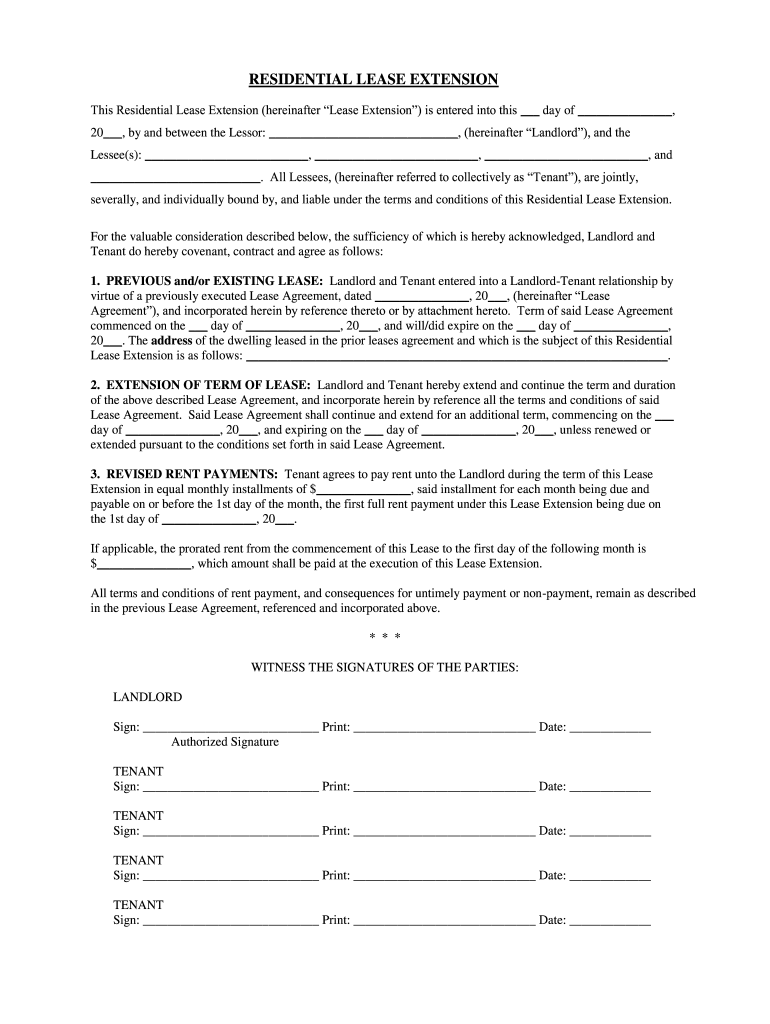
The Illinois Residential Extension Agreement refers to a formal document used to extend the term of an existing lease between a landlord and tenant(s) in the state of Illinois. This agreement allows both parties to continue their rental relationship beyond the original lease term under predefined conditions. Typically, it includes terms like the length of the extension, any rent adjustments, and other relevant modifications that apply during the extended period.
Key Features of the Agreement
- Lease Extension Duration: Specifies the timeframe for which the lease is being extended.
- Rent Adjustments: Updates to the rental payment amounts, if applicable.
- Continuation of Original Terms: Affirms that all original lease terms remain intact unless otherwise stated.
How to Use the Illinois Residential Extension Agreement
Using this agreement involves a few steps to ensure it serves its intended purpose effectively. Both the landlord and tenant should review and understand the agreement before signing.
Steps for Effective Use
- Review Original Lease: Both parties should revisit the original lease to understand existing terms.
- Discuss Modifications: Agree on any changes such as rent alterations or additional clauses.
- Prepare the Document: Use a standardized form or template as a basis for drafting the extension agreement.
- Sign the Agreement: Both parties should sign to confirm acceptance. It’s advisable to keep a notarized version for added legal protection.
How to Obtain the Illinois Residential Extension Agreement
Obtaining the Illinois Residential Extension Agreement can be straightforward when approached systematically.
Methods to Access the Form
- Online Templates: Various websites offer downloadable templates specifically for Illinois.
- Real Estate Attorneys: Seek legal advice to draft a bespoke agreement.
- Property Management Firms: They often provide standardized forms suitable for residential extensions.
Steps to Complete the Illinois Residential Extension Agreement
Completing the agreement requires accuracy and completeness to avoid future disputes.
Detailed Completion Process
- Details of Parties Involved: Accurately fill out names and contact information for both landlord and tenant(s).
- Definition of Property: Clearly describe the rental property's address and identifiers.
- Terms of Extension: State the new lease term, including start and end dates.
- Adjustment Clauses: Outline any changes to rent, security deposits, or responsibilities.
- Signatures and Dates: Ensure both parties sign and date the document to make it binding.
Key Elements of the Illinois Residential Extension Agreement
Understanding the essential components of this agreement helps in evaluating its suitability and legal enforceability.
Main Components
- Parties Involved: Names and roles (landlord, tenant).
- Property Details: Full description of the property under lease.
- Extension Period: Specific duration of the lease extension.
- Financial Terms: Any changes to the rent, deposits, or fees.
- Signatory Section: Designated area for parties to sign and date.
Legal Use of the Illinois Residential Extension Agreement
This agreement has to comply with Illinois state laws to be effective and enforceable.
Legal Considerations
- Compliance with State Laws: Ensure that the agreement adheres to the Residential Landlord and Tenant Act of Illinois.
- Notarization: Consider having the document notarized for added legal weight.
- Disclosure Requirements: Fulfill all necessary state disclosure norms applicable to rental agreements.
Important Terms Related to the Illinois Residential Extension Agreement
Several terms are crucial to grasp for a proper understanding and application of the agreement.
Notable Terms
- Lease Term: Duration for which the lease is active.
- Rent Adjustment: Changes in rent payment structure during the extension.
- Original Lease Continuation: Confirmation that previous lease terms maintain their effect unless amended.
Examples of Using the Illinois Residential Extension Agreement
Real-world applications of this agreement illustrate its utility across different scenarios.
Practical Uses
- Long-Term Tenancies: A landlord prefers retaining reliable tenants beyond the initial lease period.
- Rent Adjustment Opportunities: Allows recalibration of rent in line with market rates during the extension period.
- Tenant Flexibility: Provides tenants additional time to transition before a long-term relocation.