




01. Edit your msc parental consent form online
Type text, add images, blackout confidential details, add comments, highlights and more.

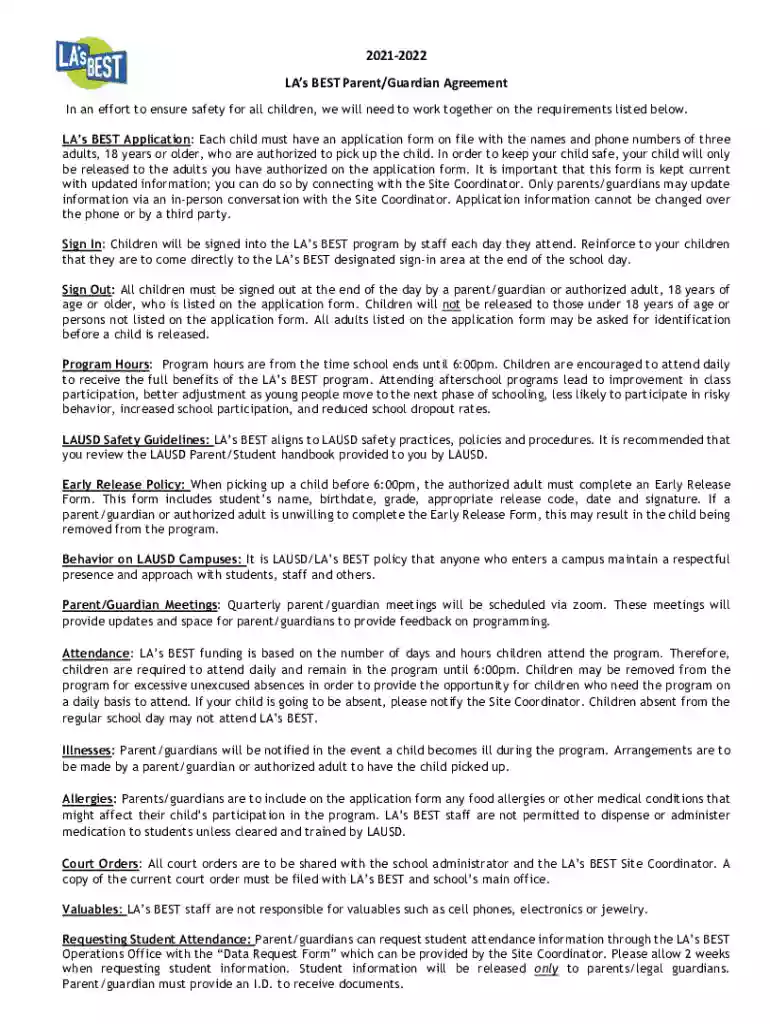
Type text, add images, blackout confidential details, add comments, highlights and more.

Draw your signature, type it, upload its image, or use your mobile device as a signature pad.

Send msc minor travel consent form via email, link, or fax. You can also download it, export it or print it out.
The MSC Cruise Parental Consent Form is a critical document used when a child under legal age is traveling on an MSC Cruise without one or both parents or legal guardians. This form ensures that the accompanying adult(s) have the authority to make decisions on behalf of the child during the cruise. It provides written consent for the child to participate in cruise activities and ensures compliance with legal requirements, protecting both the child and the cruise line from potential misunderstandings or liabilities. This form is vital in verifying that all necessary permissions have been secured for a minor’s travel.
To effectively use the MSC Cruise Parental Consent Form, it is essential to complete all sections accurately and ensure that the information aligns with legal requirements. You need to provide detailed information about the child, including their full name, date of birth, and passport information. The form also requires details about the accompanying adult(s), such as their full names and relationship to the child. Ideally, both parents should sign the form, and it should be notarized to add a layer of authenticity. Having multiple copies of the notarized form can be advantageous in case documentation needs to be presented at various points during the trip.
Obtaining the MSC Cruise Parental Consent Form is straightforward. Typically, the form can be downloaded from the MSC Cruises official website or requested directly from their customer service. If anyone has trouble accessing it online, contacting the cruise line's customer service for guidance on obtaining the form is a prudent step. It is essential to ensure you have the most current version of the form before completing it, as requirements may occasionally change.
Completing the MSC Cruise Parental Consent Form involves a detailed process that ensures all required information is accurately captured. Here’s a step-by-step guide on how to fill it out:
A comprehensive understanding of the essential components of the MSC Cruise Parental Consent Form ensures its proper completion and acceptance. The form generally includes:
The MSC Cruise Parental Consent Form is legally used to establish the accompanying adult's authority over a minor during international travel. Its legality ensures compliance with international travel laws and protects all parties involved. It may be presented at borders, during embarkation, or in emergency situations to confirm that the accompanying adults are authorized decision-makers for the child. Ensuring notarization and completeness enhances its legal acceptance across different jurisdictions.
There are various scenarios where the MSC Cruise Parental Consent Form shows its utility, including:
Understanding the terminology related to the MSC Cruise Parental Consent Form facilitates its proper use and completion. Key terms include:
At DocHub, your data security is our priority. We follow HIPAA, SOC2, GDPR, and other standards, so you can work on your documents with confidence.



20 hours ago After consent, you may, upon written request to us, obtain a paper copy of an electronic record. No fee will be charged for such copy and noRead more
by T Syriopoulos 2020 Cited by 94 MSC Cruise is also an important cruise market player, though it holds a relatively lower market share compared with the other sample companies.


