01. Edit your form online
Type text, add images, blackout confidential details, add comments, highlights and more.

Type text, add images, blackout confidential details, add comments, highlights and more.

Draw your signature, type it, upload its image, or use your mobile device as a signature pad.

Send it via email, link, or fax. You can also download it, export it or print it out.
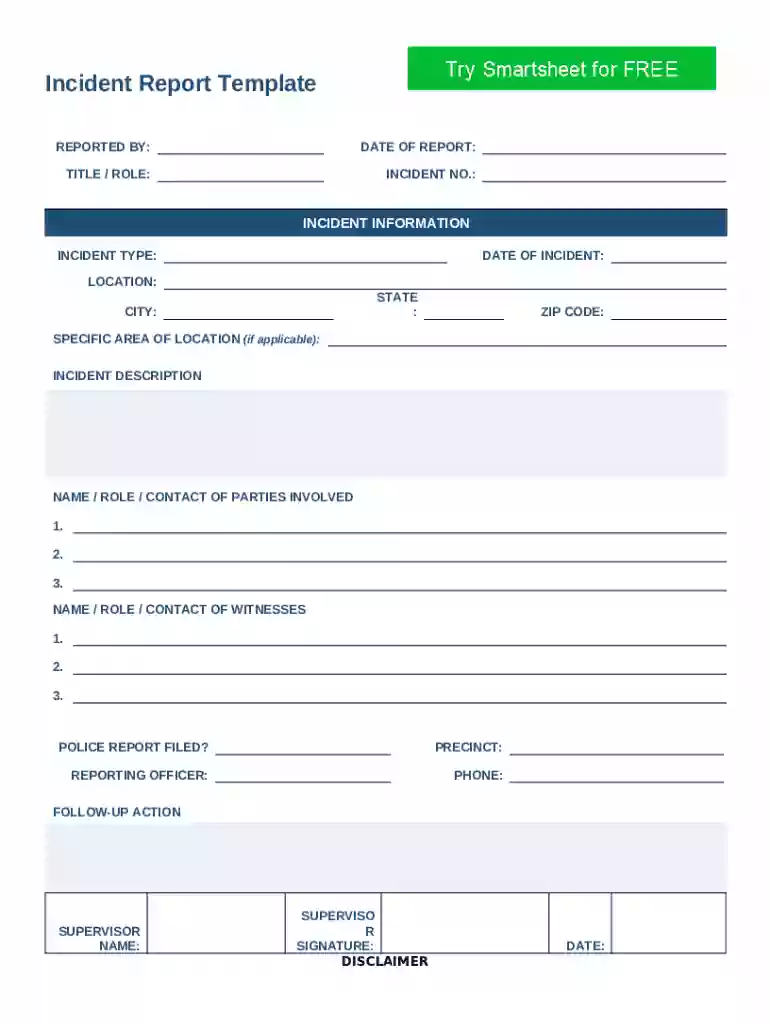
The "Incident-Report form docx - Incident Report Template REPORTED BY: WHS" is a structured document utilized to record critical details concerning an incident, particularly those incidents involving workplace health and safety concerns. This template is designed to assist organizations in documenting the circumstances of incidents thoroughly to facilitate appropriate follow-up actions. In essence, the document serves as an official record that can be referred to during investigations or audits.
To efficiently document an incident, this template incorporates several key elements:
Reporter's Information: Details about the individual reporting the incident, including their name, contact information, and role within the organization.
Incident Description: A detailed account of what occurred, including the time, date, and location of the incident.
Parties Involved: Identification of any individuals involved in or affected by the incident, along with their roles and contact information.
Witnesses: A section for listing any witnesses to the incident, including their contact information if further testimony is needed.
Police Report Status: Information regarding whether the incident was reported to local authorities and, if so, any reference number and officer details.
Follow-up Actions: Documentation of recommended or required actions following the incident, such as medical attention, equipment repairs, or procedural reviews.
Disclaimer: A statement about the accuracy and reliability of the information provided within the report.
To fill out the "Incident-Report form docx - Incident Report Template REPORTED BY: WHS," follow these steps:
Gather Information: Collect all necessary details about the incident, including statements from involved parties and witnesses.
Fill Out Personal Details: Enter your information as the reporter, ensuring accuracy in spelling and contact numbers.
Describe the Incident: Write a clear and concise description of what happened, ensuring all pertinent details such as time and location are included.
List Involved Parties: Document any other individuals involved, capturing relevant role descriptions and contact information.
Record Witness Statements: If applicable, include information from any witnesses, ensuring their statements are accurately represented.
Note Police Interaction: Indicate if law enforcement was involved, providing any case numbers or names of officers that attended.
Outline Follow-up Measures: Detail any immediate actions taken following the incident and proposed future steps to prevent recurrence.
Review and Finalize: Double-check all entered information for accuracy before finalizing the document.
Organizations that prioritize workplace safety and compliance, such as those in the construction, manufacturing, and healthcare sectors, frequently employ this incident-report template. Safety officers, human resources personnel, and managers are among the most common users within these entities. These professionals use the template to ensure all incidents are systematically recorded and addressed in line with regulatory requirements.


The use of the "Incident-Report form docx - Incident Report Template REPORTED BY: WHS" offers several advantages:
Consistency and Completeness: Ensures all relevant details are captured in a consistent manner across incidents.
Legal Compliance: Helps businesses stay compliant with local, state, and federal workplace safety regulations by maintaining accurate records.
Risk Management: Identifies patterns in incidents, serving as a basis for risk assessments and the development of safer work practices.
Support in Legal Proceedings: Serves as an authoritative document in legal cases or insurance claims involving workplace incidents.
Understanding the terminology used within the incident-report form is crucial for accurate completion:
Occupational Safety: Refers to policies and practices in place to ensure the safety and health of employees within the workplace.
Non-Conformance: Any deviation from documented procedures or standards that might lead to an incident.
Corrective Action: Steps taken to address issues identified in the incident, aiming to prevent future occurrences.
Root Cause Analysis: A method used to determine the underlying cause of an incident to develop effective prevention strategies.
This template aligns with federal workplace safety standards such as those set out by the Occupational Safety and Health Administration (OSHA) in the United States. It is designed to document information that can be critical in legal proceedings, making sure that incidents are reported and followed up appropriately. The comprehensive data captured can serve as a primary resource during any legal investigations or audits by regulatory agencies.
Workplace Injury: If an employee gets injured while operating machinery, the incident report can detail the event, the machinery involved, safety equipment being used, and measures taken immediately following the injury.
Property Damage: In cases where company assets suffer damage, such as a forklift accident causing warehouse shelving collapse, the form records all details needed to assess risks and potential changes needed in safety protocols.
Near Miss: Reporting and documenting near-miss incidents can be crucial in understanding what preventive measures are effective or need improvement, even when no injury or damage has occurred.
Incident reporting requirements can vary by state in the United States, including mandatory reporting timelines, the scope of incidents that must be reported, and the documentation required for compliance. It is crucial for businesses to be aware of and adhere to these variations to avoid potential fines or legal challenges. Consulting with a local legal expert or regulatory advisor can ensure compliance with specific state regulations surrounding incident reporting.
At DocHub, your data security is our priority. We follow HIPAA, SOC2, GDPR, and other standards, so you can work on your documents with confidence.